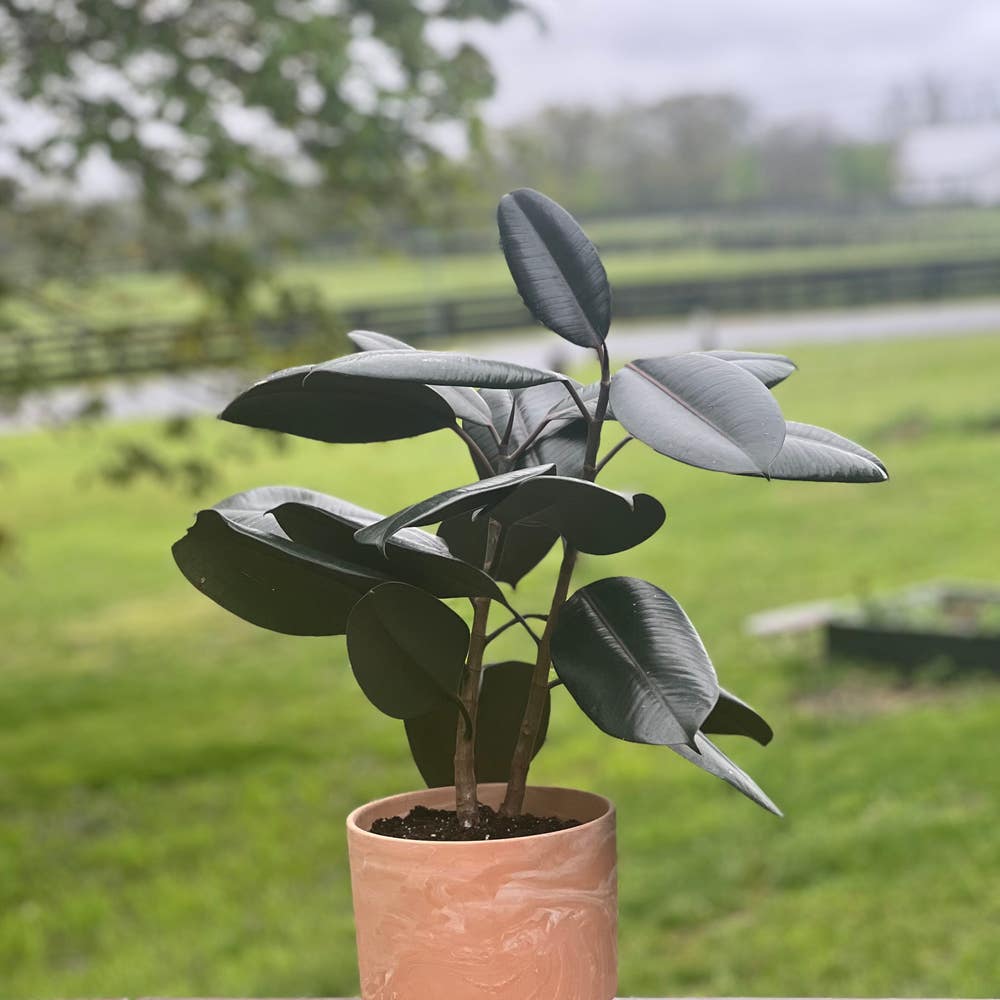
🌳 Burgundy Rubber Tree Roots 101
Ficus elastica 'Burgundy'
By the Greg Editorial Team
Sep 30, 2024•7 min read
This article was created with the help of AI so we can cover more plants for you. May contain errors. See one? Report it here.
Cultivate a thriving Burgundy Rubber Tree 🌱 by mastering its unique root care techniques for vibrant growth!
- 🌱 Burgundy Rubber Trees thrive with fibrous roots, ensuring stability in various soils.
- 💧 Proper aeration and drainage are vital to prevent root rot and promote health.
- 🌿 Monitor soil moisture closely; it should be slightly damp, never soggy.
Type of Root System
🌱 Fibrous Roots
Fibrous roots are a network of thin, branching roots that spread out close to the soil surface. Unlike taproot systems, which feature a single, dominant root, fibrous roots create a dense mat that helps anchor the plant securely.
💪 Resilience and Adaptability
These roots are incredibly resilient, allowing the Burgundy Rubber Tree to thrive in various soil types. Good aeration and drainage are crucial for maintaining root health, as they prevent waterlogging and promote nutrient uptake.
Understanding the fibrous root system is essential for ensuring your Burgundy Rubber Tree remains healthy and vibrant. With the right care, these adaptable roots can support robust growth and resilience against environmental stressors.
As we delve deeper into root depth and growth patterns, you'll discover how these roots interact with their surroundings and what that means for your plant's overall health.
Root Depth and Growth Patterns
Typical Root Depth and Spread 🌱
The Burgundy Rubber Tree typically boasts a root depth of 2-3 feet (60-90 cm). Its roots can spread impressively, extending up to 3-4 feet (90-120 cm) in diameter.
Growth Patterns and Care Implications 🌿
Roots grow dynamically, responding to environmental factors like moisture and soil quality. Providing ample space is crucial for healthy root development, especially when considering indoor versus outdoor planting.
Indoor plants may require more frequent monitoring, as confined spaces can lead to rootbound conditions. Conversely, outdoor planting allows roots to spread freely, promoting robust growth and resilience.
Understanding these growth patterns helps you create the ideal environment for your Burgundy Rubber Tree, ensuring it thrives beautifully.
Watering, Fertilizing, and Transplanting
Watering Needs 🌊
Proper watering is crucial for the health of your Burgundy Rubber Tree. Monitor the soil moisture regularly; it should be slightly damp but never soggy.
Signs of overwatering include yellowing leaves and a foul odor from the soil. Conversely, underwatering can lead to wilting and crispy leaf edges.
Well-draining soil is essential to prevent root rot. Consider using a mix that allows excess water to escape while retaining some moisture.
Fertilization Techniques 🌱
When it comes to fertilizing your Ficus elastica, timing and type matter. A balanced fertilizer with an NPK ratio of 10-10-10 is often recommended during the growing season.
Fertilize every 4-6 weeks to support growth, but be cautious of over-fertilizing, which can burn the roots. Always dilute the fertilizer according to package instructions to avoid damage.
Transplanting Considerations 🌍
As your Burgundy Rubber Tree grows, its roots will need more space. If you notice roots circling the pot or emerging from drainage holes, it’s time to consider repotting.
Follow these steps for a successful transplant:
- Choose a pot that is 1-2 inches larger in diameter.
- Gently loosen the roots to encourage new growth.
- Refill with fresh, well-draining soil and water thoroughly.
By keeping an eye on watering, fertilizing, and transplanting, you can ensure your Burgundy Rubber Tree thrives in its environment. Next, let’s explore common root-related issues that may arise and how to address them effectively.
Common Root-Related Issues
🕵️ Identifying and Addressing Problems
Root health is crucial for the Burgundy Rubber Tree, and recognizing issues early can save your plant. Common symptoms of root rot include yellowing leaves, wilting, and a foul odor emanating from the soil.
Other diseases can also affect the roots, such as fungal infections that thrive in overly moist conditions. Understanding these issues is the first step toward effective treatment.
💧 Best Practices for Watering and Soil Selection
To prevent root-related problems, adopt best practices for watering and soil selection. Ensure your Burgundy Rubber Tree is planted in well-draining soil to avoid waterlogged conditions.
Monitor your watering routine closely. Overwatering can lead to root rot, while underwatering can stress the plant, making it more susceptible to diseases.
🚑 How to Treat Root Rot
If you suspect root rot, act quickly to save your plant. Follow these steps to treat the issue effectively:
- Remove the plant from the pot.
- Trim away any affected roots, ensuring you cut back to healthy tissue.
- Repot the plant in fresh, well-draining soil to promote recovery.
Taking these actions can help restore your Burgundy Rubber Tree to health. Regular monitoring and proper care will keep your plant thriving and resilient against future challenges.
Next, let’s explore how to identify healthy versus unhealthy roots to further enhance your plant care skills.
Healthy vs. Unhealthy Roots
👀 Visual Cues of Healthy Roots
Healthy roots are a vital part of your Burgundy Rubber Tree's well-being. Look for roots that are firm and exhibit a white or light tan color.
⚠️ Indicators of Unhealthy Roots
On the flip side, unhealthy roots can signal trouble. If you notice a mushy texture or dark coloration, it's time to take action.
🔧 Steps to Revive Unhealthy Roots
Reviving unhealthy roots is crucial for your plant's recovery. Follow these steps to help restore root health:
Assess Watering Practices: Check if you're overwatering or underwatering. Adjust your routine accordingly.
Improve Soil Drainage: Ensure your soil allows for proper drainage. Consider mixing in perlite or sand to enhance aeration.
Consider Repotting: If the roots are severely compromised, it may be time to repot. Choose a fresh, well-draining soil mix to give your plant a new start.
By keeping an eye on these visual cues and taking corrective actions, you can ensure your Burgundy Rubber Tree thrives. Healthy roots lead to a flourishing plant, so stay proactive in monitoring their condition.
Next, let’s explore how to recognize rootbound conditions and what solutions you can implement.
Recognizing Rootbound Conditions
🌀 Understanding Rootbound
Rootbound conditions occur when a plant's roots grow in circles within the pot, leading to stunted growth. This happens when the roots have filled the container, leaving little room for further expansion.
🔍 Signs of Rootbound Plants
Look for specific signs that indicate your Burgundy Rubber Tree may be rootbound. If you notice roots emerging from the drainage holes, it's a clear signal that your plant needs more space.
⏰ When to Repot
Timing is crucial for repotting a rootbound plant. If you observe the signs mentioned, it's best to take action promptly to ensure your plant continues to thrive. Repotting not only provides more room for growth but also refreshes the soil, enhancing nutrient availability.
🛠️ Steps to Take
- Choose a larger pot: Opt for a pot that is 1-2 inches larger in diameter.
- Gently loosen the roots: Carefully untangle any circling roots to encourage new growth.
- Refill with fresh soil: Use well-draining soil to promote healthy root development.
By recognizing rootbound conditions early and taking the necessary steps, you can help your Burgundy Rubber Tree flourish. This proactive approach ensures your plant remains healthy and vibrant, ready to tackle whatever challenges come its way.
Next, we’ll explore the importance of root health in propagation and division, ensuring your plant continues to thrive.
Propagation and Division
Importance of Root Health 🌱
Healthy roots are the backbone of successful propagation. They not only support the plant but also ensure that new growth can thrive.
Timing is crucial for propagation. The best practices involve starting during the growing season when the plant is most active.
Techniques for Propagating 🌿
There are two primary methods for propagating your Burgundy Rubber Tree: stem cuttings and division. Each technique has its own advantages, depending on your goals.
Step-by-Step Guide for Propagating from Cuttings
- Select a healthy stem with several leaves. This ensures that the cutting has enough energy to develop roots.
- Cut below a node and place the cutting in either water or soil. Nodes are where roots will emerge, making this step vital.
- Maintain humidity and warmth for optimal root development. This creates a conducive environment for your cutting to thrive.
By following these steps, you can successfully propagate your Burgundy Rubber Tree and enjoy the satisfaction of nurturing new plants.
As you explore propagation, remember that healthy roots lead to vibrant growth. This knowledge will empower you to cultivate a thriving indoor garden.
⚠️ Safety First
This content is for general information and may contain errors, omissions, or outdated details. It is not medical, veterinary advice, or an endorsement of therapeutic claims.
Always consult a qualified healthcare professional before using any plant as food, medicine, or supplement.
Never eat any plant (or feed one to pets) without confirming its identity with at least two trusted sources.
If you suspect poisoning, call Poison Control (800) 222-1222, the Pet Poison Helpline (800) 213-6680, or your local emergency service immediately.
Spotted an error? Please report it here.
Nurture your Burgundy Rubber Tree's roots for vibrant growth 🌿 by using Greg's tailored watering alerts and expert tips to keep your plant thriving!