🐅 How Do I Fix Tiger Lily Root Rot?
Lilium lancifolium
By the Greg Editorial Team
Jun 18, 2024•8 min read
This article was created with the help of AI so we can cover more plants for you. May contain errors. See one? Report it here.
Rescue your tiger lilies 🐯🌷 from root rot's grip with these life-saving identification and treatment tips!
- Yellowing leaves, wilting, mushy roots indicate tiger lily root rot.
- Immediate action: Remove plant, trim roots, use fungicide, repot with good soil.
- Prevent recurrence with proper watering, soil mix, and regular plant inspections.
Identifying Root Rot in Tiger Lilies
Yellowing leaves and stunted growth are your first red flags. Tiger lilies are hardy, but when they start looking like they've given up on life, it's time to play detective. Check the roots: healthy ones are firm and colored like fresh produce, not like something you forgot in the back of the fridge.
🚨 Key Symptoms
- Wilting leaves that seem more dramatic than a daytime soap opera.
- Roots that are mushier than overcooked noodles.
- A smell from the soil that makes you question your life choices.
🔍 Confirming Root Rot
Don't mistake a bad hair day for a terminal illness. Other issues can mimic root rot. Before you start mourning, gently remove the plant from its home and inspect the roots. If they're sporting a dark, soggy look and the texture of rotten fruit, you've got root rot on your hands. If the soil smells like it's fermenting its own microbrewery, that's another telltale sign.
🛑 Distinguishing From Other Issues
If the roots are firm and the soil smells earthy, look elsewhere. Overwatering and poor drainage are often the culprits, but they're not the only ones crashing the party. Rule out other villains like pests or nutrient deficiencies before you declare root rot as the offender.

Immediate Steps to Address Root Rot
Upon discovering root rot in your Tiger Lily, it's like finding out your plant's been living a double life. Below ground, a horror show; above, possibly a façade of health. Here's how to ditch the rot and save the plot.
🌱 Step 1: Plant Extraction
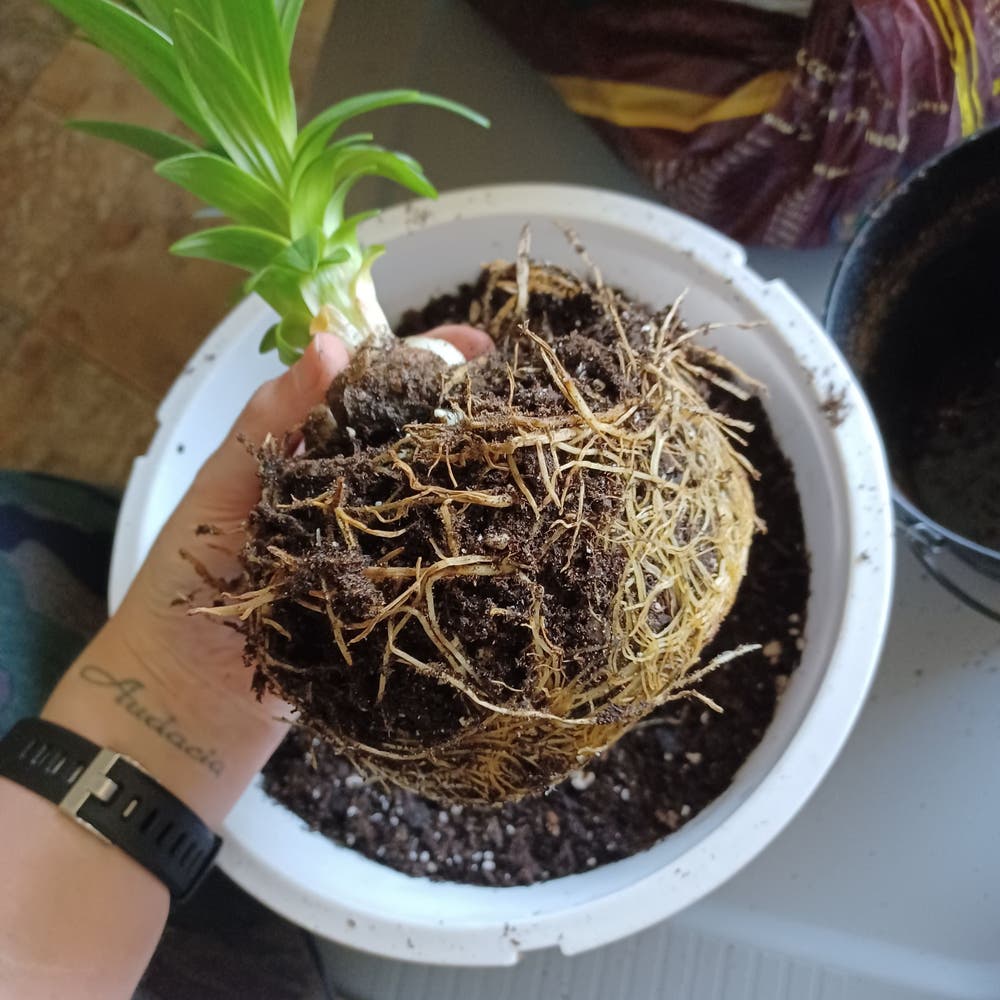
Gently lift your Tiger Lily from its pot like it's a sleeping baby you don't want to wake. Brush off the soil to expose the roots. Healthy roots look like they've been hitting the gym—firm and white. Rotten roots, however, are the couch potatoes—soft, brown, or black.
🩺 Step 2: Root Triage
It's surgery time, and you're the doctor. With sterilized scissors, snip away the mushy roots with the precision of a bonsai artist. Match the foliage pruning to the root amputation to keep the plant's world in balance.
🧼 Step 3: Disinfection
After the cut, it's time to disinfect. Think of it like applying antiseptic to a wound. A copper-based fungicide can act as a shield, guarding the remaining roots against any lingering fungal felons.
🌿 Step 4: The Repotting Shuffle
Now, grab some fresh soil and a pot with drainage that could make a colander jealous. Repot your Tiger Lily with the tenderness of a first date, ensuring the roots have room to breathe and stretch.
Remember, these steps aren't just a quick fix; they're the start of a new lifestyle for your plant. Keep the water in check—only when necessary—and watch your Tiger Lily bounce back with the resilience of a cat with nine lives.

Soil and Water Management for Recovery
🚰 Adjusting Watering Practices
Overwatering is often the culprit behind root rot. It's time to get personal with your soil—check its moisture level before you water. The top inch should be dry to the touch. Think of it as the plant's 'thirst meter'. If it's damp, skip the watering can. When you do water, make sure it's a thorough affair, allowing excess to drain freely. No puddles, please.
🌱 Choosing the Right Soil Mix
Your soil mix is the life support system for your plants. It should be the Goldilocks of soils—not too dense, not too light, but just right. A mix of sterile potting media with a dash of perlite, vermiculite, or sand will promote good drainage. Remember, a soggy soil mix is a no-go.
🌿 Preparing for Replanting
Before you reintroduce your plant to its home, make sure the pot is clean or, better yet, brand new. This is no time for shortcuts. Mix in some organic matter like compost to give your soil a nutritional boost. It's like a health shake for your plant's roots.
💧 Long-Term Soil and Water Balance
Keep a vigilant eye on the soil's moisture level throughout the seasons. Adjust your watering schedule as the weather changes—more in the heat, less when it's cool. And don't forget, your Tiger Lily's feedback is instant, so be ready to adapt your care routine on the fly.

Utilizing Fungicides and Natural Remedies
⏰ When to Apply Fungicides
Timing is everything. Apply fungicides about a month after planting and follow up 3-4 weeks later. If your Tiger Lily is already blooming, it's time to get moving. Bloom signals it's time for another round. Remember, these are toxic chemicals; handle with care and keep them away from kids and pets.
🌱 How to Apply Fungicides
Read the label—twice. It's not just fine print; it's the law of the land for your plant's health. Mix and apply as directed, usually by drenching the soil to reach the roots. Don't just sprinkle on like fairy dust; get down and dirty where the rot resides.
🌿 Natural Remedies
For those who whisper to their plants, natural remedies are your secret language. Neem oil and a baking soda mixture can be just as effective as chemical fungicides. They're like the gentle guardians of the garden, keeping fungal foes at bay without the chemical warfare.
🏠 Home Remedies
If you're feeling like a plant medic, mix up some home remedies. Charcoal, cinnamon, and chamomile aren't just for hipster cafes—they're your DIY anti-fungal arsenal. They're like the old-school remedies grandma swore by, and she was onto something.
🛡️ Preventive Measures
Prevention beats cure every time. Adjust watering habits, let the soil dry out, and improve air circulation. It's like giving your plant a personal space bubble to keep the bad stuff out. Regularly inspect your plant for early distress signals, like a plant's version of sending an SOS.
🧼 Sanitizing Tools and Pots
Before you repot, sanitize your tools and pots with a bleach solution. It's like giving your plant a clean slate, free from past pathogens. Make sure your pot has proper drainage holes to avoid waterlogging, the root rot's best friend.
Long-Term Prevention Strategies
💧 Best Practices for Watering and Soil Maintenance
Watering is not a "set it and forget it" game. It's about finesse, about finding that sweet spot where the soil is moist but not a swamp. Check the soil before watering—dry on top? Time to hydrate. Use room temperature water to avoid shocking the roots. As the seasons shift, so should your watering habits; less is more when the world cools down, and a bit of extra splash is needed when the sun cranks up the heat.
Soil is your plant's home, and you wouldn't want to live in a dump, right? Mix in some organic matter to keep it loose and nutrient-rich. This isn't just for kicks; it's critical for drainage and aeration. Avoid the clay-sand combo unless you're into pottery.
🛡️ Importance of Tool Sterilization and Plant Inspection Routines
Sterilize your tools like a surgeon prepping for operation. Clean pots, fresh potting media—it's like setting up a sterile field for your Tiger Lilies. Think of it as a quarantine zone for diseases.
Inspect your plants regularly, like a plant detective on the lookout for clues. Spotted something fishy? Isolate the suspect before it turns into a garden crime scene. And remember, prevention is less of a headache than the cure—so keep those eyes peeled.
Aftercare and Monitoring
🚨 Guidelines for Recovery Support
Monitor your Tiger Lily like a security camera post-treatment. New, healthy growth is the green light you're looking for. If the leaves are still throwing a brown spot party, it's time to reassess your care strategy.
💧 Watering Wisdom
Post-recovery, water with the precision of a ninja—enough to hydrate, not drown. If the soil's drier than a comedian's humor, it's time to water. Stick to a schedule that keeps the soil's thirst quenched but not flooded.
🗑 Debris Duty
Act like a cleanliness freak and remove any fallen leaves or debris. It's not just about tidiness; it's about keeping diseases from gatecrashing your plant's recovery party.
🌱 Mulching Magic
Give your plant's roots a cozy blanket with a mulch makeover. It helps regulate soil moisture and temperature, which is like giving your plant a steady, comforting hug.
👀 Visual Inspection
Keep your eyes peeled for signs of recovery or distress. New growth should look like it's on a green-only diet—healthy and spot-free. If you see more brown than a chocolate factory, it's time to change tactics.
🔄 Response to Adjustments
Notice how your Tiger Lily reacts to tweaks in care. A thumbs-up response includes more vibrancy and a robust appearance. No change? Time to play detective and adjust your care routine.
📊 Monitoring and Assessment
Keep a log like you're tracking a suspect. This helps pinpoint what's working and what's not, allowing for a more tailored care approach. Celebrate new growth like it's a personal victory.
🌱 Progress Tracking
Share your plant recovery stories with fellow green thumbs. It's not just about bragging rights; it's about learning and passing on the baton of plant wisdom.
⚠️ Safety First
This content is for general information and may contain errors, omissions, or outdated details. It is not medical, veterinary advice, or an endorsement of therapeutic claims.
Always consult a qualified healthcare professional before using any plant as food, medicine, or supplement.
Never eat any plant (or feed one to pets) without confirming its identity with at least two trusted sources.
If you suspect poisoning, call Poison Control (800) 222-1222, the Pet Poison Helpline (800) 213-6680, or your local emergency service immediately.
Spotted an error? Please report it here.
Prevent root rot 🛑 in your tiger lilies with Greg's tailored watering reminders and soil tips, keeping your blooms thriving and stress-free.