🐅 Should I Repot My Tiger Lily And If So, How?
Lilium lancifolium
By the Greg Editorial Team
Jun 18, 2024•6 min read
This article was created with the help of AI so we can cover more plants for you. May contain errors. See one? Report it here.
Boost your Tiger Lily's vigor and bloom 🌷 with savvy repotting insights—just in time for spring!
- 🌱 Repot when root-bound or if you notice slow growth and yellow leaves.
- 🍂 Late fall or early spring is ideal for repotting Tiger Lilies.
- 📏 Choose an 8-inch pot and well-draining potting mix with perlite or sand.
Recognizing When to Repot Your Tiger Lily
🌱 Spotting the Signs of a Root-Bound Plant
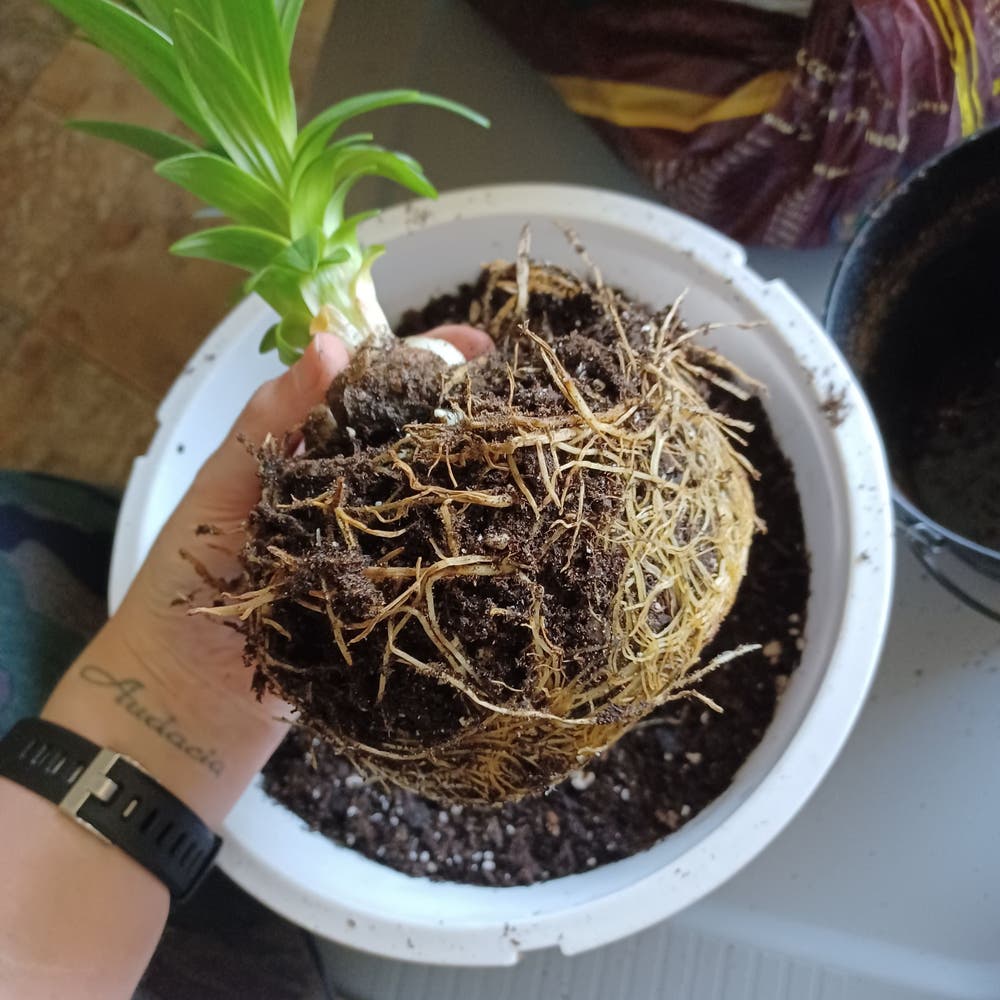
Roots making a break for it outside the drainage holes or staging a coup above the soil line are your Tiger Lily's way of saying, "I need more room!" This is a classic sign of being root-bound. If your plant's growth has slowed down or come to a screeching halt, it's likely pleading for a new home.
🌿 Soil Fatigue: When Your Plant's Earth is Exhausted
Yellow leaves can be the Tiger Lily's white flag of surrender to soil exhaustion. It's not just being dramatic; the plant is genuinely struggling to find nutrients in its current setup. A droopy demeanor or a bloom boycott could also signal that it's time to refresh the potting mix and give those roots some new earth to explore.
🕰 Timing is Everything
Don't jump the gun. Repotting at the wrong time can stress your plant more than that one friend who's always late. Late fall or early spring is the Tiger Lily's preferred moving day, aligning with its natural growth cycle. This is when the plant is ready to take on new challenges, like a fresh pot and soil.
💧 The Watering Conundrum
Overwatering and underwatering can both lead to repotting. If your Tiger Lily's leaves have more spots than a Dalmatian, it's time to rethink your watering strategy. Consistent moisture is key, but let's not turn the pot into a swimming pool. On the flip side, if the soil is drier than a stand-up comedian, it's a cry for hydration – and possibly a new pot that retains moisture better.
🌱 A Healthy Balance
Remember, your Tiger Lily isn't asking for a spa retreat; it's a simple request for a comfortable pot where it can stretch its roots without feeling cramped. Think of it as upgrading from a cramped studio to a one-bedroom with a view. And by view, we mean a pot with enough space to gaze upon a fresh batch of nutrient-rich soil.

Preparing for Repotting: Pot Selection and Potting Mix
🌱 Choosing the Right Pot
When your Tiger Lily starts flexing its roots through the drainage holes, it's time for a new home. Go for a pot that's at least 8 inches wide and deep. Unglazed clay is your best bet—it breathes like a yogi, letting excess moisture escape. Make sure the new pot has a couple inches of breathing room around the root ball for future growth.
🌿 Selecting the Perfect Potting Mix
Don't just shovel dirt into your Tiger Lily's new digs. Grab a well-draining potting mix that's as quality as your favorite coffee blend. It's like picking a mattress for your plant—supportive, but with enough give for those roots to stretch out. If you're feeling fancy, mix in some perlite or coarse sand to really get that drainage on point.

The Repotting Process: Timing, Technique, and Aftercare
🌷 Best Season for Repotting Tiger Lilies
Spring is the prime time for repotting Tiger Lilies. After the frost has bid adieu and before the summer heat waves roll in, your lilies are in their sweet spot for a change of scenery. This timing allows the roots to recover and expand in comfortably warm soil, setting the stage for a summer of vigorous growth.
🌱 Step-by-Step Guide to Repotting
1. Choose the Right Pot
Select a pot that’s a size up from the old one, with drainage holes. Unglazed clay pots are excellent for their breathability, helping to prevent waterlogged roots.
2. Prepare the Potting Mix
Opt for a well-draining mix. Your Tiger Lily doesn’t like wet feet, so keep it light and airy.
3. Remove the Plant
Gently coax your Tiger Lily out of its current pot. If it plays hard to get, tap the pot’s sides to loosen the grip.
4. Inspect and Trim the Roots
Check for any signs of damage or rot. Snip off the bad parts with sterilized shears—think of it as a root haircut for better growth.
5. Repot
Place the plant in the new pot at the same depth it was before. No deep diving or shallow lounging. Fill in the gaps with your potting mix and give it a gentle pat down.
6. Water and Place
Water your newly potted Tiger Lily until it drains out the bottom. Then, find a sunny spot, preferably with a bit of afternoon shade, and let it settle in.
🌿 Immediate Aftercare
Watering is crucial after repotting. Keep the soil moist but not soggy. Overwatering is the fast track to root rot city, while underwatering will leave your lilies high and dry.
Avoid fertilizing for the first six weeks. Your plant needs time to adjust to its new digs without the added stress of processing nutrients.
Keep an eye on the temperature. Tiger Lilies prefer a cool to moderate climate—not too hot, not too cold, just right.
🌼 Acclimatization and Growth
Monitor your Tiger Lily as it acclimates. It's normal for the plant to experience a bit of shock, but it should bounce back with proper care. With the right balance of sunlight, water, and TLC, your Tiger Lily will be ready to strut its stuff come blooming season.

Addressing Post-Repotting Concerns
After repotting your Tiger Lily, it's normal to encounter a few hiccups. Let's troubleshoot.
🥀 Wilting and Droopiness
Wilting leaves post-repotting? Classic transplant shock. Keep the soil moist and avoid direct sunlight for a bit. Your plant's throwing a tantrum, but it'll get over it.
💛 Yellowing Leaves
If leaves are turning yellow, it might be stress, but it's also a sign to ease up on the water. Tiger Lilies like their space and their soil on the drier side post-move.
🦠 Root Rot: The Sneaky Saboteur
Root rot is the silent killer of repotted plants. If you spot mushy, brown roots during repotting, trim the damage and ensure your pot has proper drainage.
🐜 Pests: Uninvited Guests
Pests love a stressed plant. Post-repotting, keep an eye out for freeloaders. If you spot trouble, isolate your plant and treat it with an appropriate pesticide.
🌱 Growth Stagnation
No new growth? Give it time. Plants need a moment to acclimate to their new digs. If the stagnation continues, reassess light and nutrient levels.
🏡 Soil Settling: The Sinkhole Phenomenon
Soil settling can leave your plant's roots exposed. Water your Tiger Lily and top up with soil as needed. It's like fluffing a pillow after a good nap.
Remember, repotting is like moving to a new house for your plant. There will be an adjustment period. Keep a close eye on your Tiger Lily, and with a little patience and care, it'll be back to its striking self in no time.
⚠️ Safety First
This content is for general information and may contain errors, omissions, or outdated details. It is not medical, veterinary advice, or an endorsement of therapeutic claims.
Always consult a qualified healthcare professional before using any plant as food, medicine, or supplement.
Never eat any plant (or feed one to pets) without confirming its identity with at least two trusted sources.
If you suspect poisoning, call Poison Control (800) 222-1222, the Pet Poison Helpline (800) 213-6680, or your local emergency service immediately.
Spotted an error? Please report it here.
Repot your Tiger Lily with confidence and watch it flourish 🌱 with Greg's personalized watering reminders and care tips!