🍂 Why Does My Schismatoglottis 'Thailand' Have Yellow Leaves?
Schismatoglottis 'Thailand'
By the Greg Editorial Team
Mar 19, 2024•4 min read
This article was created with the help of AI so we can cover more plants for you. May contain errors. See one? Report it here.
- Over and underwatering both lead to yellow leaves.
- 🌞 Bright, indirect light is crucial to prevent yellowing.
- Balanced fertilizer and root care keep leaves green.
Pinpointing the Culprits Behind Yellow Leaves
💧 Overwatering Woes
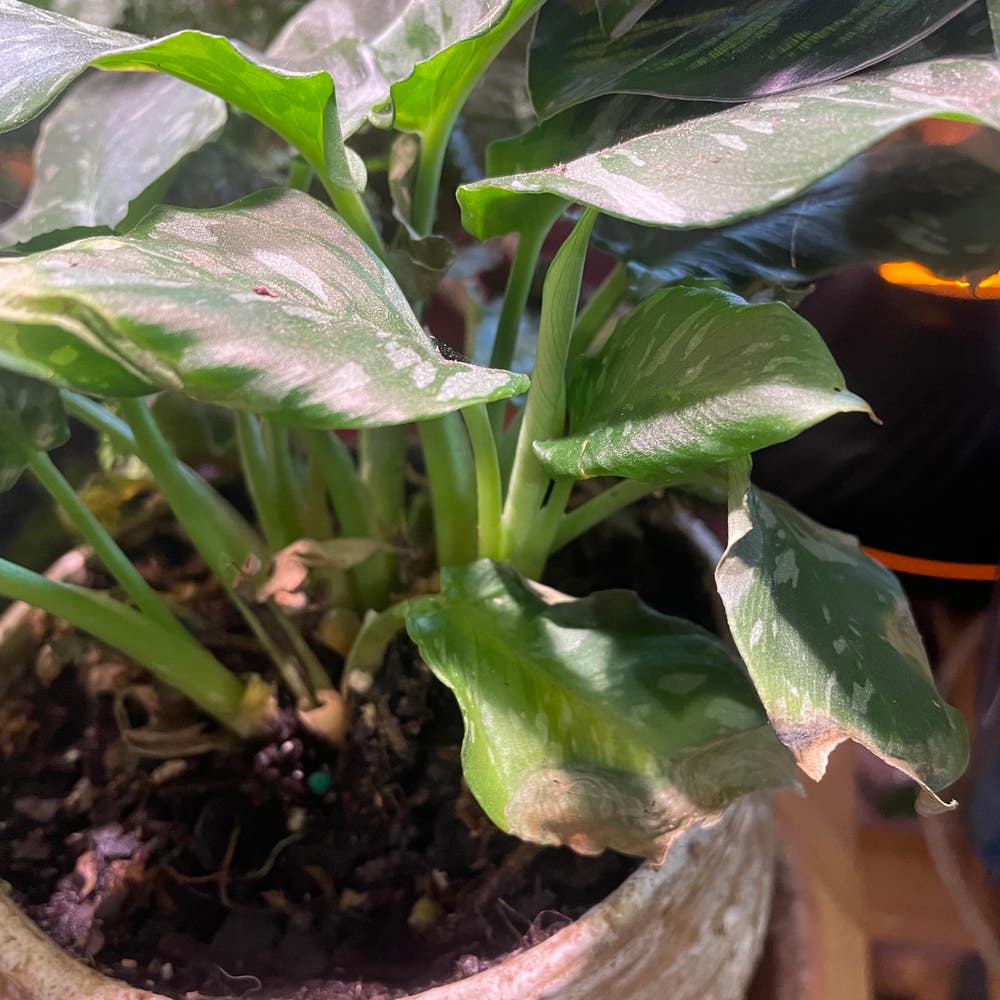
Overzealous watering turns your Schismatoglottis 'Thailand' into a soggy mess. Yellow leaves and a wilted demeanor are your plant's way of saying, "I'm drowning here!" When the soil feels like a wet sponge, it's time to ease up on the H2O.
🏜️ Underwatering Stress
Conversely, leaves that resemble crispy autumn foliage signal a cry for water. If the soil is as dry as a stand-up comedian's wit, your plant is parched. Thirsty roots can't support healthy greenery, leading to those telltale yellow leaves.
🌞 Light: Finding the Sweet Spot
When it comes to light, think of your plant as a sunbather who hates sunburn. Bright, indirect light is the golden ticket. Too much sun and your plant's leaves will protest by turning yellow; too little and they'll sulk in the same hue.
🍽️ Nutrient Needs
A hungry Schismatoglottis 'Thailand' is a sad sight. Nutrient deficiencies manifest as yellow leaves, with nitrogen, iron, or magnesium often being the missing guests at the dinner table. It's like your plant is on a diet it never signed up for.
🚰 Root Health Check
Roots are the unsung heroes, and when they're in trouble, the leaves take the hit. Check for root rot or a compacted root ball, which can turn leaves yellow faster than a traffic light. Healthy roots mean a vibrant plant, so don't neglect what's below the soil.
Turning Over a New Leaf: Remedies
💧 Fine-Tuning Watering Habits
Watering should hit the Goldilocks zone – not too much, not too little. Check the soil before watering; if it's dry an inch down, it's time for a drink. Remember, consistency is key, but adjust for seasonal changes. Overwatering leads to soggy roots, while underwatering leaves your plant high and dry.
☀️ Lighting the Way to Health
Your Schismatoglottis 'Thailand' craves that bright, indirect light sweet spot. Too much sun? Leaves throw in the towel and yellow. Not enough? They'll stretch out and lose their luster. Move your plant closer or further from the light source as needed, and watch for signs of improvement.
🌿 Feeding for Foliage
Nutrients are your plant's secret sauce. A balanced fertilizer is the ticket to vibrant leaves. But don't go overboard – too much and you risk nutrient burn. Follow the instructions, and if you've been heavy-handed, give the soil a flush. Your plant will thank you with a return to lush greenery.
Preventative Measures for a Lush Plant
💧 Water Wisdom
Consistency is the cornerstone of plant parenting. Forget marking your calendar; your Schismatoglottis 'Thailand' doesn't give a hoot about dates. Use your finger to test the soil's moisture or hoist the pot to feel its heft. Overwatering is a recipe for disaster. Make sure your pot has drainage holes that could make a colander jealous.
🌞 Light and Environment Harmony
Your plant craves stability like a cat basking in a sunbeam—no sudden temperature drops or scorching heat waves. It's all about the right light; too much and your plant's leaves will throw a yellow tantrum, too little and they'll sulk in green envy. Rotate the pot regularly for even growth, and keep those leaves dust-free for a top-notch photosynthesis performance.
🌱 Root Care Routine
Roots need love too, and they're not afraid to get picky about their soil bed. Choose a mix that's like a gourmet meal for your plant—rich in organic matter and with drainage that could rival a well-engineered gutter system. When it's time for a pot upgrade, think of it as a gentle nudge rather than a leap—one size up is the sweet spot. Keep an eye out for any signs of root rot, because nothing says "game over" for your plant quite like soggy, unhappy roots.
⚠️ Safety First
This content is for general information and may contain errors, omissions, or outdated details. It is not medical, veterinary advice, or an endorsement of therapeutic claims.
Always consult a qualified healthcare professional before using any plant as food, medicine, or supplement.
Never eat any plant (or feed one to pets) without confirming its identity with at least two trusted sources.
If you suspect poisoning, call Poison Control (800) 222-1222, the Pet Poison Helpline (800) 213-6680, or your local emergency service immediately.
Spotted an error? Please report it here.
Banish yellow leaves and ensure your Schismatoglottis 'Thailand' thrives with balanced care ⚖️, guided by Greg's custom watering schedules and light condition tips.