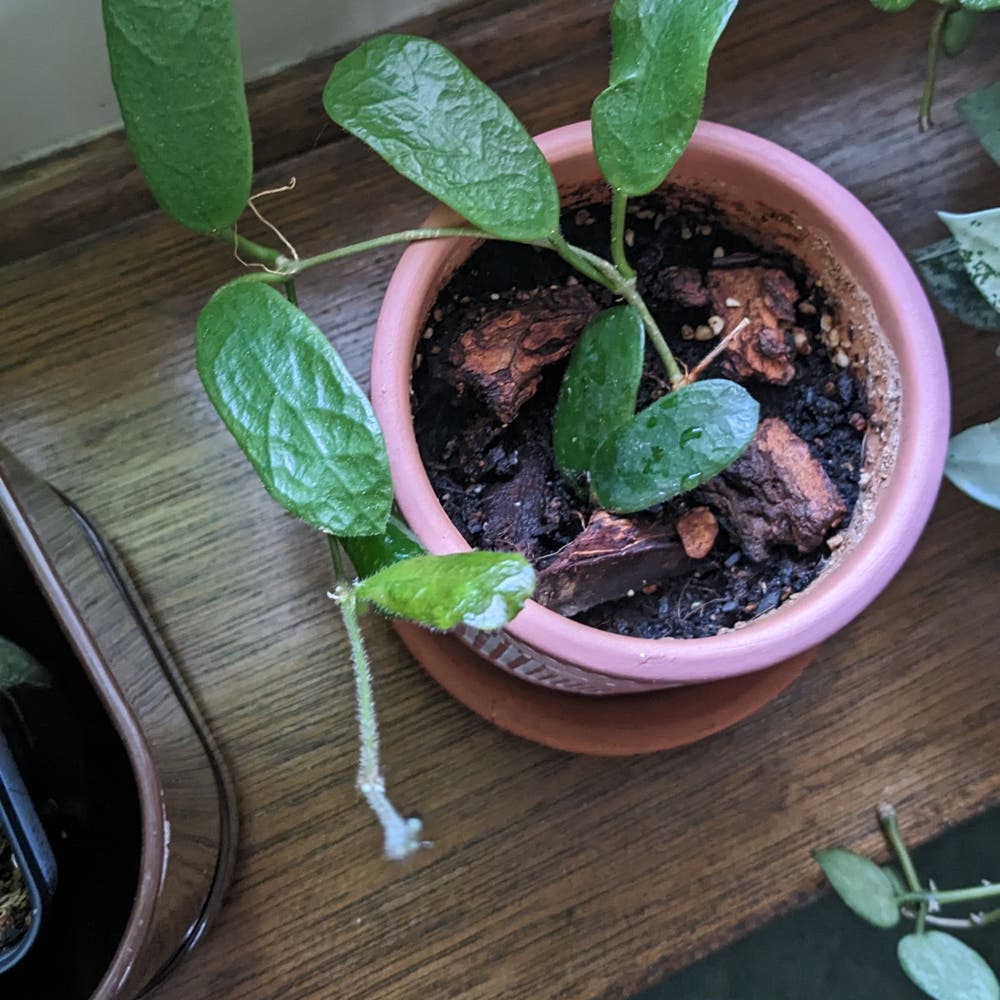
📏 How Big Your Round-leaved Hoya Will Get
Hoya rotundiflora
By the Greg Editorial Team
Sep 28, 2024•5 min read
This article was created with the help of AI so we can cover more plants for you. May contain errors. See one? Report it here.
Master the art of growing round-leaved hoyas 🌱 and transform your space with lush greenery and vibrant blooms! 🌼
- 🌱 Round-leaved hoya can grow 3-6 feet tall with proper support and care.
- ☀️ Bright, indirect sunlight is essential for optimal growth and size.
- 💧 Consistent moisture and well-draining soil are key for vibrant, healthy plants.
Mature Height and Spread
Height 🌱
The round-leaved hoya typically reaches a mature height of 3 to 6 feet (0.9 to 1.8 meters) when given proper support. Its growth habit is either climbing or trailing, which significantly influences how tall it can grow.
Spread 📏
In terms of spread, you can expect an average mature width of 2 to 4 feet (0.6 to 1.2 meters). This spread largely depends on the availability of space and the support structures you provide.
Understanding these dimensions is crucial for planning where to place your hoya. With the right care, you can enjoy a lush, sprawling plant that enhances your space beautifully.
As we explore further, let's dive into the growth rate and time it takes for your hoya to reach its full potential.
Growth Rate and Time to Maturity
Growth Rate 🌱
The round-leaved Hoya typically exhibits a moderate growth rate, averaging about 12 to 24 inches (30 to 61 cm) per year when provided with optimal conditions. Key factors influencing this growth include light exposure, watering frequency, and nutrient availability.
Time to Maturity ⏳
Reaching full size usually takes around 3 to 5 years, depending on how well you care for your plant. Variability in this timeline can arise from different care practices and environmental conditions, so patience is essential.
Understanding these growth dynamics can help you set realistic expectations for your round-leaved Hoya. With the right conditions, you’ll be rewarded with a thriving plant that enhances your space beautifully.
As you consider how to nurture your Hoya, keep in mind the various factors that can influence its growth. Next, we’ll explore how different conditions can affect the size and health of your plant.
Size Variability Based on Conditions
🌞 Light Conditions
Bright, indirect sunlight is the secret sauce for your round-leaved Hoya's growth. When it gets this optimal light, expect vigorous growth; however, in low light, the plant will struggle, resulting in slower growth and smaller dimensions.
🌱 Soil Type
Using well-draining soil is crucial for achieving those impressive mature dimensions. Poor soil quality can stunt growth, leaving you with a smaller, less vibrant plant.
💧 Watering Frequency
Consistent moisture is key to encouraging healthy growth and larger size. On the flip side, overwatering or underwatering can lead to stunted growth, keeping your plant from reaching its full potential.
🌡️ Temperature and Humidity
For optimal growth, keep your Hoya in a temperature range of 60°F to 80°F (15°C to 27°C). Higher humidity levels can also work wonders, promoting larger leaf size and overall plant health.
Understanding these environmental factors can help you create the perfect conditions for your round-leaved Hoya to thrive. Next, let’s explore the different varieties and their unique growth potential.
Varieties and Their Growth Potential
🌱 Dwarf Varieties
Dwarf varieties of the round-leaved hoya are perfect for those tight spaces. Typically, they reach heights of just 1 to 2 feet (0.3 to 0.6 meters), making them compact and bushy.
These smaller plants are ideal for tabletops or window sills, adding a touch of greenery without overwhelming your space. Their manageable size doesn’t compromise their charm or beauty.
🌳 Giant Varieties
On the other end of the spectrum, giant varieties can soar beyond 6 feet (1.8 meters) when given proper support. These hoyas are vigorous and sprawling, requiring ample room to thrive.
If you have the space, these larger plants can become stunning focal points in your home or garden. Their impressive growth can create a lush, tropical vibe that’s hard to resist.
Understanding the differences between dwarf and giant varieties can help you choose the right hoya for your environment. Whether you prefer a compact beauty or a towering green giant, there's a round-leaved hoya to fit your needs.
Next, let’s explore how to control the size of your hoya, ensuring it flourishes just the way you want it.
Controlling Size
✂️ Pruning Techniques
To keep your round-leaved Hoya at a manageable size, regular pruning is essential. Trim the stems to control both height and spread, ensuring your plant maintains its desired shape.
The best time to prune is early spring, just before new growth begins. This timing helps the plant recover quickly and encourages bushier growth.
🌱 Propagation Methods
Propagation can also influence the size of your Hoya. Using cuttings or division techniques allows you to manage growth effectively.
For optimal results, aim to propagate in early spring. This timing supports robust growth and helps your new plants thrive.
🪴 Container Size
Choosing the right container is crucial for your Hoya's growth. Larger pots provide ample space for root systems, allowing for larger plants.
Conversely, small containers can restrict growth, leading to stunted dimensions. Opt for a pot that gives your plant room to flourish.
By implementing these strategies, you can effectively control the size of your round-leaved Hoya, ensuring it thrives in your space. Next, let’s explore how different environmental conditions can impact your plant's growth potential.
⚠️ Safety First
This content is for general information and may contain errors, omissions, or outdated details. It is not medical, veterinary advice, or an endorsement of therapeutic claims.
Always consult a qualified healthcare professional before using any plant as food, medicine, or supplement.
Never eat any plant (or feed one to pets) without confirming its identity with at least two trusted sources.
If you suspect poisoning, call Poison Control (800) 222-1222, the Pet Poison Helpline (800) 213-6680, or your local emergency service immediately.
Spotted an error? Please report it here.
Grow your round-leaved hoya to stunning heights 🌿 with Greg's tailored care reminders and expert tips that ensure your plant thrives in the perfect conditions!