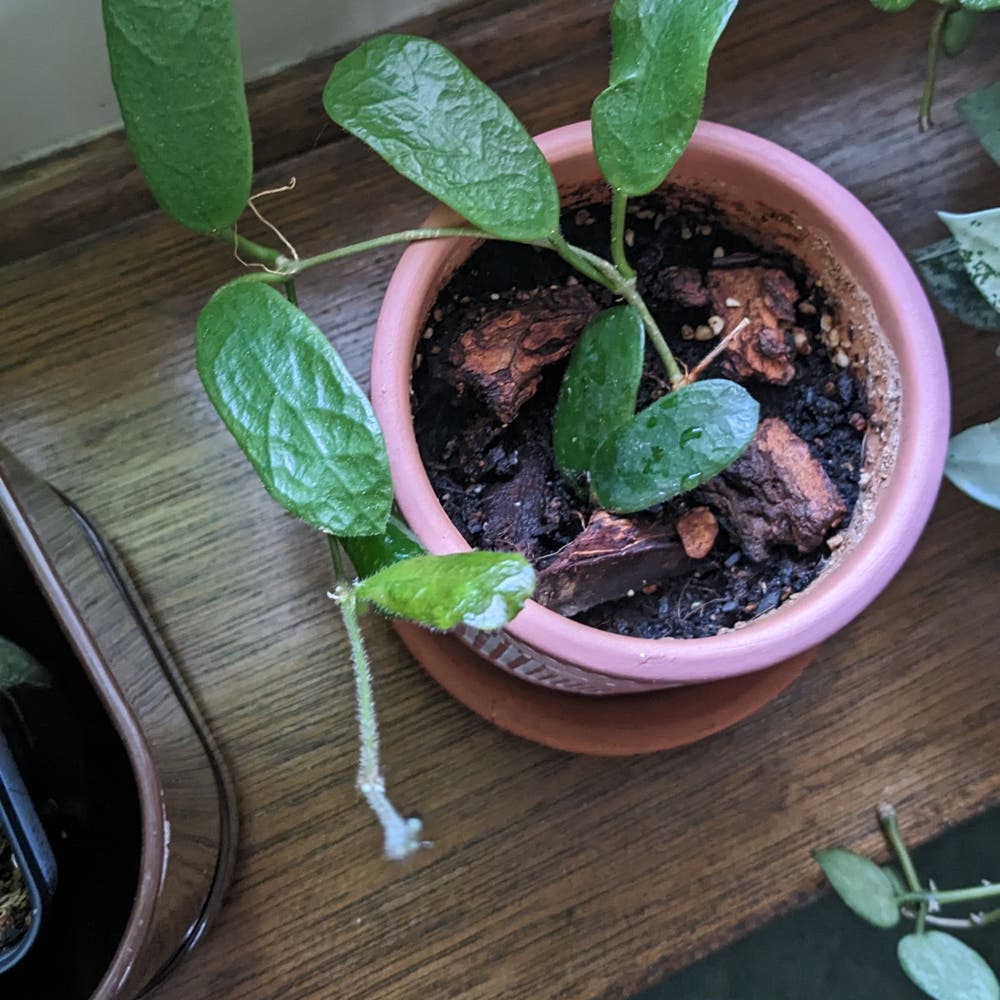
Hoya Rotundiflora Root Rot Solutions
Hoya rotundiflora
By the Greg Editorial Team
Jun 18, 2024•4 min read
This article was created with the help of AI so we can cover more plants for you. May contain errors. See one? Report it here.
Rescue your wilting Hoya 🌿 from root rot's clutches and ensure its lush future with our expert guide.
- 🚩 Yellow leaves and wilting signal root rot; inspect roots and soil moisture.
- ✂️ Prune affected roots carefully, then adjust watering and repot for recovery.
- 🌱 Prevent future rot with well-draining soil and terracotta pots.
Spotting the Red Flags: Symptoms of Root Rot in Hoya Rotundiflora
🚩 Visual Symptoms to Watch Out For
Yellowing leaves and wilting are distress signals from your Hoya rotundiflora. They're not just having a bad day; they're crying out for help. When you see a leaf palette that's more autumn than vibrant green, pay attention.
Stunted growth and blackened roots are telling you there's a problem below the surface. It's not just about what you can see; it's about what these symptoms indicate for the health of the plant's roots.
🕵️ Beyond the Surface: Root and Soil Examination
To gently unearth the truth about your Hoya's health, you'll need to get your hands dirty. Carefully remove the plant from its pot and inspect the roots. Healthy roots should be firm and white, not mushy or black.
Assessing soil moisture is crucial. If the soil feels like a swamp, your Hoya's roots might be suffocating. Soil should be moist but not waterlogged, as overly wet conditions are a breeding ground for root rot.

The Rescue Mission: Treating Root Rot in Your Hoya
🔪 Surgical Precision: Root Pruning Techniques
When root rot strikes your Hoya rotundiflora, it's time for some tough love with sterilized shears. Identify the healthy roots—firm and white—and mercilessly cut away the rest. It's a delicate balance between being thorough and overzealous. Remember, you're aiming to save the plant, not prepare a salad.
Disinfect your tools with rubbing alcohol or a bleach solution before and after use. This isn't just for show; it's critical to prevent spreading disease. Gently remove the plant from its pot, shake off the old soil, and start the delicate task of pruning. If the roots crumble like stale cake, they've got to go.
🏥 Aftercare: Nursing Your Hoya Back to Health
Post-surgery, your Hoya's going to need a recovery plan. Adjust your watering habits; think of it like a doctor prescribing a new diet after heart surgery. The goal is to keep the soil moist but not wetter than a drowned rat.
Repotting is your next step. Choose a pot with drainage holes to avoid waterlogging. The pot material matters too—terracotta breathes better than plastic. As for the soil, pick a mix that's the botanical equivalent of a well-aerated, fluffy pillow. It should drain faster than a sinkhole.
Remember, recovery isn't just about getting back to baseline. You're setting the stage for a comeback. Keep the plant in bright, indirect light and resist the urge to water too soon. Let the soil dry out a bit first; your Hoya's not a fish, it doesn't need to swim.

Fortifying Your Hoya: Prevention Strategies
💧 Watering Wisdom: Finding the Balance
Watering your Hoya rotundiflora is a delicate dance. Too much and you risk root rot; too little and your plant wilts. The trick is to let the topsoil dry slightly between waterings. Think of it as your plant's pause for a breath of fresh air.
Terracotta pots are your secret weapon, offering breathability that plastic just can't match. They wick away moisture, helping prevent overwatering mishaps. And when it comes to soil, aim for the Goldilocks zone – moist, but never swampy.
🌱 Soil and Pot Perfection
Choosing the right soil mix is like picking the perfect mattress for a good night's sleep. It needs to support your Hoya while allowing excess water to drain away effortlessly. Well-draining soil is non-negotiable for a happy, healthy plant.
The pot matters too. Size and material are the unsung heroes in the fight against root rot. A pot too large invites moisture to linger, while the wrong material could trap water like a dam. Opt for a pot that's just right in size and made of breathable material like terracotta or unglazed ceramic.
Remember, it's not just about watering less; it's about ensuring the water has somewhere to go. Keep an eye on your Hoya, and adjust your care routine as needed. Your plant will thrive with the right balance of water, soil, and love.

⚠️ Safety First
This content is for general information and may contain errors, omissions, or outdated details. It is not medical, veterinary advice, or an endorsement of therapeutic claims.
Always consult a qualified healthcare professional before using any plant as food, medicine, or supplement.
Never eat any plant (or feed one to pets) without confirming its identity with at least two trusted sources.
If you suspect poisoning, call Poison Control (800) 222-1222, the Pet Poison Helpline (800) 213-6680, or your local emergency service immediately.
Spotted an error? Please report it here.
Prevent root rot in your Hoya rotundiflora by balancing moisture ⚖️ with Greg's custom watering reminders, ensuring your plant's roots stay healthy and strong.