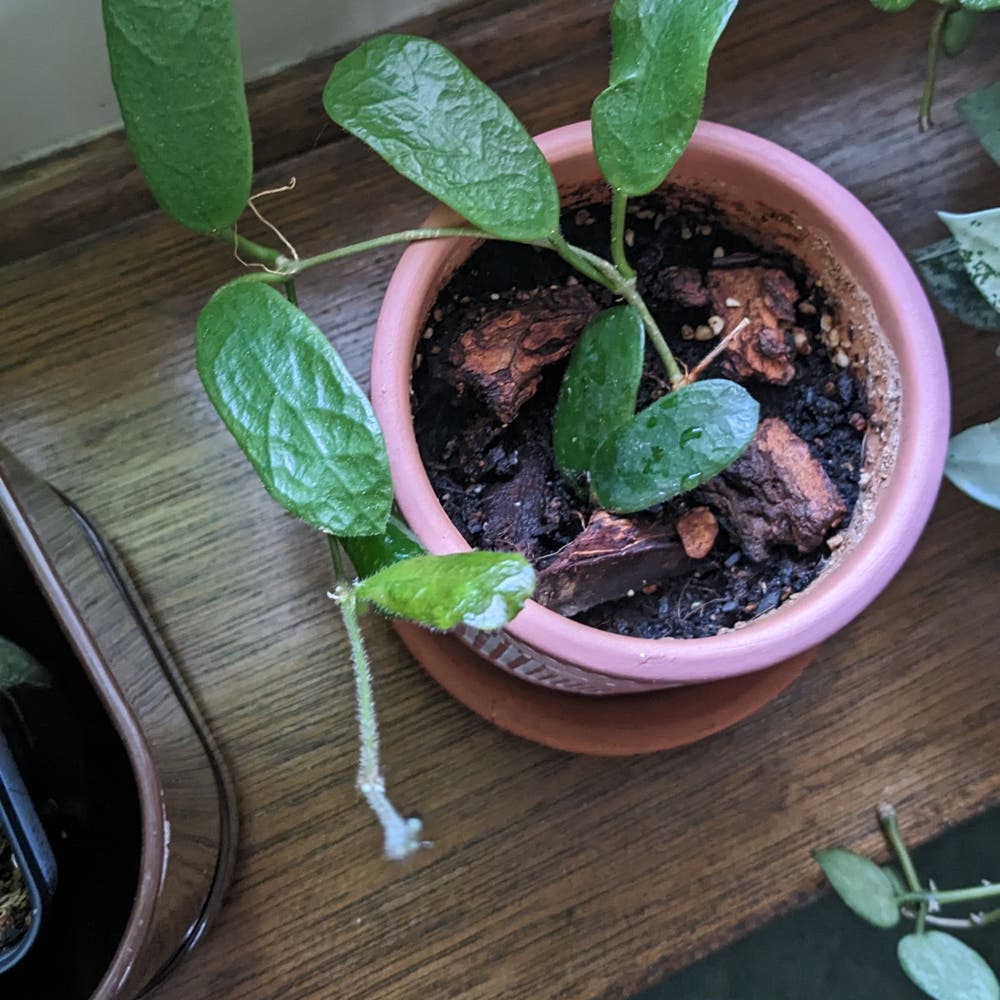
💧 Why Are My Hoya rotundiflora Leaves Mushy?
Hoya rotundiflora
By the Greg Editorial Team
Jun 18, 2024•5 min read
This article was created with the help of AI so we can cover more plants for you. May contain errors. See one? Report it here.
Solve the mushy leaf mystery 🌿 in your Hoya rotundiflora and secure its thriving growth.
- Overwatering causes mushy leaves, while underwatering leads to crispy leaves.
- 🌱 Use moisture meter or finger test to perfect watering routine.
- Well-draining soil and pot choice prevent future mushiness.
Spotting the Trouble: Signs Your Hoya rotundiflora Has Mushy Leaves
🚰 Recognizing Overwatering Symptoms
Soggy soil is your first clue that you're overdoing it with the watering can. When your Hoya rotundiflora's pot feels like it's been through a flood, it's time to rethink your approach. Mushy leaves that resemble overripe fruit are a distress signal from your plant; they're a classic symptom of too much water.
To test for over-saturation, stick a finger into the soil. If it feels like a wet sponge and clings to your skin, that's a red flag. A heavy pot is another sign that your plant is sitting in too much moisture. And if there's a foul smell coming from the soil, that's the stench of root rot setting in.
🏜️ Underwatering vs. Overwatering
It's a fine line between too much and too little. Underwatered Hoya rotundiflora leaves turn crispy and wrinkled, like they've been left out in the sun too long. Overwatered leaves, on the other hand, are soft and yellowing or brown, and they may even develop black or brown fungal spots.
Understanding the contrast is crucial because the remedy for each is vastly different. While underwatering calls for a good soak, overwatering requires you to let the soil dry out. Both conditions can lead to leaf drop, but for different reasons: underwatering causes the plant to conserve water, while overwatering can lead to root rot.
The role of watering in leaf health cannot be overstated. Your Hoya rotundiflora's leaves are like mood rings, reflecting the plant's overall well-being. Pay attention to their texture, color, and firmness, and you'll keep your Hoya happy and hydrated—just right.

The Watering Balancing Act: Getting It Just Right
💧 Fine-Tuning Your Watering Routine
Adjusting the frequency and volume of watering your Hoya rotundiflora is crucial. Overzealous hydration can lead to mushy leaves, while stinginess can leave your plant parched. It's about reading the room—or pot, in this case.
During spring and summer, your Hoya is in its growth spurt, craving more water. But when winter rolls around, it's more of a couch potato, needing less. Think of it as a seasonal watering wardrobe change.
🌡️ The Right Way to Check Soil Moisture
Ditch the guesswork with a moisture meter; it's like a plant's thirst-o-meter. Or go old-school: stick your finger in the soil. If it's dry a couple of inches down, it's time for a drink. If it's damp, put the watering can down.
Remember, your Hoya's roots need to breathe. Well-draining soil is non-negotiable. If the soil feels like a wrung-out sponge, you're in the Goldilocks zone—moist but not waterlogged. Keep it consistent, and your Hoya will thank you with vibrant leaves.

When the Damage Is Done: Salvaging Your Hoya
🌱 Pruning Away the Damage
Pruning is not just a cosmetic procedure; it's vital for your Hoya's recovery. When leaves turn to mush, they're beyond saving. Snip them off. Use clean, sharp scissors to cut just above a healthy node. This redirects the plant's energy to the remaining healthy tissue, fostering regrowth.
🏺 The Repotting Rescue
Repotting is like hitting the reset button on your Hoya's living conditions. Do this if the roots have started to rot or if the soil is not draining properly. Carefully remove your plant from its current pot, shaking off the old soil to inspect the roots. Cut away any soft, brown roots until you're left with firm, white ones.
Choosing the Right Soil
For the new soil mix, consider a blend of half potting soil and half succulent & cactus mix, with a sprinkle of coco coir and compost for good measure. This creates an airy, well-draining environment that roots love.
Repotting Steps
- Water your Hoya a few days before repotting to reduce stress.
- Choose a new pot with drainage holes—slightly larger than the current one.
- Fill the pot with the fresh soil mix and replant your Hoya.
- Water immediately after repotting to help the soil settle.
Remember, repotting is a traumatic event for plants. Give your Hoya time to adjust to its new home before expecting any significant growth.

Keeping the Mush Away: Prevention Tips
💧 Watering Wisdom: Less Is Often More
Watering your Hoya rotundiflora is a delicate dance. Overwatering is the fast track to mushy leaves. Establish a routine that's responsive to the plant's needs, not the calendar. Check the soil's moisture before watering—dry to the touch is your green light. Remember, the plant's thirst, not your schedule, dictates when it's time to water.
🌱 Soil and Pot Perfection
Soil is the unsung hero in the fight against mushiness. Choose a mix that's chunky and quick to drain—think perlite or coarse sand for that extra oomph in aeration. Pots are more than decorative; they're functional. Ensure yours have drainage holes to avoid soggy soil scenarios. If you're pot's as watertight as a submarine, it's time for a swap or a drill intervention.
⚠️ Safety First
This content is for general information and may contain errors, omissions, or outdated details. It is not medical, veterinary advice, or an endorsement of therapeutic claims.
Always consult a qualified healthcare professional before using any plant as food, medicine, or supplement.
Never eat any plant (or feed one to pets) without confirming its identity with at least two trusted sources.
If you suspect poisoning, call Poison Control (800) 222-1222, the Pet Poison Helpline (800) 213-6680, or your local emergency service immediately.
Spotted an error? Please report it here.
Prevent overwatering woes and keep your Hoya rotundiflora's leaves perfectly plump with Greg's custom watering plan 🌿, tailored to your plant's unique needs and home environment.