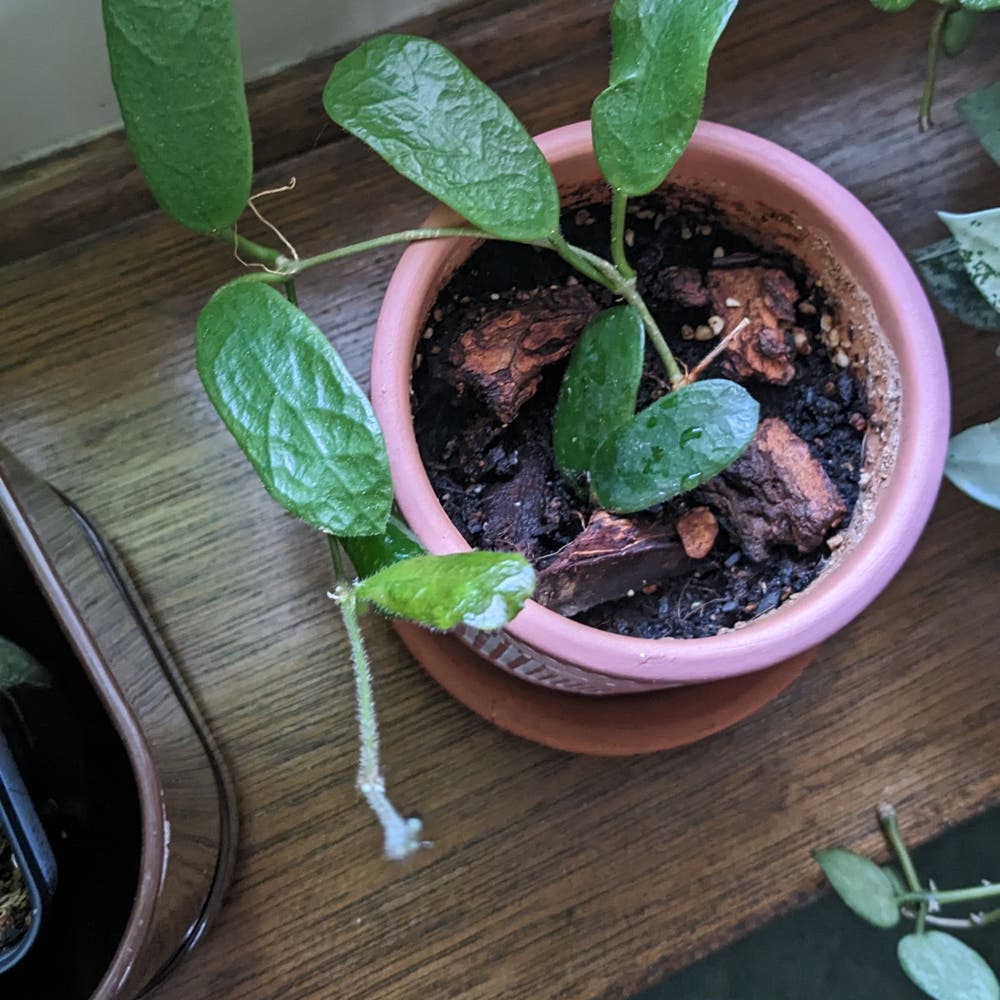
Why Are My Hoya rotundiflora Leaves Falling Over?
Hoya rotundiflora
By the Greg Editorial Team
Jun 18, 2024•5 min read
This article was created with the help of AI so we can cover more plants for you. May contain errors. See one? Report it here.
Prevent your Hoya's leafy despair 🍂 by mastering its need for perfect sips of water, rays of light, and cozy temps.
- Droopy leaves mean distress; overwatering and underwatering are common culprits.
- 🌞 Bright, indirect light is key; adjust seasonally and consider grow lights.
- Steady 60-95°F climate prevents droop; protect from drafts and temperature swings.
Spotting the Signs: When Your Hoya's Leaves Start to Droop
🍃 Identifying Droopy Leaves: What to Look For
Droopiness in Hoya rotundiflora leaves is like a cryptic text from a friend—it means something's up, but you'll need to dig deeper. Look for leaves that hang lower than your energy on a Monday morning. They might also feel softer than usual, like they've lost their will to stand up straight. If your Hoya's leaves are more limp than a forgotten salad, it's a sign they're not just relaxing—they're in distress.
🎵 The Difference Between Natural Leaf Behavior and Signs of Distress
Hoya leaves have a natural rhythm, like a good playlist—they'll move and groove a bit as they grow. But when they start to look as sad as a song by The Smiths, it's time to pay attention. Natural behavior includes slight variations in leaf positioning and firmness. However, when you've got leaves that are as droopy as a teenager at 7 AM on a school day, that's your cue something's wrong. Discoloration, spotting, or leaves that feel like they've given up on life are red flags, signaling it's time to troubleshoot.

Water Woes: Too Much or Too Little
🌊 Overwatering Havoc
Overwatering is a silent assailant for your Hoya rotundiflora, leading to droopy, discolored leaves. Yellowing or blackened foliage and a general wilted appearance are your cues to reevaluate your watering habits.
To rescue your Hoya from the clutches of soggy soil, first let the earth dry out. If the roots have turned soft and brown, it's time for some gentle root pruning. Then, ensure your plant is in a breathable environment to prevent future waterlogging.
💧 The Perils of Underwatering
Conversely, underwatering turns your Hoya into a drama queen with leaves as limp as yesterday's leftovers. If the soil feels as dry as a bone and the pot is suspiciously light, your plant is screaming for a drink.
For a quick hydration fix, immerse your Hoya in water until the soil is evenly moist, not drenched. Going forward, adopt a Goldilocks approach to watering—consistent but moderate, ensuring the soil's moisture is just right.

Let There Be Light: Finding the Sweet Spot
🌿 The Role of Light in Leaf Stability
Bright, indirect light is the mantra for Hoya rotundiflora enthusiasts. It's the plant's version of a shady retreat on a sunny day. Too much direct sunlight, and you risk a sunburned Hoya; too little, and you'll have a stretching, leggy plant on your hands. It's a delicate balance, but getting it right means the difference between a thriving plant and one that's just surviving.
🔄 Adjusting Your Hoya's Sunbathing Schedule
Start by assessing your current setup. Is your Hoya soaking up rays like it's on a beach vacation, or is it hidden away in a dim corner? Rotate your plant regularly to ensure even light distribution, preventing the all-too-common one-sided growth. As the seasons change, so should your plant's position—what's ideal in spring might be excessive in summer. If you're tech-inclined, consider using a light meter app to eliminate the guesswork.
💡 Supplementing with Artificial Light
If your home is more dungeon than sunroom, don't despair. Grow lights can be a game-changer, offering a steady source of light without the risk of sunburn. Just remember, moderation is key; you're aiming for a light supplement, not a plant disco.
🌅 Seasonal Light Adjustments
Keep in mind the sun's shifting patterns throughout the year. The gentle morning light in summer can be a soothing balm for your Hoya, while the harsh midday rays can be downright brutal. Adjust your plant's location to avoid the peak intensity of the sun, especially during those scorching summer months.
💡 Light Levels and Growth Signals
Your Hoya's leaves are like a mood ring, subtly signaling their contentment or distress. New growth and the occasional flower spike are your rewards for nailing the light conditions. Conversely, faded, yellowing, or crispy leaves are distress flares, urging you to reassess your light strategy.

Keeping the Chill at Bay: Temperature and Your Hoya
🌡️ Understanding How Temperature Affects Your Hoya's Posture
Hoya rotundiflora leaves drooping could be a temperature tantrum. These plants prefer a steady climate, not a rollercoaster of conditions. 60-95°F (15-35°C) is the sweet spot for these tropical beauties. Too cold, and you'll see leaves curling like they're hugging themselves warm. Too hot, and they'll start to look like they're wilting from a fever.
🛡️ Strategies for Maintaining the Ideal Climate for Firm Leaves
Draft-proof your space to keep the cold out. Use thermal curtains or seal windows to combat the chill. Keep your Hoya away from air conditioning vents, which are like kryptonite to their tropical souls.
🥶 Combat the Cold
When winter hits, move your Hoya away from leaky windows and ensure heaters aren't scorching them. A gentle heat source, like an oil heater, can keep the temperature consistent. Just don't let it turn your plant into toast.
🛋️ Keep It Cozy
Aim for a room temperature between 60-75°F. A little cooler in winter is fine, but never let it drop below 50°F. Sudden temperature drops are the enemy—avoid them like bad habits.
💡 Quick Tips
- Use a thermometer to monitor room temperature.
- Group plants together to create a microclimate.
- Consider a humidifier if the air is drier than a comedian's wit.
- Good airflow is crucial, but avoid drafts. Use fans to circulate air without creating a wind tunnel.
Remember, your Hoya's comfort is key. Keep it stable, and you'll have a plant that stands tall and proud, without a droop in sight.
⚠️ Safety First
This content is for general information and may contain errors, omissions, or outdated details. It is not medical, veterinary advice, or an endorsement of therapeutic claims.
Always consult a qualified healthcare professional before using any plant as food, medicine, or supplement.
Never eat any plant (or feed one to pets) without confirming its identity with at least two trusted sources.
If you suspect poisoning, call Poison Control (800) 222-1222, the Pet Poison Helpline (800) 213-6680, or your local emergency service immediately.
Spotted an error? Please report it here.
Prevent droopy leaves and foster a thriving Hoya rotundiflora 🌱 with Greg's personalized care reminders for the perfect balance of water, light, and warmth.