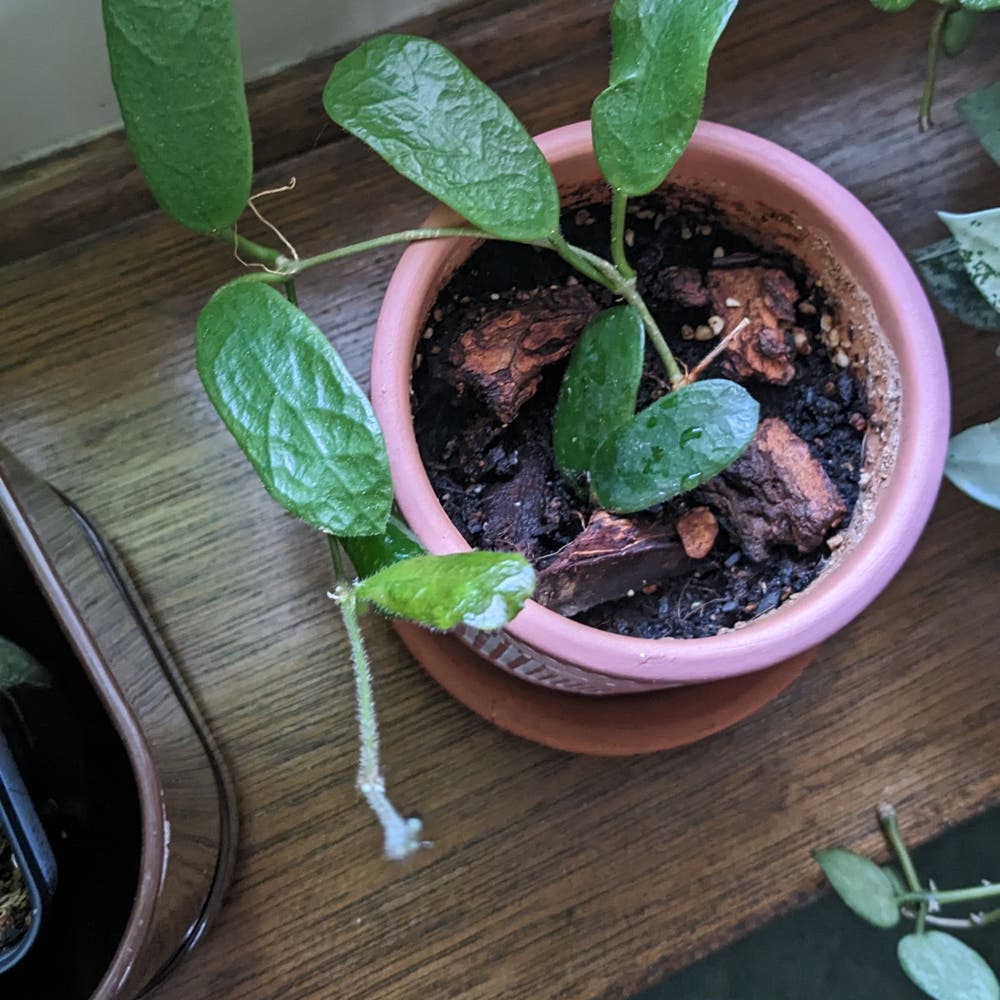
💧 Why Are My Hoya rotundiflora Leaves Droopy?
Hoya rotundiflora
By the Greg Editorial Team
Jun 18, 2024•5 min read
This article was created with the help of AI so we can cover more plants for you. May contain errors. See one? Report it here.
Perk up your Hoya's droopy leaves 🍃 by uncovering the root cause and learning the perfect fix!
- Droopy leaves signal care issues; check for yellowing, crispiness, and pests.
- Watering woes? Check top two inches of soil before watering.
- Bright, indirect light and stable temps between 60-75°F are ideal.
Spotting the Trouble: Signs Your Hoya rotundiflora is Unhappy
🚩 Telltale Symptoms of Droopy Leaves
Droopy leaves on a Hoya rotundiflora scream "I'm not okay!" Persistent droopiness is a distress signal, not a plant trying to be dramatic. If the leaves hang like a deflated balloon, especially after watering, it's intervention time. Look for other distress signals too—discoloration or stunted growth can indicate a more serious issue.
🕵️ Quick Checks to Assess Plant Health
Before you panic, do a quick health check. Yellowing leaves or spotting? Could be overwatering. Leaves crispier than your favorite chips? Probably underwatering. Check the soil with the finger test—if it's clingy, skip the water. If it's dry, it's time to hydrate. Peek under the leaves for pests; they're sneaky and can cause droopiness too. Remember, consistency in care is like brushing your teeth—it's all about the routine.

The Usual Suspects: Pinpointing the Cause
💧 Water Woes: Too Much or Too Little
Droopy leaves on your Hoya rotundiflora can scream overwatering or whisper underwatering. Overwatered soil feels like a wet blanket, heavy and suffocating. The leaves? They're as limp as overcooked noodles. On the flip side, underwatering leaves the soil drier than a stale cracker, and the plant's leaves wrinkled like laundry forgotten in the dryer.
Identifying the Signs of Improper Watering
Check the soil's top two inches; if it's dry, it's time for a drink. If it's soggy, hold off on the watering can. Your Hoya's roots need to breathe, not swim.
Fine-tuning Your Watering Routine
Consistency is key. Water when the soil is dry, not on a set schedule. Think of it as checking your fridge before grocery shopping—don't add water if there's enough moisture already.
Light and Shadow Play
Hoya rotundiflora thrives in bright, indirect light. Too much sun and you'll have a crispy plant on your hands. Too little, and it's as if your Hoya is stuck in a perpetual state of the Mondays—sluggish and unenthused.
Understanding the Light Needs of Hoya rotundiflora
If the leaves are fading, it's a cry for more light. But remember, direct sunlight is a no-go; it's like putting your plant in a tanning bed with no protective goggles.
Adjusting Light Conditions to Perk Up Your Plant
Shift your Hoya to a spot where the light is just right—think of it as moving to the sweet spot between the AC and the heater.
Climate Control: Temperature and Humidity Factors
Your Hoya's comfort zone is a steady 60-75°F (15-24°C). Drafts and temperature swings are as welcome as a skunk at a lawn party.
Recognizing the Impact of Environmental Changes
Keep your Hoya away from cold drafts or hot vents. Sudden changes in temperature can shock your plant more than an unexpected plot twist in your favorite series.
Creating the Ideal Microclimate for Your Hoya
Humidity is your Hoya's best friend. Aim for a tropical vibe—a pebble tray or a misting session can make all the difference. It's like giving your plant a mini spa day, every day.

First Aid for Your Hoya: Immediate Solutions
💦 Rescuing Overwatered Roots
Stop watering immediately if you suspect overwatering. Move your Hoya to a brighter spot to help the soil dry out faster. If the roots are mushy or blackened, it's time for surgery: remove the plant, trim off the rotten roots, and repot in fresh, well-draining soil. Sanitize the pot to prevent reinfection. A terracotta pot is a good call for its breathability.
🏜️ Thirst-Quenching Tips for Underwatered Plants
Underwatered? Your Hoya's leaves will feel like a crisp fall leaf, not a limp salad green. When the top inch of soil is drier than a stand-up comedian's wit, water deeply. But don't drown the poor thing; let it sip, not gulp. Consistency is key—water when the soil is dry, not on a rigid schedule.
🌞 Adjusting Light and Environment
Lighting should be like a cozy reading nook, not a tanning bed. Bright, indirect light is your Hoya's jam. If it's stretching out like it's doing morning yoga, it needs more light. Too much sun, and it'll get a sunburn—move it away from direct rays. Temperature-wise, think spring day, not Sahara noon or Arctic night. Keep it in the Goldilocks zone: not too hot, not too cold. Humidity? They like it more humid than a British comedy.

Keeping Your Hoya Happy: Long-Term Prevention
💧 Crafting the Perfect Care Routine
Creating a consistent watering and care schedule is like setting a rhythm for your Hoya rotundiflora's life. Rotate your plant to ensure even growth and prevent it from developing a hunchback. If your home's lighting is more like a dungeon, consider a grow light to simulate the sun's embrace. Keep the light exposure as regular as your morning routine.
🌱 Monitoring Your Plant's Response to Changes
Your Hoya is a living barometer, subtly signaling its needs. Observe changes in leaf texture and color. Adjust your care tactics accordingly, just as you would swap a sweater for a tee with the changing seasons.
👀 Vigilance and Adaptation
Stay on your toes for early warning signs of distress. A droopy leaf here, a yellow spot there – these are your Hoya's cries for help. Adapt your care routine as your plant matures, because what worked for a juvenile Hoya might not cut it for a full-grown specimen.
🌿 Adapting Care Practices as Your Hoya Grows
As your Hoya grows, its needs will evolve. It's like upgrading from a tricycle to a bike – you need to shift gears. Tweak your watering and feeding schedule as your plant ages, and don't shy away from repotting when it's time for a bigger home.
⚠️ Safety First
This content is for general information and may contain errors, omissions, or outdated details. It is not medical, veterinary advice, or an endorsement of therapeutic claims.
Always consult a qualified healthcare professional before using any plant as food, medicine, or supplement.
Never eat any plant (or feed one to pets) without confirming its identity with at least two trusted sources.
If you suspect poisoning, call Poison Control (800) 222-1222, the Pet Poison Helpline (800) 213-6680, or your local emergency service immediately.
Spotted an error? Please report it here.
Revive your Hoya's droopy leaves 🍃 with Greg's tailored care reminders, ensuring you water just right and keep the vibes high for your plant's best health.