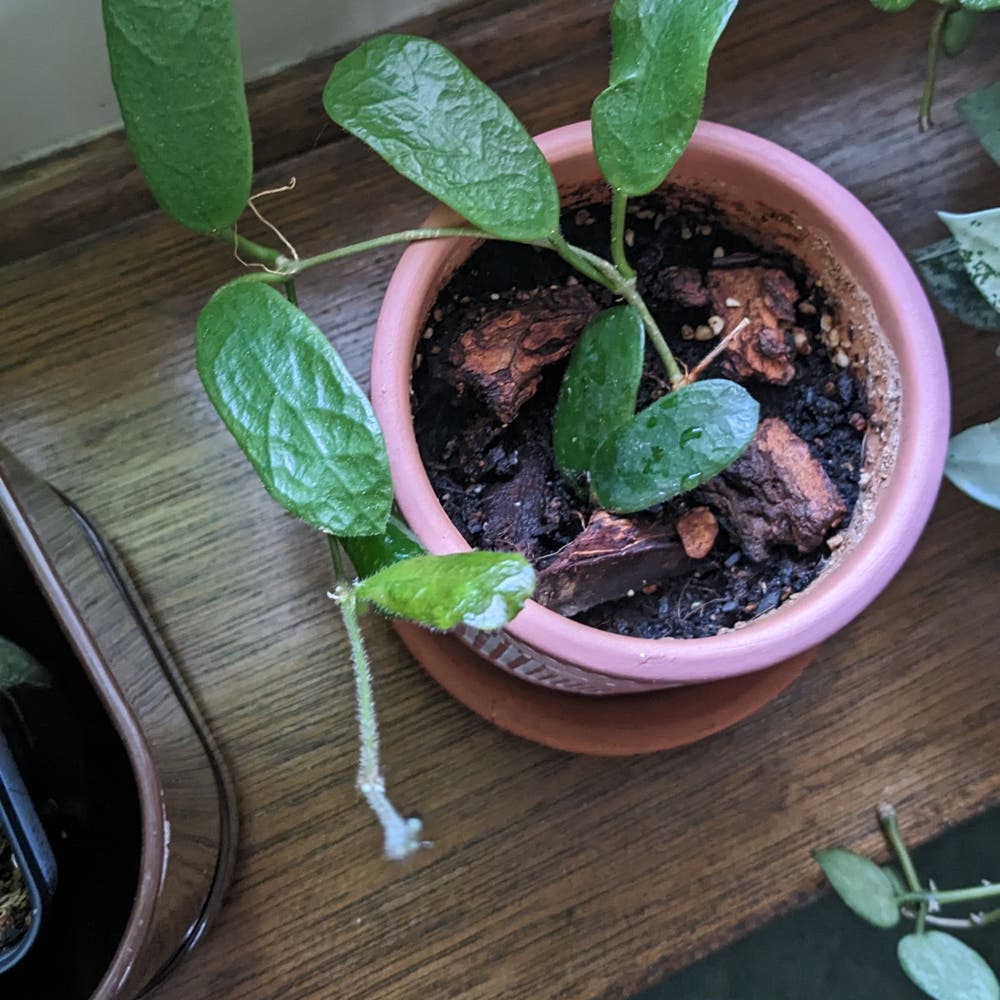
🌞 My Hoya rotundiflora's Sunlight Needs
Hoya rotundiflora
By the Greg Editorial Team
Jun 18, 2024•3 min read
This article was created with the help of AI so we can cover more plants for you. May contain errors. See one? Report it here.
Nurture your Hoya rotundiflora to lush perfection 🌿 with the ultimate guide to balancing its sunlight needs for vibrant blooms. 🌞
- Bright, indirect light is key for Hoya rotundiflora's health and blooms.
- 🌞🌱 Avoid direct sun to prevent leaf damage; use sheer curtains for protection.
- Grow lights help, especially with a timer to mimic natural sunlight rhythms.
Soaking Up the Right Rays Indoors
🌞 Finding the Sweet Spot for Indoor Light
Hoya rotundiflora thrives in bright, indirect light. To replicate its natural habitat, place it near an east-facing window where it can soak up gentle morning rays. Direct afternoon sun is a no-go; it can turn those lush leaves into crispy critters.
💡 Grow Lights: Giving Your Hoya a Boost
When your Hoya's not getting enough solar love, grow lights can save the day. They're like a personal sun for your plant, minus the risk of sunburn. Opt for fluorescent lamps or LEDs; they offer full-spectrum light without cranking up the heat. Hang them 12-24 inches above your plant and use a timer to mimic the sun's natural rhythm.

Taking Your Hoya Outside
🌞 Outdoor Light: A Balancing Act
Transitioning your Hoya rotundiflora to outdoor life is like upgrading from a home theater to the cinema—more dramatic and immersive, but with a need for strategic seat selection. Bright, indirect light is the VIP zone; think dappled sunlight under a leafy tree or a softly lit porch.
Start the acclimation process by placing your Hoya in a shaded area and gradually move it to a spot with more light over several days. This avoids the botanical equivalent of diving headfirst into an ice bath—shocking and ill-advised.
🌦️ Weather Watch: Protecting Your Hoya
Your Hoya's leaves are its pride and joy—keep them from crisping up like overdone toast with some sun shield action. A canopy or sheer curtain can serve as a parasol against the harsh midday sun.
When the weather throws a tantrum, be it a scorching heatwave or a chilly night, consider a protective cover. A frost blanket or a simple sheet can fend off temperature extremes. Remember, your Hoya is more a fan of consistency than surprises. Keep an eye on the forecast and be ready to play bodyguard against Mother Nature's mood swings.

Light and Blooms: A Quick Peek
💡 Encouraging Flowers with Light
Hoya rotundiflora's blooming is directly tied to its light exposure. To coax out those elusive flowers, bright, indirect light is your best bet. It's like giving your plant a VIP pass to the best spot in the house, where the light is just right—not too harsh, not too dim.
Grow lights can be a game-changer, especially during the darker months. Full-spectrum bulbs are ideal, simulating a slice of the sun's spectrum to encourage flowering. Set them on a timer to mimic natural day and night cycles, because plants, like us, thrive on routine.
💡 Adjusting Light for Optimal Flowering
Adjusting light conditions for your Hoya rotundiflora is a delicate operation. Aim for consistency once buds appear; any major changes can lead to bud drop—a real heartbreaker. If you're using artificial light, dial it up to 12-14 hours a day, but don't go overboard. Think of it as a plant's daily dose of caffeine—too much and it gets jittery, too little and it's sluggish.
Remember, when you ramp up the light, don't forget to water accordingly. Your plant will be thirstier with all that extra light. Keep the soil moist, but not soggy—nobody likes wet feet, not even your Hoya.

⚠️ Safety First
This content is for general information and may contain errors, omissions, or outdated details. It is not medical, veterinary advice, or an endorsement of therapeutic claims.
Always consult a qualified healthcare professional before using any plant as food, medicine, or supplement.
Never eat any plant (or feed one to pets) without confirming its identity with at least two trusted sources.
If you suspect poisoning, call Poison Control (800) 222-1222, the Pet Poison Helpline (800) 213-6680, or your local emergency service immediately.
Spotted an error? Please report it here.
Harness the power of Greg's PlantVision to find the ideal spot for your Hoya rotundiflora, ensuring it gets just the right amount of bright, indirect light 🌞 for those stunning blooms.