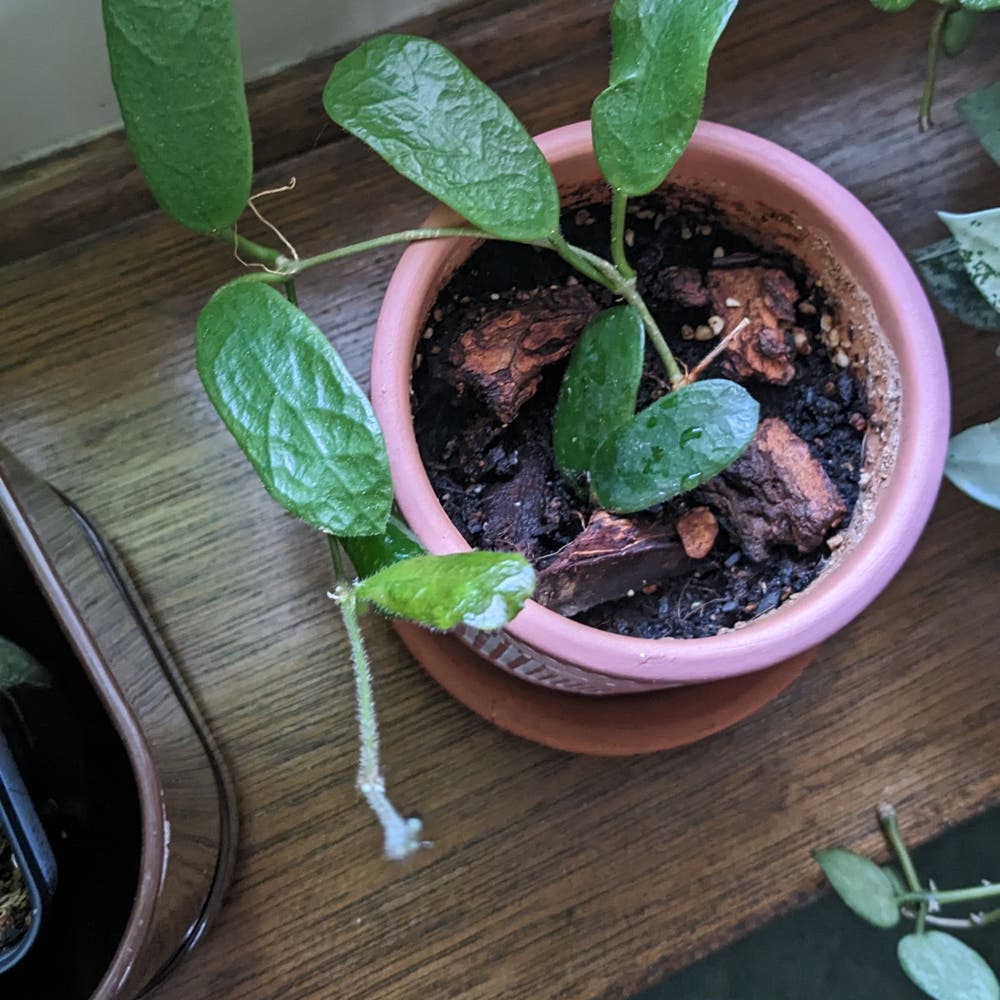
Why Are My Hoya rotundiflora Leaves Curling?
Hoya rotundiflora
By the Greg Editorial Team
Jun 18, 2024•5 min read
This article was created with the help of AI so we can cover more plants for you. May contain errors. See one? Report it here.
Unravel the mystery behind curling Hoya leaves 🍃 and learn to keep them perfectly flat and thriving!
- Curling leaves signal issues like over/underwatering, pests, and poor air conditions.
- Immediate action: Isolate plant, check soil moisture, and inspect for pests.
- Prevent with regular care: Check-ups, proper potting mix, and stable environment.
Spotting Trouble: Recognizing Leaf Curl in Hoya Rotundiflora
🍃 Visual Symptoms of Leaf Curling
Curling leaves in Hoya rotundiflora scream for attention, often hinting at deeper issues. Discoloration and texture changes accompany the drama, with leaves turning into tight scrolls of distress. Look for leaves that deviate from their usual lush, flat demeanor, indicating it's not just a phase.
🚨 Immediate Steps to Take
Upon spotting curled leaves, spring into action. Isolate your Hoya to prevent any potential spread of pests or diseases. Assess the soil moisture—too dry or too wet can both lead to a curling crisis. Examine the plant for other symptoms like yellowing or spotting, which can be the plant's way of waving a red flag.

The Usual Suspects: Common Causes of Leaf Curling
💧 Thirsty Roots or Drowning?
Watering your Hoya rotundiflora is a balancing act. Too much, and you risk root rot, signaled by leaves that are as limp as overcooked spaghetti. Too little, and the leaves curl inward, like a fist clenching in thirst. Aim for soil that's moist but not waterlogged, and let the top inch dry out before reaching for the watering can again.
🐜 Pests: Unwanted Guests Causing Havoc
Pests like spider mites and aphids are the bane of Hoya rotundiflora. These tiny critters suck the life out of leaves, leaving them curled and dejected. Regularly check the undersides of leaves and show pests the door with a blast of water or a dab of insecticidal soap.
🌬 When the Air Isn't Right
Your Hoya's leaves might curl if the air is as dry as a desert or as humid as a sauna. They prefer a Goldilocks zone of humidity—aim for a comfortable middle ground. Temperature swings are also a no-go; keep your plant away from drafts and direct heat sources to avoid leaf curling drama.

Nipping Problems in the Bud: Treatment Strategies
🐜 Eradicating Pests
Regular inspections are your first line of defense against pests. Catching these critters early can save your Hoya rotundiflora from becoming an all-you-can-eat buffet. If you spot trouble, isolate the plant to prevent a pest block party.
- Quarantine new plants to avoid introducing pests.
- Use a soapy water solution or neem oil as a gentle yet effective treatment.
- For more stubborn infestations, consider horticultural oils or miticides, but rotate treatments to prevent resistance.
- Sanitize your tools after pruning to prevent spreading any microscopic party crashers.
🌿 Adjusting Care Routines
Your Hoya's curling leaves might be crying out for a change in their care routine. It's not just about watering; it's about creating a stable environment that doesn't stress out your plant.
- Ensure the pot has adequate drainage and adjust watering to when the top inch of soil is dry.
- Promote good air circulation and avoid wetting the leaves to prevent fungal gatecrashers.
- Adjust lighting to provide bright, indirect light that mimics the dappled sunlight of the Hoya's natural habitat.
- Use a balanced, water-soluble fertilizer every few months to keep your Hoya nourished without overdoing it.
Remember, it's not needy; it just likes routine. Keep the care consistent, and your Hoya will thank you with flat, healthy leaves.

Keeping Your Hoya Happy: Prevention Tips
🕵️ Regular Check-ups
Vigilance is your Hoya's best friend. Schedule weekly inspections to catch any signs of distress early. Look for pests, check leaf health, and ensure the soil moisture is just right. It's like a weekly health check-up, but for your plant.
🏺 Creating the Perfect Home
Potting mix and drainage are the unsung heroes of Hoya health. Use a well-draining mix to keep those roots happy and breathing. Ensure your pot has drainage holes to prevent water from overstaying its welcome.
📦 The Right Container
Choose a pot that's snug but not tight—think cozy, not cramped. A size up from the current pot is usually a good bet. Remember, roots need room to grow, but too much space can lead to waterlogging.
🌡️ Temperature and Airflow
Keep your Hoya in a stable environment—60-75°F (15-24°C) is their comfort zone. Avoid drafts and direct heat sources; steady temperatures keep your Hoya stress-free. Good airflow prevents fungal issues, so let it breathe but not shiver.
💦 Humidity Matters
Hoyas love a bit of a tropical vibe. Aim for humidity that mimics a rainforest morning—think dew, not downpour. A pebble tray or humidifier can work wonders without turning your home into a sauna.
🌞 Light and Location
Bright, indirect light will make your Hoya's day. Too much sun is a no-no; think bright but not blinding. Find a spot where the light is consistent, and your Hoya will reward you with steady growth.
🚰 Watering Wisdom
Water when the top inch of soil feels dry. Use your finger or a moisture meter—no guesswork. Consistency is key; erratic watering is the root of all evil for Hoyas. Consider self-watering pots for a steady supply of moisture without overdoing it.
🍽️ Feeding Finesse
Feed your Hoya monthly during the growing season with a balanced fertilizer. It's like a monthly treat—nutritious but not overindulgent. Overfeeding is as bad as overwatering, so keep it moderate.
🌱 Steady as She Grows
Resist the urge to move your Hoya around. They thrive on consistency—find a good spot and let them settle in. Think of it as their forever home, at least for the season.
⚠️ Safety First
This content is for general information and may contain errors, omissions, or outdated details. It is not medical, veterinary advice, or an endorsement of therapeutic claims.
Always consult a qualified healthcare professional before using any plant as food, medicine, or supplement.
Never eat any plant (or feed one to pets) without confirming its identity with at least two trusted sources.
If you suspect poisoning, call Poison Control (800) 222-1222, the Pet Poison Helpline (800) 213-6680, or your local emergency service immediately.
Spotted an error? Please report it here.
Banish those curling leaves and ensure your Hoya rotundiflora thrives with Greg's 🌱 spot-on moisture monitoring and pest detection reminders, tailored just for your plant's needs.