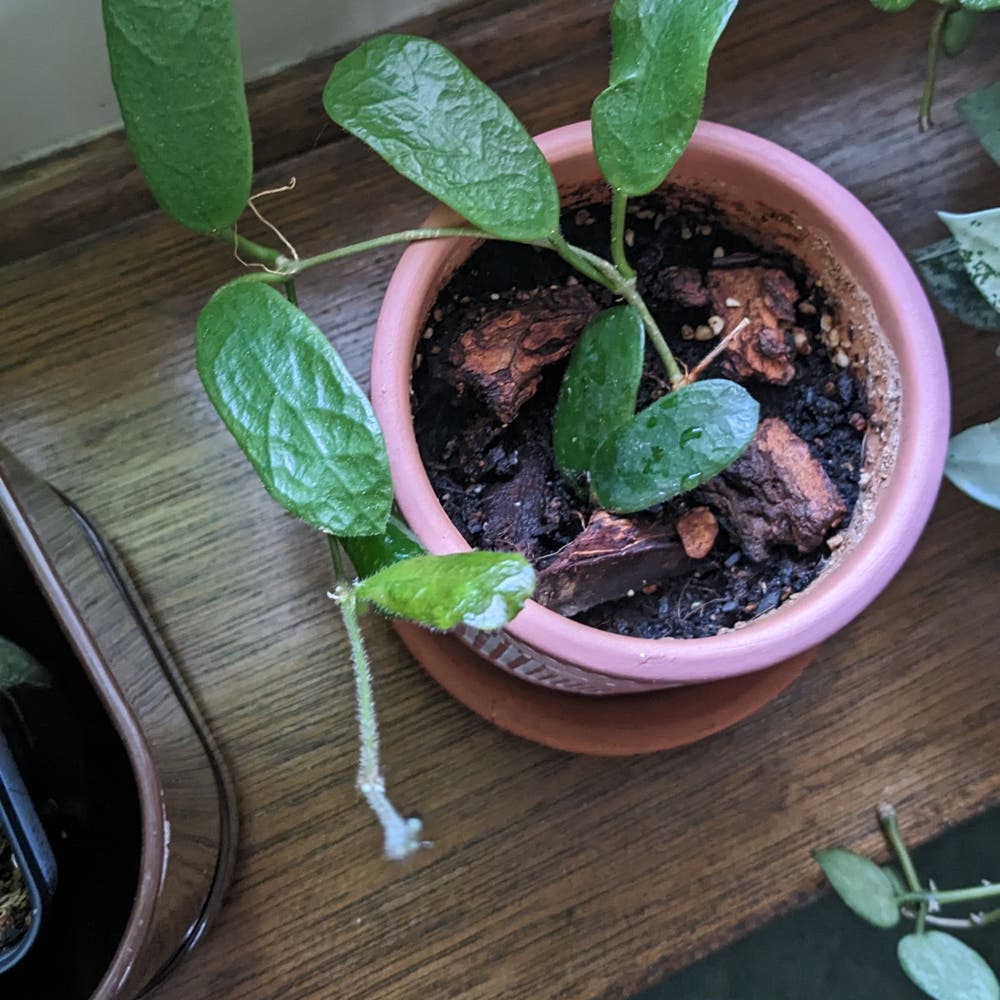
Common Hoya rotundiflora Problems
Hoya rotundiflora
By the Greg Editorial Team
Jun 18, 2024•4 min read
This article was created with the help of AI so we can cover more plants for you. May contain errors. See one? Report it here.
Safeguard your Hoya's health 🌿 from rot to pests with this essential troubleshooting guide!
- 🌧️ Over-watering leads to yellow leaves; let soil dry, then repot.
- 🌡️ Keep temperature stable between 60-75°F, away from drafts.
- 🌞🌱 Balance light exposure, protect from direct sun to prevent leaf scorch.
When Watering Goes Wrong: Over and Under-Watering
💦 Over-watering
Yellowing leaves and stems with the consistency of overcooked pasta are distress signals from an over-watered Hoya rotundiflora. The soil's scent might remind you of a musty basement—another red flag.
To stage a rescue, cease all watering immediately. If the roots look like they've seen better days (think blackened or mushy), it's time for surgery. Snip the damaged parts and give your plant a fresh start in well-draining soil. Let it experience a bit of drought before you reintroduce water; it's tough love, but it works.
🏜️ Under-watering
A Hoya pleading for water will have leaves drooping like they've just heard bad news, and tips as crispy as autumn leaves.
Revive with hydration, but don't drown it in your enthusiasm. Water it thoroughly, allowing excess to drain, and then let the soil approach dryness before the next watering. It's a balancing act—like a bartender mixing the perfect cocktail, you're aiming for just the right mix of wet and dry.

Light and Temperature: Finding the Sweet Spot
🌞 Irregular Light
Symptoms of too much or too little light on your Hoya can be glaringly obvious. Leaves that fade in color are silently screaming for more light, while those with a sunburnt look have had their fair share and then some.
Balancing act
Ensuring your Hoya gets just the right amount of light is like walking a tightrope, but without the risk of plummeting to your doom. Rotate your plant to prevent a lopsided growth tragedy and keep it in a spot where the sun gently kisses, not slaps.
🌡️ Inconsistent Temperature
Your Hoya's leaves are like mood rings, changing to tell you if they're too hot or too cold. A steady temperature is like comfort food for your plant—necessary and soul-soothing.
Keeping it cozy
Tips for maintaining ideal temperatures for Hoya rotundiflora are simple: keep it between 60-75°F (15-24°C). Avoid the drama of drafts and the shock of sudden temperature changes. Think of your Hoya as a guest that never leaves; make it feel at home.

The Unseen Invaders: Pests and Diseases
🐛 Pests
Identifying Common Pests in Hoya rotundiflora
Hoya rotundiflora, while resilient, isn't immune to the sneaky critters that treat plants like all-you-can-eat buffets. Aphids, mealybugs, and spider mites are the usual suspects. They leave behind sticky residue, cotton-like clumps, or pale, stippled leaves. Vigilance is key; a regular plant inspection can save your Hoya from becoming an insect nursery.
🚫 Safe and Effective Pest Control Strategies
When you spot these pests, it's time for action. Insecticidal soap or neem oil are your go-to bouncers, showing pests the exit without harsh chemicals. Apply with a targeted approach, focusing on the undersides of leaves where bugs love to hide. Remember, overdoing it can harm your plant, so follow the less-is-more philosophy.
🍄 Mold/Fungus and Root Rot
Spotting Mold and Signs of Root Rot
Mold and root rot are the party poopers in your Hoya's life. Fuzzy growth or a musty smell in the soil are your red flags. If the base of your plant feels soft or looks blackened, it's a distress signal. These issues often stem from overwatering, so reassess your watering routine post-haste.
💔 Recovery Roadmap: Eradicating Mold and Saving Rotting Roots
To tackle root rot, a tough love approach is necessary. Remove the plant, cut away the rotted roots, and repot in fresh, well-draining soil. For mold, increase airflow and consider a fungicide if things look grim. Prevention is your best defense; keep those leaves dry and ensure your Hoya's soil is never soggy.

Environmental Stress: Leaf Scorching and Drafts
🌞 Leaf Scorching
Burn notice: Your Hoya's leaves can signal an overdose of sunlight. Look for brown patches or a bleached appearance as a cry for help.
Shade and shelter: Counteract the sun's intensity by relocating your plant to a spot with indirect light or use sheer curtains to act as a sunscreen. Consider a shade cloth if your Hoya can't move from its sunny spot.
❄️ Drafts and Temperature Fluctuations
Feeling the chill: Drafts can cause your Hoya's leaves to wilt or display discoloration. It's like your plant is shivering and throwing a fit at the same time.
Draft-proofing: Keep your Hoya away from unpredictable areas like open windows or air conditioning vents. Aim for a stable room temperature, avoiding the drama of sudden changes. Stability is your Hoya's best friend when it comes to temperature.
⚠️ Safety First
This content is for general information and may contain errors, omissions, or outdated details. It is not medical, veterinary advice, or an endorsement of therapeutic claims.
Always consult a qualified healthcare professional before using any plant as food, medicine, or supplement.
Never eat any plant (or feed one to pets) without confirming its identity with at least two trusted sources.
If you suspect poisoning, call Poison Control (800) 222-1222, the Pet Poison Helpline (800) 213-6680, or your local emergency service immediately.
Spotted an error? Please report it here.
Achieve Hoya rotundiflora perfection by relying on Greg's tailored care alerts ⚖️ to strike the right balance of watering, lighting, and temperature, avoiding common pitfalls for a flourishing plant.