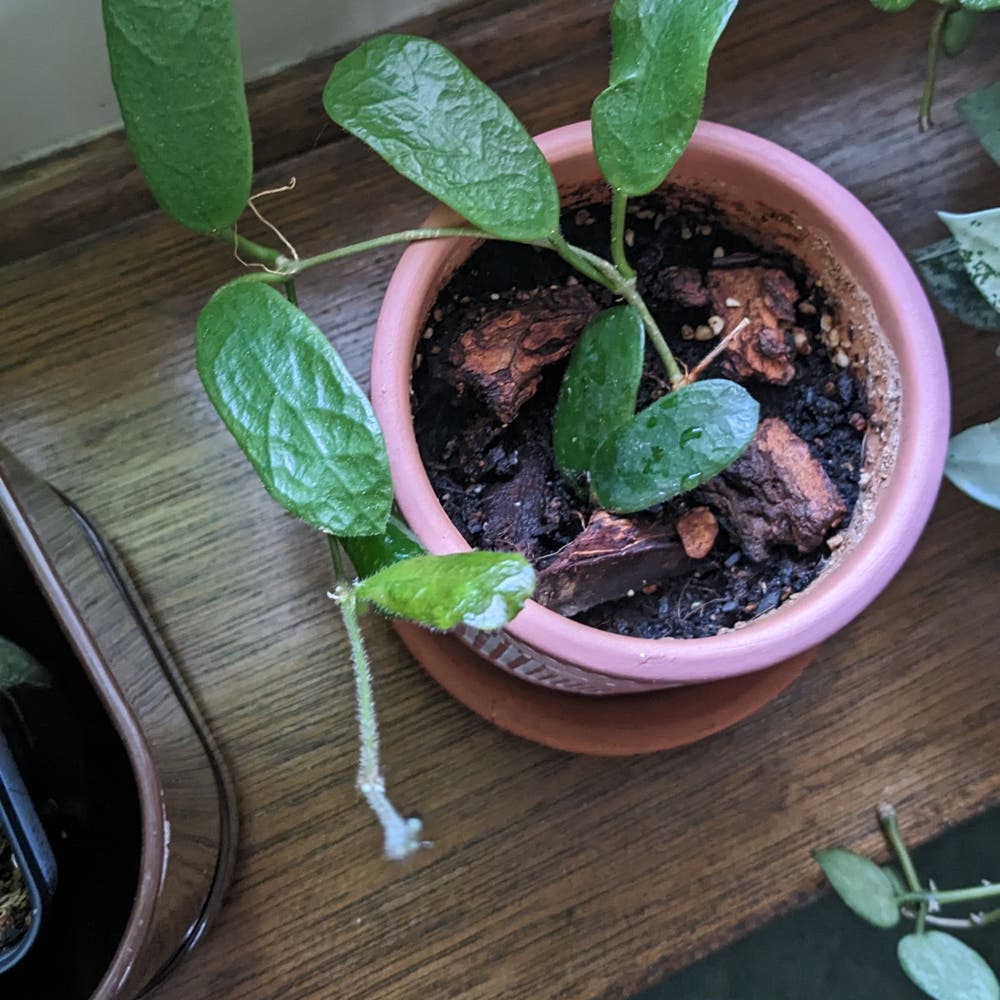
🌞 Is My Hoya rotundiflora Getting Too Much Direct Sunlight?
Hoya rotundiflora
By the Greg Editorial Team
Jun 18, 2024•4 min read
This article was created with the help of AI so we can cover more plants for you. May contain errors. See one? Report it here.
Shield your Hoya from too much sun and achieve the perfect leafy glow with these savvy tips. 🌞🌱
- 🌞 Direct sunlight affects Hoya health; yellowing or crispy leaves signal too much sun.
- 🧭 Window direction matters; adjust for seasonal sunlight changes.
- 🛡️ Protect with gradual acclimation and sunlight buffers like sheers.
When Sun Kisses Leaves: Hoya rotundiflora and Direct Sunlight
🌞 What Does Direct Sunlight Mean for Your Hoya?
Direct sunlight is the unfiltered VIP pass to the sun’s rays, while indirect light is more of a general admission ticket, offering a less intense experience. Your Hoya rotundiflora's leaves are like mood rings, changing to show you if they're getting the right light. Yellowing or crispy edges? That's a cry for less sun. Lush and green? You've nailed it.
🌞 Can Hoya rotundiflora Soak Up the Sun?
Spoiler alert: Hoya rotundiflora isn't a sun worshipper. It prefers a gentle glow over a full-on solar blast. Think of it as preferring a cozy reading nook by the window rather than a beach towel in the midday sun. Too much direct light and your Hoya might throw a fit, with leaves turning as yellow as a school bus or as brown as a toasted marshmallow. Keep it cool, and your Hoya will thank you with starry blooms and vibrant foliage.

The Window Compass: Navigating Sunlight in Your Home
🌞 The Direction Dilemma: Which Windows Work Best?
Navigating your home's sunlight can feel like a game of Tetris, where the pieces are your Hoya rotundiflora and the playfield is your window setup. Window direction is the cheat code. In the Northern Hemisphere, south-facing windows are the jackpot, dishing out generous sunlight servings. Flip the script if you're down under in the Southern Hemisphere—north-facing windows are where it's at. East-facing windows? They're the gentle morning wake-up call, while west-facing ones pack a punch in the afternoon. And north-facing windows (or south in the Southern Hemisphere), they're the dimly lit backstage, ideal for plants that prefer the shade.
🌍 Hemisphere Hacks: Seasonal Sunlight Strategies
Your Hoya's sunbathing routine should adapt to the Earth's tilt—seasons change, and so should your plant care strategy. Seasonal shifts mean the sun's path plays hopscotch across the sky throughout the year. In summer, your plant might be living its best life with the extended daylight, but come winter, it's a different story. Keep an eye on the sun's low winter arc—your Hoya might need to scooch closer to the window to catch those elusive rays. Remember, it's not just about the window direction; it's about the time of year, too. Stay observant, stay flexible, and your Hoya will stay golden.

Sunburn and Sunniness: Recognizing Hoya Health Signs
🌞 Spotting Trouble: When Your Hoya Says 'Too Much!'
Crispy, brown patches on your Hoya rotundiflora's leaves are the plant's version of a sunburn. It's a clear sign that your green buddy has had more than its fair share of direct sunlight. If the leaves look like they've been through a desert without sunscreen, it's time to rethink your light strategy.
Yellow leaves can be deceptive; they might scream nutrient deficiency, but often they're just shading their disdain for too much sun. If the yellowing is more like a bad tan—uneven and obvious—it's likely a sun issue, not a diet one.
🎚️ The Adjustment Game: Balancing Sunlight Exposure
Adjusting your Hoya's sun exposure is like fine-tuning a delicate instrument. Rotate your plant regularly to ensure even light distribution and prevent the Hoya equivalent of a farmer's tan. If your Hoya's leaves are reaching out like they're trying to grab the sun, they're actually begging for more light.
When you've gone too far and your Hoya is throwing shade by showing signs of sun stress, it's time to move it to a spot with bright, indirect light. Think of it as relocating your plant to a spa after a rough day at the beach. No direct sunbathing—your Hoya isn't trying to tan, it's trying to thrive.

Shielding Your Hoya from the Scorch: Practical Tips
🌞 Gradual Tans are the Plan: Acclimating to Sunlight
Your Hoya rotundiflora isn't a beach bum—it can't handle a full day of sun without a warm-up. Start slow. Begin with a spot that gets a soft glow of morning light, and gradually increase its sun time over a few weeks. This way, you're giving it a taste of the sun-kissed life without the burn.
🕶 Creating Sunlight Buffers: Safeguarding with Sheers and Shades
Think of sheer curtains as sunglasses for your Hoya. They cut the glare, not the view. Hang them up if your windows are a bit too enthusiastic with the light. No sheers? No problem. A strategically placed bookshelf or a frosted window film can also soften those rays. Remember, your Hoya's leaves are its skin—protect them like you would your own.
⚠️ Safety First
This content is for general information and may contain errors, omissions, or outdated details. It is not medical, veterinary advice, or an endorsement of therapeutic claims.
Always consult a qualified healthcare professional before using any plant as food, medicine, or supplement.
Never eat any plant (or feed one to pets) without confirming its identity with at least two trusted sources.
If you suspect poisoning, call Poison Control (800) 222-1222, the Pet Poison Helpline (800) 213-6680, or your local emergency service immediately.
Spotted an error? Please report it here.
Keep your Hoya rotundiflora sun-kissed 🌞 and not sunburnt with Greg's PlantVision, ensuring just the right glow for those delicate leaves.