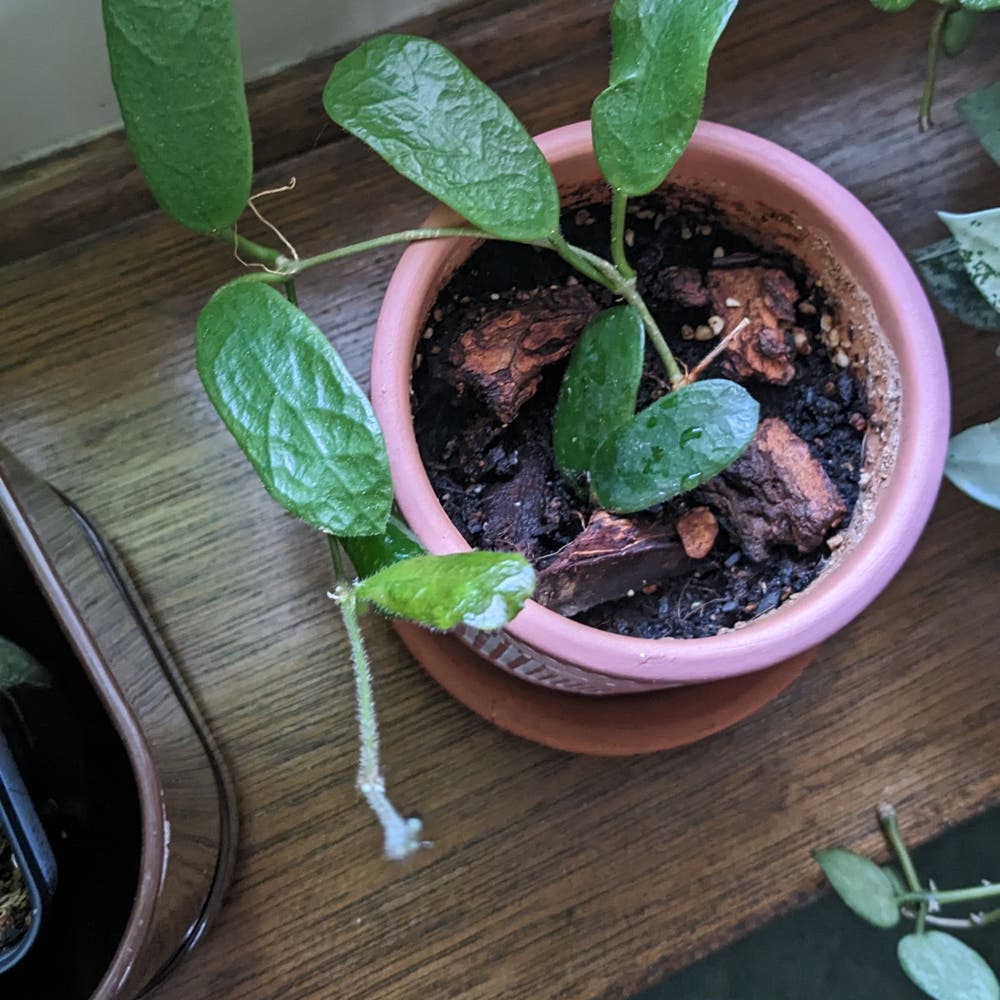
Black Spots on My Hoya rotundiflora Leaves
Hoya rotundiflora
By the Greg Editorial Team
Jun 18, 2024•4 min read
This article was created with the help of AI so we can cover more plants for you. May contain errors. See one? Report it here.
Banish black spots on your Hoya 🌿 with our savvy treatment tips and keep your plant's beauty spotless!
- Black spots signal trouble, often indicating fungal or bacterial infections.
- Inspect leaves regularly, especially undersides, for early detection.
- Prevent with proper care: adjust watering, airflow, and humidity.
Spotting the Trouble: Recognizing Black Spots
🕵️ What Do They Look Like?
Black spots on your Hoya rotundiflora are unwelcome intruders. They're small, dark, and can start as tiny as pinheads. Left unchecked, they'll expand into larger blotches, like ink spills on parchment. Texture is a clue; they might be raised, sunken, or flat, but they're always a sign that something's amiss.
🕵️ Where Do They Show Up?
These spots are sneaky, often beginning their invasion on the undersides of leaves. It's a game of hide-and-seek where you're it, so flip those leaves and inspect them regularly. If you spot them on top, it's a red flag; the situation might be more advanced than you think. Keep an eye out for spots with dark margins or concentric rings—these are the calling cards of a fungal or bacterial bash, and it's time to crash it.

Playing Detective: Figuring Out Why Your Hoya's Got Spots
🍄 Fungal Foes: Telltale Signs
Circular or irregular brown spots on your Hoya rotundiflora's leaves are the fingerprints of a fungal infection. A powdery texture or a red or yellow halo is like your plant's way of waving a red flag. Immediate action is critical: isolate the plant, remove the affected leaves, and consider a fungicide.
🦠 Bacterial Baddies: Symptoms to Watch For
Bacterial spots can be trickier to diagnose. They often present as water-soaked lesions, turning into black or brown spots. If you notice a foul smell from the soil or see a slimy residue, bacteria might be your culprit. Time to clean up: remove diseased leaves and improve hygiene around your plant.
🌿 Environmental Culprits: When Your Plant's Space Isn't Right
Your Hoya's environment can be a breeding ground for black spots. Too much moisture and poor air circulation are like rolling out the red carpet for fungal and bacterial growth. Check if your plant is getting too much or too little light—both extremes can stress your Hoya, making it more susceptible to disease. Adjust watering techniques, ensure good airflow, and keep the humidity in check to turn your plant's home from a problem zone to a comfort zone.

The Battle Plan: Treating Those Black Spots
🛡️ Going Anti-Fungal: Your Toolkit
Neem oil and baking soda mixtures are your first line of defense against fungal foes. Apply these solutions weekly, covering all parts of the plant. Consistency is key; don't stop until the black spots wave the white flag.
🛡️ Bacteria Be Gone: Clean-Up Crew
For bacterial infections, copper-based fungicides are the equivalent of plant antibiotics. Isolate the affected Hoya rotundiflora to prevent the spread. Sterilize your tools and prune the damaged leaves. Apply the treatment with precision, avoiding healthy tissue.
🌞 Fixing the Scene: Environmental Tweaks
Good air circulation acts as an invisible barrier against spores. Space out your plants and consider a fan to create a gentle breeze. Humidity and temperature control are also crucial. Adjust these elements to prevent future outbreaks, and remember, cleanliness is non-negotiable.

Keeping the Leaves Clean: Prevention Tactics
💦 Water Wisely: Avoiding Overhead Showers
Base watering is your Hoya rotundiflora's best friend. By keeping the leaves dry, you're essentially telling fungal diseases to take a hike. Overhead watering? That's a hard no. It's like giving fungi a free pass to the all-you-can-eat buffet on your plant's leaves.
💨 Circulate the Air: Let Your Hoya Breathe
Good air circulation is like giving your plant room to stretch. A gentle fan or a well-placed window can prevent your Hoya's leaves from becoming a fungal rave. Think of it as your plant's personal breathing space—airflow is crucial.
🌡️ Humidity Harmony: Finding the Sweet Spot
Humidity can be a drama queen—too high, and you're in a swamp; too low, and you're in a desert. Aim for that 40-60% sweet spot with a hygrometer's help. If it's a jungle in there, a dehumidifier will cut through the mugginess. Desert-like conditions? A pebble tray or humidifier will up the ante on moisture. Remember, your Hoya's comfort zone is a balanced humidity level.
⚠️ Safety First
This content is for general information and may contain errors, omissions, or outdated details. It is not medical, veterinary advice, or an endorsement of therapeutic claims.
Always consult a qualified healthcare professional before using any plant as food, medicine, or supplement.
Never eat any plant (or feed one to pets) without confirming its identity with at least two trusted sources.
If you suspect poisoning, call Poison Control (800) 222-1222, the Pet Poison Helpline (800) 213-6680, or your local emergency service immediately.
Spotted an error? Please report it here.
Eradicate black spots 🍂 on your Hoya rotundiflora by leveraging Greg's environmental monitoring and tailored treatment plans for plant health triumph!