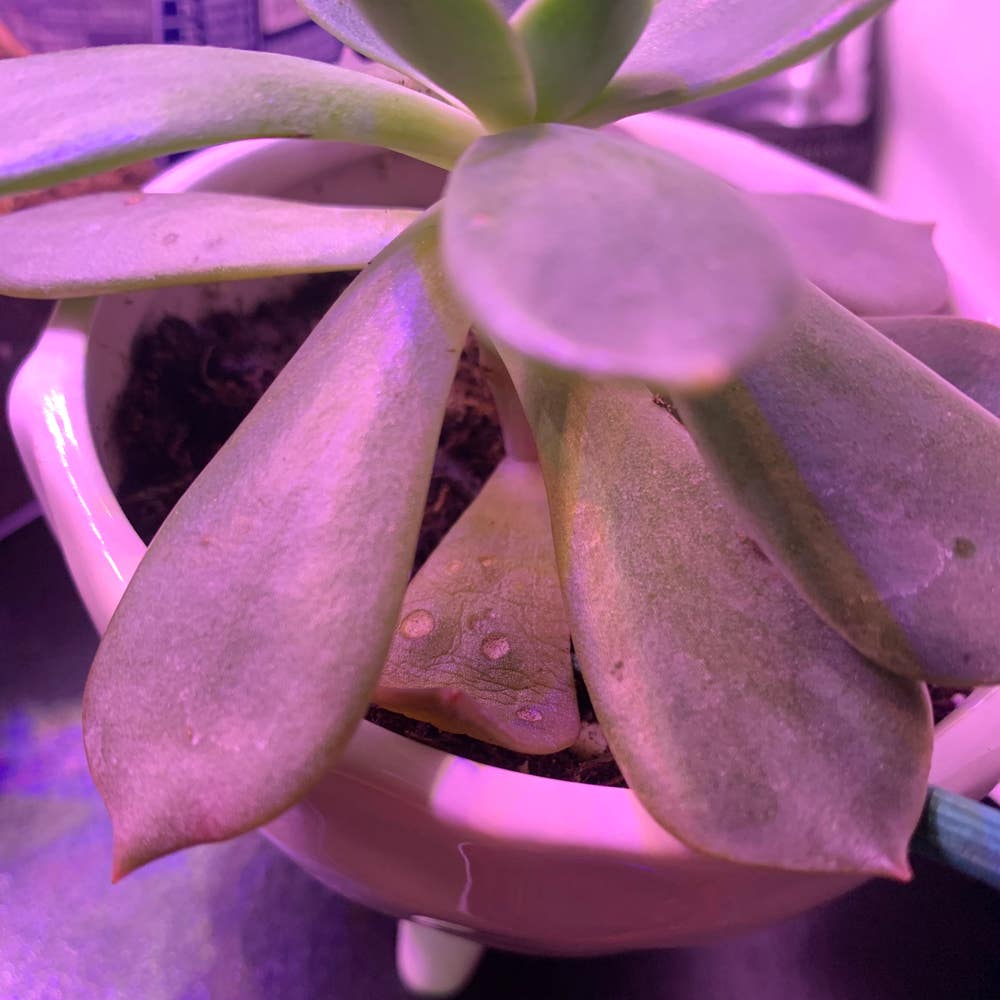
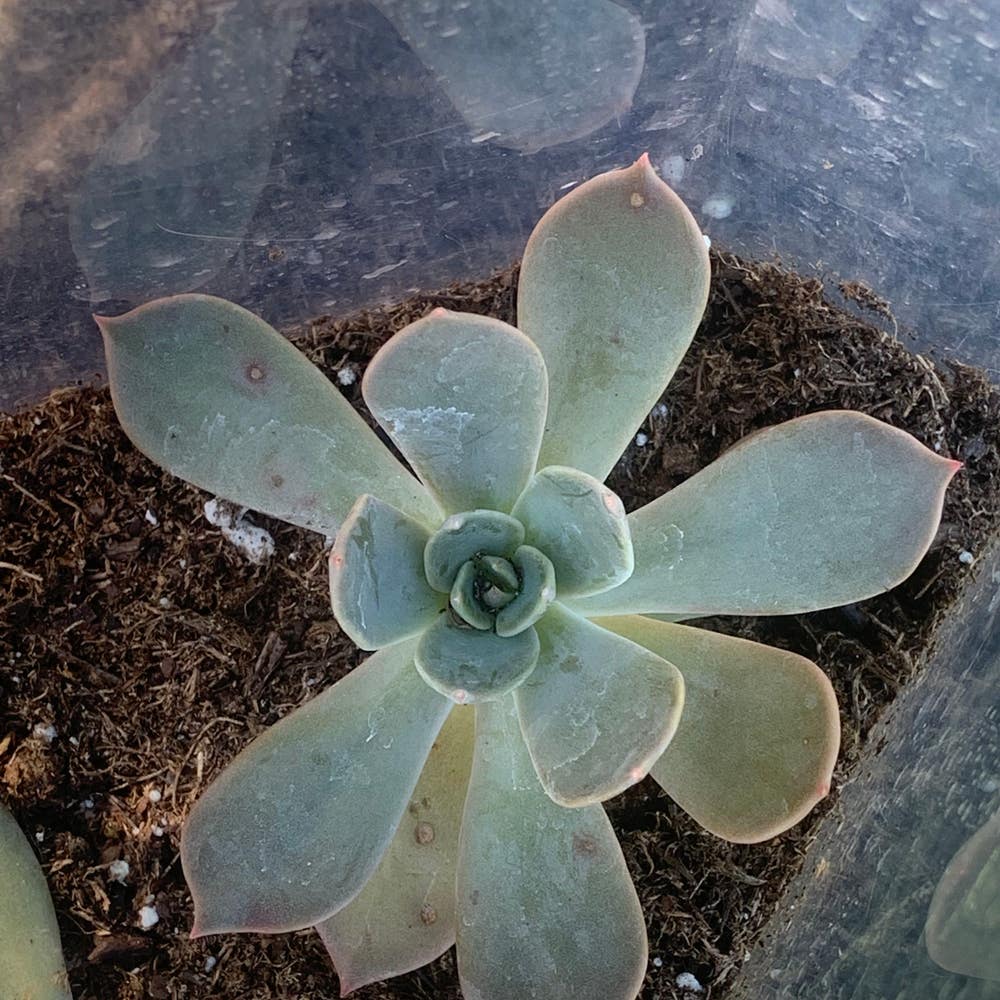
Understanding Curling Leaves on Your Echeveria 😕
Echeveria prolifica
By the Greg Editorial Team
Sep 30, 2024•6 min read
This article was created with the help of AI so we can cover more plants for you. May contain errors. See one? Report it here.
Empower your Echeveria care 🌱 to prevent leaf curling and enjoy a thriving, vibrant plant!
- 💧 Overwatering and underwatering both cause leaf curling in Echeveria; balance is key.
- ☀️ Excessive light exposure leads to sunburn; provide bright, indirect sunlight instead.
- 🐛 Regular pest inspections are crucial; mealybugs and aphids can damage your Echeveria.
Common Causes of Leaf Curling
💧 Overwatering and Root Rot
Overwatering is a common issue that can lead to leaf curling in Echeveria. Symptoms include yellowing leaves and mushy or blackened roots.
To prevent this, use well-draining soil and allow the soil to dry out between waterings. This simple practice can save your plant from serious damage.
🚰 Underwatering and Dehydration
Underwatering can also cause leaves to curl. Look for signs like wrinkled or shriveled leaves and dry, crispy edges.
Establishing a consistent watering schedule and regularly monitoring soil moisture levels can help keep your Echeveria hydrated and healthy.
☀️ Sunburn and Excessive Light Exposure
Excessive light can lead to sunburn, which manifests as brown, crispy patches on leaves. You may also notice leaves curling away from the light source.
To prevent sunburn, provide bright, indirect sunlight and gradually acclimate your plant to brighter conditions. This approach helps avoid shock.
🐛 Pest Infestations
Pests can wreak havoc on your Echeveria. Common culprits include mealybugs, which appear as cotton-like masses on leaves, and aphids, small green insects found on new growth.
Regularly inspecting for pests and maintaining plant hygiene are essential prevention strategies. A little vigilance goes a long way.
🌱 Nutrient Deficiencies
Nutrient deficiencies can lead to pale or discolored leaves and stunted growth. If your Echeveria looks lackluster, it might be time to assess its nutrient intake.
Using a balanced succulent fertilizer during the growing season and testing soil for nutrient levels can help ensure your plant thrives. A well-fed plant is a happy plant!
Understanding these common causes of leaf curling will empower you to take action. Next, let’s dive into diagnosing the problem to pinpoint the exact issue affecting your Echeveria.
Diagnosing the Problem
🌊 Assessing Watering Habits
Signs of Overwatering
Overwatering can be a silent killer for your Echeveria. If the soil remains soggy and you notice root rot symptoms, like mushy roots, it’s time to reassess your watering routine.
Signs of Underwatering
On the flip side, underwatering can also lead to distress. If the soil is completely dry and the leaves appear shriveled, your plant is signaling for hydration.
☀️ Evaluating Light Conditions
Ideal Light for Prolific Echeveria
Echeveria thrives in bright, indirect sunlight for about 6-8 hours daily. This optimal light exposure keeps your plant vibrant and healthy.
Signs of Too Much or Too Little Light
Too much light can cause leaf burn, leading them to curl away from the light source. Conversely, too little light results in stretching towards the light and pale leaves, indicating your plant is searching for more brightness.
🐛 Checking for Pests
Common Pests Affecting Echeveria
Pests can wreak havoc on your Echeveria. Keep an eye out for mealybugs and aphids, as they are common culprits that can damage your plant.
How to Identify Pest Damage
Identifying pest damage is crucial for timely intervention. Look for sticky residue, webbing, or visible insects on the leaves, which are telltale signs of an infestation.
Understanding these diagnostic steps will empower you to take action and restore your Echeveria to its former glory. Next, we'll explore effective treatment methods for curling leaves.
Treating Curling Leaves
💧 Adjusting Watering Practices
How to Properly Water Echeveria
To ensure your Echeveria thrives, start by checking the soil moisture with a simple finger test—insert your finger 1-2 inches deep. If the soil feels dry, water thoroughly until excess drains from the bottom, then allow the soil to dry out before the next watering.
Recommended Soil Moisture Levels
Aim for soil that is dry to the touch before watering again. This helps prevent overwatering, which is a common cause of leaf curling.
☀️ Modifying Light Exposure
Best Lighting Conditions for Recovery
For optimal recovery, move your Echeveria to a spot with bright, indirect sunlight. This light condition helps the plant regain its strength without the risk of sunburn.
How to Gradually Acclimate to Brighter Light
To acclimate your plant to brighter light, start with 1-2 hours of direct sunlight. Gradually increase exposure over 1-2 weeks to avoid shocking the plant.
🐞 Pest Control Methods
Organic Pest Control Options
If pests are the issue, consider using organic options like neem oil spray or insecticidal soap. These treatments are effective and less harmful to your plant and the environment.
Chemical Treatments and Their Application
If you opt for chemical treatments, always follow the label instructions for application rates and frequency. This ensures you effectively manage pests without damaging your Echeveria.
By adjusting your watering practices, modifying light exposure, and implementing pest control methods, you can effectively treat curling leaves on your Echeveria. Next, let's explore how to prevent future issues to keep your plant healthy and vibrant.
Preventing Future Issues
🌱 Best Practices for Echeveria Care
Caring for your Echeveria involves a few essential practices to keep it thriving.
Ideal Soil Mix for Drainage
Using the right soil mix is crucial for drainage. Aim for a combination of potting soil, perlite, and sand in a 2:1:1 ratio to ensure your plant's roots stay healthy and well-aerated.
Recommended Pot Types and Sizes
Choosing the right pot can make a significant difference. Terracotta pots are ideal for their breathability, and the pot size should allow for growth without overcrowding, promoting a healthy root system.
🍂 Seasonal Care Adjustments
Adapting your care routine to the seasons is vital for your Echeveria's health.
How to Care for Echeveria in Different Seasons
In spring and summer, increase your watering frequency to match the plant's growth. Conversely, during fall and winter, reduce watering and protect your Echeveria from frost to prevent stress.
Signs of Seasonal Stress and How to Mitigate It
Keep an eye out for leaf curling or discoloration as indicators of seasonal stress. Adjust your care routine accordingly to help your plant bounce back and thrive.
By implementing these best practices and seasonal adjustments, you can effectively prevent future issues with your Echeveria. This proactive approach will ensure your plant remains vibrant and healthy, setting the stage for ongoing monitoring and maintenance.
Monitoring and Maintenance
Regular Checks for Leaf Health 🌿
Keeping an eye on your Echeveria is essential for its overall health. Inspect your plant every 1-2 weeks for any signs of distress.
What to Look for During Inspections 🔍
During your inspections, focus on curling leaves, discoloration, and any signs of pests. Early detection can save your plant from serious issues down the line.
When to Repot or Refresh Soil 🌱
Repotting is sometimes necessary to keep your Echeveria thriving. Here are some signs that it’s time to refresh the soil or change pots.
Signs That Repotting is Necessary 🚪
- Roots growing out of drainage holes indicate overcrowding.
- Soil that has become compacted or depleted can hinder growth.
How to Repot Without Damaging the Plant 🛠️
Repotting can be a delicate process, but it’s manageable. Follow these steps for a smooth transition:
- Gently remove the plant from its pot.
- Trim any damaged roots to promote healthy growth.
- Place the Echeveria in fresh soil and water lightly to settle it in.
By regularly monitoring your plant and repotting when necessary, you can ensure your Echeveria remains healthy and vibrant. This proactive approach will help you enjoy your succulent for years to come.
⚠️ Safety First
This content is for general information and may contain errors, omissions, or outdated details. It is not medical, veterinary advice, or an endorsement of therapeutic claims.
Always consult a qualified healthcare professional before using any plant as food, medicine, or supplement.
Never eat any plant (or feed one to pets) without confirming its identity with at least two trusted sources.
If you suspect poisoning, call Poison Control (800) 222-1222, the Pet Poison Helpline (800) 213-6680, or your local emergency service immediately.
Spotted an error? Please report it here.
Keep your Echeveria thriving 🌱 by using Greg's tailored watering reminders and care tips to prevent curling leaves and ensure a vibrant plant!