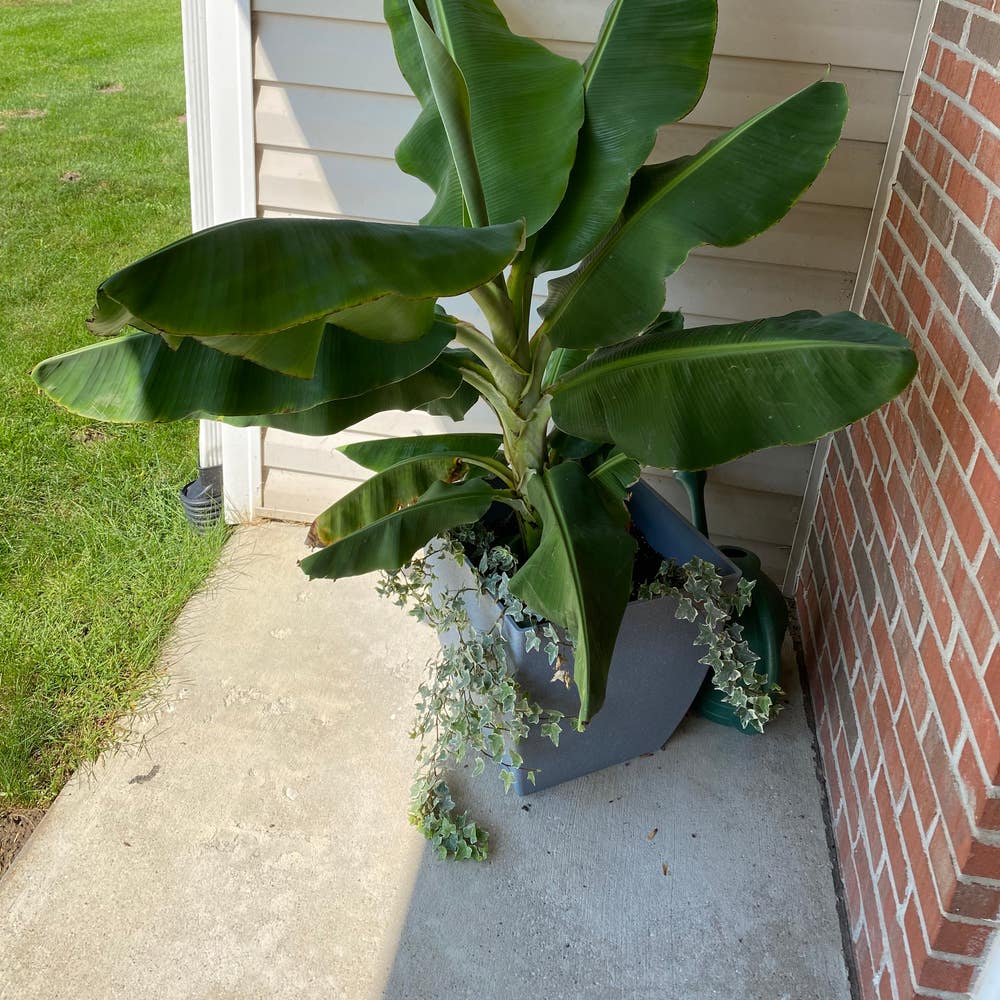
Why Are There Brown Spots on My Abyssinian Banana? 🍂
Ensete ventricosum
By the Greg Editorial Team
Jun 18, 2024•5 min read
This article was created with the help of AI so we can cover more plants for you. May contain errors. See one? Report it here.
Safeguard your Abyssinian Banana's splendor 🍌 by tackling those troubling brown spots with our guide!
- Brown spots signal care issues; over/underwatering and humidity imbalance are key culprits.
- Fungal and bacterial infections often manifest as brown spots; treatment varies.
- Prevent spots with regular checks and by optimizing environment and watering practices.
Spotting the Trouble: Identifying Brown Spots on Your Plant
🌿 Visual Symptoms of Brown Spots
Brown spots on Abyssinian Banana leaves can be as disheartening as a blemish on a masterpiece. These spots may appear tan, dark brown, or even black. They're not just a cosmetic issue; they're a cry for help. Location matters: spots on the tips could mean one thing, while spots on the leaf's body could mean another. Size and quantity also give clues; a few large spots versus many small ones can indicate different issues.
🚿 Common Mistakes in Plant Care Leading to Brown Spots
Overwatering and underwatering are the twin banes of plant care, often leaving behind a trail of brown spots. It's like walking a tightrope with your watering can. Humidity too plays a crucial role; too little, and your plant might as well be gasping in a desert. The key is to find that sweet spot, where your plant sips the perfect amount of water and basks in just-right humidity.

Rooting Out the Causes: What's Behind the Brown Spots?
🍄 Fungal Foes and Bacterial Bullies
Fungal diseases often manifest as raised or spreading spots, a telltale sign of uninvited guests. Look for rusty patches or circular spots; these are the calling cards of fungi. Bacterial infections, on the other hand, are the sneaky types, producing water-soaked lesions with a distinctive red or yellow edge. They thrive in wet conditions, so if your watering can has been overly generous, you might just be rolling out the red carpet for these microscopic party crashers.
🌿 Environmental Stressors
Environmental factors can be silent but deadly contributors to brown spots. Temperature fluctuations, incorrect light levels, and poor air circulation can all stress your plant out, leading to those unsightly blemishes. It's like throwing a plant into a mosh pit and expecting it not to get bruised. Too much sun can cause leaf scorch, while too little light can weaken the plant, making it more susceptible to infections. And let's not forget about airflow—good circulation isn't just about cranking up the fans; it's about giving your plants some personal space.

Healing the Leaves: Effective Treatment Options
🌿 Natural Remedies vs. Chemical Solutions
Natural remedies can be gentle yet powerful allies in the fight against brown spots. A simple mix of baking soda and soap creates a fungicidal spray that's easy on the environment and your wallet. Spray liberally, and repeat every two weeks to keep those spots in check.
Chemical solutions, like copper fungicides, pack a punch for more severe cases. They're the SWAT team for stubborn infections. But handle with care—safety gear is a must, and always follow the label to a T.
🌱 Adjusting Care Practices
Watering is an art—get it wrong, and you're inviting trouble. Check the soil's moisture and adjust your schedule. Overwatering is a common culprit, so ensure good drainage. If the soil feels like a swamp, consider wicking or aeration to help it dry.
Humidity can be a friend or foe. If your plant's leaves are begging for moisture, mist them with the precision of a ninja, use a pebble tray, or invest in a humidifier. But remember, like a tourist at a buffet, they can have too much of a good thing—avoid creating a steam room.
Pruning isn't just for looks; it's a strategic move. Snip off the brown, damaged parts with clean, sharp tools. It's like a haircut for your plant—out with the old, in with the new growth.
In summary, show those brown spots some tough love with the right mix of natural and chemical treatments, and fine-tune your care routine to keep your Abyssinian Banana looking its best.

Keeping the Spots at Bay: Prevention Tactics
🕵️ Regular Monitoring and Maintenance
Consistency is your plant's best friend. Regularly inspect your Abyssinian Banana like a detective on a case, looking for the slightest hint of brown spots. This isn't just about spotting trouble; it's about understanding your plant's normal state so you can detect anomalies quickly.
🌟 Creating the Ideal Environment
Lighting should be just right—bright, but not direct, like a sunny spot shielded by a sheer curtain. If your indoor lighting is as unpredictable as a plot twist, consider grow lights to keep the illumination steady.
Airflow is like your plant's personal breathing space. Ensure there's enough room between your plants for air to circulate freely, preventing the stuffy conditions that pests and diseases adore.
Temperature needs to be as stable as your love for your green companions. Avoid placing your plant in the path of drafts or sudden temperature changes that could stress it out and invite those dreaded brown spots.
Humidity can be a tricky beast. Too much, and you're in a fungal funhouse; too little, and your plant's thirstier than a tourist in the desert. Use a hygrometer to keep tabs on moisture levels, and adjust with a humidifier or dehumidifier as needed.
Remember, the goal is to create a stable environment where your Abyssinian Banana can thrive without the stress factors that lead to brown spots. It's about giving your plant the routine it craves and the care it deserves.
⚠️ Safety First
This content is for general information and may contain errors, omissions, or outdated details. It is not medical, veterinary advice, or an endorsement of therapeutic claims.
Always consult a qualified healthcare professional before using any plant as food, medicine, or supplement.
Never eat any plant (or feed one to pets) without confirming its identity with at least two trusted sources.
If you suspect poisoning, call Poison Control (800) 222-1222, the Pet Poison Helpline (800) 213-6680, or your local emergency service immediately.
Spotted an error? Please report it here.
Eradicate those pesky brown spots 🌱 on your Abyssinian Banana with Greg's precise watering schedules and health tracking for a lush, spot-free plant paradise.