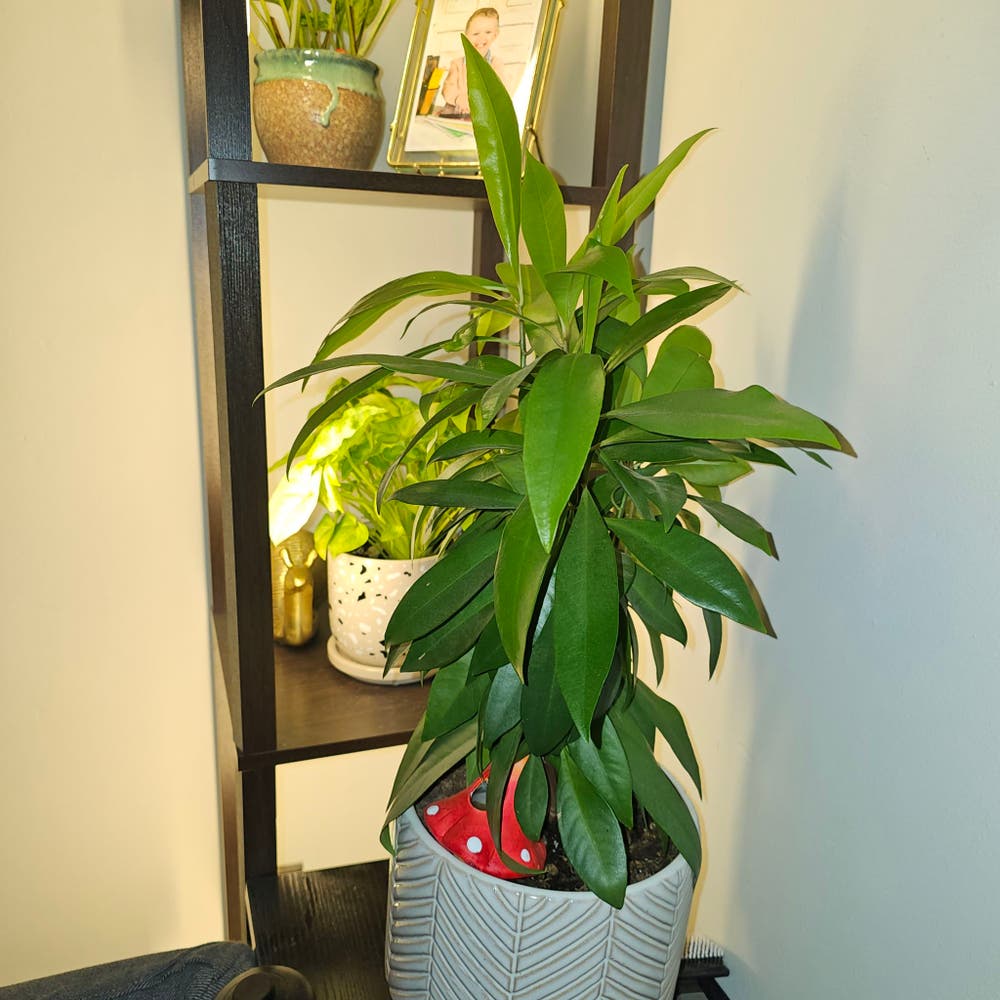
Why the Leaves on Your Tachibana Are Turning Yellow 🍂
Ardisia tachibana
By the Greg Editorial Team
Nov 26, 2024•7 min read
This article was created with the help of AI so we can cover more plants for you. May contain errors. See one? Report it here.
Revive your Tachibana by mastering the causes of yellowing leaves and restoring its vibrant health! 🌱
- 🌱 Yellow leaves indicate nutrient deficiencies, especially nitrogen and iron.
- 💧 Overwatering and underwatering both cause yellowing; balance is key!
- 🌞 Tachibana needs 6-8 hours of sunlight daily to thrive and prevent yellowing.
Causes of Yellowing Leaves
🌱 Nutrient Deficiencies
Nitrogen Deficiency
Yellowing leaves, particularly the older ones, often signal a nitrogen deficiency. This nutrient is vital for chlorophyll production, which is essential for a plant's overall vigor and health.
Iron Deficiency
Iron deficiency manifests as yellowing between leaf veins, known as interveinal chlorosis, and typically affects younger leaves first. Iron plays a crucial role in photosynthesis and enzyme function, making it indispensable for plant growth.
💧 Watering Issues
Overwatering Symptoms
If you notice yellowing leaves accompanied by wilting and root rot, overwatering might be the culprit. This often results from poor soil drainage or watering too frequently.
Underwatering Symptoms
On the flip side, underwatering can also lead to yellowing leaves, along with dry, crispy edges and drooping. This usually occurs due to infrequent watering or dry soil conditions.
🐛 Pest Infestations
Common Pests Affecting Tachibana
Aphids and spider mites are common pests that can wreak havoc on your Tachibana. Aphids are small, green insects that suck sap from leaves, while spider mites are tiny pests that spin webs and cause stippling on foliage.
Signs of Pest Damage
Look for yellowing leaves, distorted growth, or visible pests and webs on your plants. These signs can help you identify and address pest issues early on.
🌡️ Environmental Stress
Temperature Fluctuations
Tachibana thrives in temperatures between 15°C to 30°C (59°F to 86°F). Extreme temperature changes can stress the plant, leading to yellowing leaves.
Humidity Levels
Maintaining humidity levels between 40% to 60% is ideal for your Tachibana. Low humidity can cause leaf curling and yellowing, indicating that your plant is struggling.
Light Exposure
Tachibana requires full sun, ideally 6-8 hours daily. Insufficient light can result in yellowing leaves and leggy growth, as the plant stretches toward the light source.
🦠 Fungal and Bacterial Diseases
Common Diseases Affecting Leaves
Fungal leaf spot presents as brown spots surrounded by yellow halos, while bacterial canker causes yellowing and wilting of leaves, often with lesions. Both can severely impact your plant's health.
Identification and Treatment
Identifying these diseases visually is crucial. Treatment options include fungicides and proper sanitation practices to prevent further spread.
Understanding these causes of yellowing leaves is essential for maintaining the health of your Tachibana. By addressing nutrient deficiencies, watering issues, pest infestations, environmental stress, and diseases, you can help your plant thrive. Next, we’ll explore how to diagnose yellow leaves effectively.
Diagnosing Yellow Leaves
👀 Visual Inspection Techniques
Start by examining your Tachibana's leaves closely. Look for changes in color, texture, and overall plant vigor, as these can indicate underlying issues.
Next, check for signs of pests or diseases on both leaves and stems. Early detection is key to preventing further damage.
🧪 Soil Testing for Nutrient Levels
Soil testing is essential for understanding nutrient deficiencies. Use soil test kits to assess nitrogen and iron levels, which are crucial for your plant's health.
Aim for a pH range of 6.0 to 7.0 for optimal nutrient uptake. This balance ensures that your Tachibana can absorb the nutrients it needs effectively.
💧 Assessing Watering Practices
Watering practices play a significant role in leaf health. Check soil moisture levels by sticking your finger into the soil up to 2 inches; this simple test can reveal if your plant is thirsty.
Adjust your watering frequency based on how dry the soil feels. Consistency is vital, so find a routine that works for your plant's needs.
🐛 Checking for Pests and Diseases
Inspect the undersides of leaves for pests, as they often hide there. Look for any visible signs of disease, such as spots or wilting, which can signal a more serious problem.
Regular checks will help you catch issues early, allowing for timely intervention and care.
By following these diagnostic steps, you can better understand the causes of yellowing leaves and take appropriate action to restore your Tachibana's health. Next, let’s explore how to prevent yellow leaves from becoming a recurring issue.
Preventing Yellow Leaves
💧 Proper Watering Techniques
To keep your Tachibana healthy, it's crucial to master your watering routine. Allow the top 1-2 inches of soil to dry out between waterings to prevent over-saturation.
Using well-draining pots and soil is essential. This helps avoid root rot, which can lead to yellowing leaves.
🌱 Fertilization Schedule
A balanced NPK fertilizer, particularly one that emphasizes nitrogen and iron, is your best bet. Apply it every 4-6 weeks during the growing season to ensure your plant gets the nutrients it needs.
🏺 Soil Selection and Drainage
Choosing the right soil is vital for your plant's health. Aim for well-draining, loamy soil enriched with organic matter.
Good drainage is key to preventing waterlogging and root rot. This simple step can make a significant difference in keeping your Tachibana vibrant.
🐞 Pest Prevention Strategies
Regular inspections are your first line of defense against pests. Look for early signs of infestation to catch issues before they escalate.
Using insecticidal soap or neem oil can help keep pests at bay. These preventive measures are effective and easy to implement.
🌡️ Environmental Control Measures
Maintaining stable temperature and humidity levels is essential for your plant's well-being. Aim for a comfortable environment to reduce stress on your Tachibana.
Ensure your plant receives adequate light exposure. This will help prevent yellowing leaves and promote healthy growth.
By following these preventive measures, you can keep your Tachibana thriving and vibrant. Next, we’ll explore effective treatment options for yellow leaves when they do occur.
Treating Yellow Leaves
Step-by-Step Treatment for Nutrient Deficiencies 🌱
Identifying nutrient deficiencies is the first step in treating yellow leaves. Start by observing visual symptoms and conducting soil tests to pinpoint the specific deficiency.
Once identified, apply the appropriate fertilizer. For instance, if nitrogen is lacking, a nitrogen-rich fertilizer will help restore vigor.
Monitor your plant's response over the next 2-4 weeks. This period is crucial for assessing whether the treatment is effective.
Adjusting Watering Practices 💧
Next, evaluate your current watering schedule and check the soil moisture. Stick your finger into the soil up to 2 inches to gauge dryness.
Modify your watering frequency based on your plant's needs and the surrounding environmental conditions. Always ensure proper drainage to prevent overwatering, which can exacerbate yellowing.
Pest Control Methods 🐛
Identifying specific pests is essential for effective pest control. Look closely at your Tachibana for any signs of infestation.
Once you know which pests are affecting your plant, apply targeted treatments. For example, insecticidal soap works well against aphids.
Keep an eye on your plant for signs of re-infestation and adjust your control measures as needed. Regular monitoring is key to maintaining plant health.
Disease Management Techniques 🦠
Start by identifying the symptoms and type of disease affecting your Tachibana. This step is vital for choosing the right treatment.
Once you know the disease, apply appropriate fungicides or bactericides. Follow the instructions carefully for the best results.
Implement sanitation practices to prevent the spread of disease. Keeping your gardening tools clean and removing affected leaves can make a significant difference.
With these treatment strategies, your Tachibana can bounce back from yellowing leaves. Next, let's explore how to monitor plant health effectively.
Monitoring Plant Health
🌱 Regular Inspection Routines
Establishing a routine for inspecting your Tachibana is crucial for maintaining its health. Schedule weekly checks to assess leaf color, texture, and overall plant vigor.
Document any changes or issues you notice during these inspections. This record will help you identify patterns and make informed decisions about care.
👀 Signs of Recovery
As you monitor your plant, look for signs of recovery. New leaf growth is a positive indicator that your Tachibana is bouncing back from stress.
Additionally, watch for returning color in previously yellowing leaves. Improved overall vigor and health are signs that your care strategies are working.
📅 Long-Term Care Strategies
To ensure your Tachibana thrives, establish a consistent care routine. This should include regular watering, fertilization, and pest management.
Be prepared to adjust your care practices based on seasonal changes and the plant's growth stages. Staying attentive to your plant's needs will foster a healthier, more resilient Tachibana.
As you implement these monitoring and care strategies, you'll be better equipped to address any issues that arise, ensuring your plant remains vibrant and healthy.
⚠️ Safety First
This content is for general information and may contain errors, omissions, or outdated details. It is not medical, veterinary advice, or an endorsement of therapeutic claims.
Always consult a qualified healthcare professional before using any plant as food, medicine, or supplement.
Never eat any plant (or feed one to pets) without confirming its identity with at least two trusted sources.
If you suspect poisoning, call Poison Control (800) 222-1222, the Pet Poison Helpline (800) 213-6680, or your local emergency service immediately.
Spotted an error? Please report it here.
Revive your Tachibana's vibrant leaves 🌿 by using Greg's tailored care reminders to tackle nutrient needs and environmental factors for thriving growth!