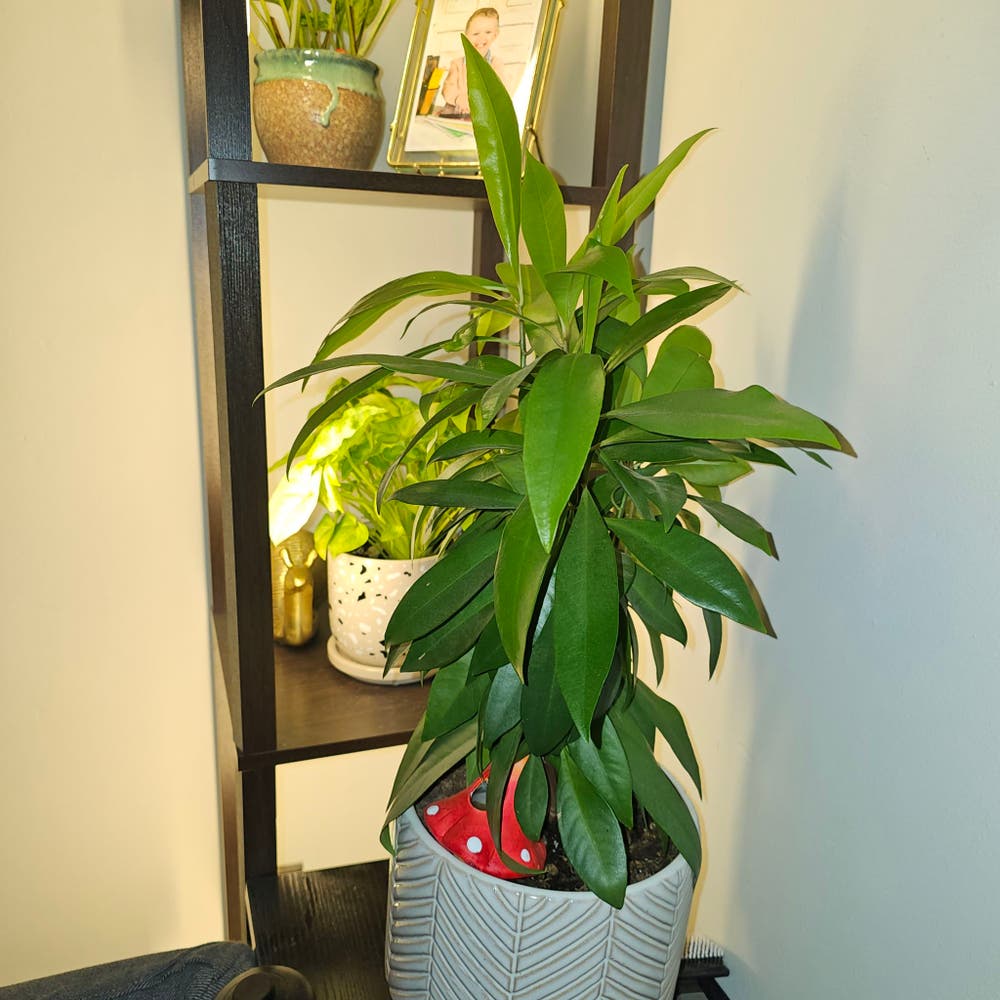
How to Fix Droopy Leaves on Your Tachibana 😢
Ardisia tachibana
By the Greg Editorial Team
Nov 26, 2024•4 min read
This article was created with the help of AI so we can cover more plants for you. May contain errors. See one? Report it here.
Revive your droopy Tachibana leaves 🌿 with expert tips on watering and nutrients for vibrant growth! 🌱
- 🌱 Droopy leaves indicate watering issues, nutrient deficiencies, or pests.
- 💧 Check soil moisture regularly to maintain balanced hydration for your Tachibana.
- 🌡️ Ideal temperature and humidity are crucial for preventing droopy leaves.
Causes of Droopy Leaves
💧 Overwatering and Underwatering
Droopy leaves often signal issues with watering. Overwatering can lead to yellowing leaves, soggy soil, and even root rot, while underwatering manifests as dry, brittle leaves and soil that pulls away from the pot edges.
Maintaining balanced soil moisture levels is crucial for your Tachibana's health. Regularly check the soil to ensure it’s neither too wet nor too dry.
🥦 Nutrient Deficiencies
Nutrient deficiencies can also cause droopy leaves.
Nitrogen Deficiency
A lack of nitrogen results in pale green leaves and stunted growth. This nutrient is vital for healthy foliage development.
Magnesium Deficiency
Magnesium deficiency presents as yellowing between leaf veins and curling leaves. Ensuring your plant receives adequate nutrients is essential for vibrant growth.
🌪️ Environmental Stress
Environmental factors play a significant role in leaf health.
Temperature
Your Tachibana thrives in an ideal temperature range of 20°C to 30°C (68°F to 86°F). Extreme temperatures can stress the plant and lead to droopiness.
Humidity
Humidity levels between 40% to 60% are preferred. Low humidity can cause leaves to droop and become crispy.
🐛 Pest Infestations
Pests can wreak havoc on your Tachibana, leading to droopy leaves.
Aphids
Look for sticky residue on leaves and curled leaves as signs of aphid infestation. These pests suck the sap from your plant, weakening it.
Spider Mites
Spider mites leave fine webbing and stippled leaves in their wake. Regular inspections can help catch these infestations early.
Understanding these causes is the first step in addressing droopy leaves on your Tachibana. Next, we’ll explore how to diagnose the specific issues affecting your plant.
Diagnosing Droopy Leaves
🌿 Visual Signs of Droopiness
Identifying droopy leaves is crucial for understanding your Tachibana's health. Healthy leaves are typically firm and upright, while droopy leaves may appear limp and lack vitality.
💧 Assessing Soil Moisture
Checking soil moisture is a straightforward process. You can use the finger test—insert your finger into the soil up to the first knuckle; if it feels dry, it's time to water. Alternatively, a moisture meter can provide a more precise reading.
🐛 Checking for Pests
Inspecting leaves and stems for pests is essential in diagnosing droopiness. Look for signs like sticky residue or webbing, which indicate potential infestations.
🌡️ Evaluating Environmental Conditions
Assessing the temperature and humidity levels in your growing environment can reveal stress factors. Ensure that your Tachibana is in a space where temperatures range from 20°C to 30°C (68°F to 86°F) and humidity stays between 40% to 60%.
By diagnosing these factors, you can pinpoint the cause of droopy leaves and take appropriate action. This understanding sets the stage for effective solutions to revive your plant.
Solutions for Droopy Leaves
🌊 Adjusting Watering Practices
To revive your Tachibana, start by adjusting your watering practices. Water your plant only when the top inch of soil feels dry to the touch.
🌱 Fertilization Techniques
Next, consider your fertilization routine. Use balanced NPK fertilizers to ensure your plant receives the essential nutrients it needs for healthy growth.
🌬️ Improving Humidity and Temperature Conditions
Humidity and temperature play a crucial role in your plant's health. Increase humidity levels by using pebble trays or humidifiers to create a more favorable environment.
🐞 Pest Management Strategies
Pest infestations can lead to droopy leaves, so it's essential to manage them effectively. Employ organic pest control methods like neem oil or insecticidal soap to keep your Tachibana safe from unwanted visitors.
🪴 Soil Amendments and Drainage Solutions
Lastly, focus on your soil's drainage capabilities. Incorporate soil amendments such as perlite or sand to improve drainage and prevent waterlogging, which can lead to droopy leaves.
By implementing these solutions, you'll be well on your way to restoring your Tachibana's vitality. Next, let's explore how to prevent future droopy leaves to keep your plant thriving.
Preventing Future Droopy Leaves
🌊 Best Practices for Watering
Establishing a consistent watering schedule is crucial for your Tachibana's health. Aim to water when the top inch of soil feels dry, ensuring your plant receives adequate moisture without drowning its roots.
📅 Regular Fertilization Schedule
Creating a fertilization calendar helps maintain nutrient availability. Use a balanced NPK fertilizer every 4-6 weeks during the growing season to keep your plant thriving.
🌡️ Monitoring Environmental Conditions
Tools for monitoring temperature and humidity can make a significant difference. Consider using a digital thermometer and hygrometer to ensure your Tachibana enjoys its ideal environment.
🐞 Routine Pest Inspections
Conducting bi-weekly pest checks during the growing season is essential. Regular inspections help catch infestations early, preventing damage to your plant.
🌱 Choosing the Right Potting Mix
Selecting a well-draining, citrus-specific potting mix is vital for your Tachibana's success. This type of mix promotes healthy root growth and prevents waterlogging, keeping droopy leaves at bay.
By implementing these preventive measures, you can foster a thriving environment for your Tachibana. Next, let’s explore effective solutions for addressing droopy leaves when they do occur.
⚠️ Safety First
This content is for general information and may contain errors, omissions, or outdated details. It is not medical, veterinary advice, or an endorsement of therapeutic claims.
Always consult a qualified healthcare professional before using any plant as food, medicine, or supplement.
Never eat any plant (or feed one to pets) without confirming its identity with at least two trusted sources.
If you suspect poisoning, call Poison Control (800) 222-1222, the Pet Poison Helpline (800) 213-6680, or your local emergency service immediately.
Spotted an error? Please report it here.
Revive your Tachibana's droopy leaves with smart care tips 🌱 from Greg, ensuring the perfect balance of watering and nutrients for a thriving plant!