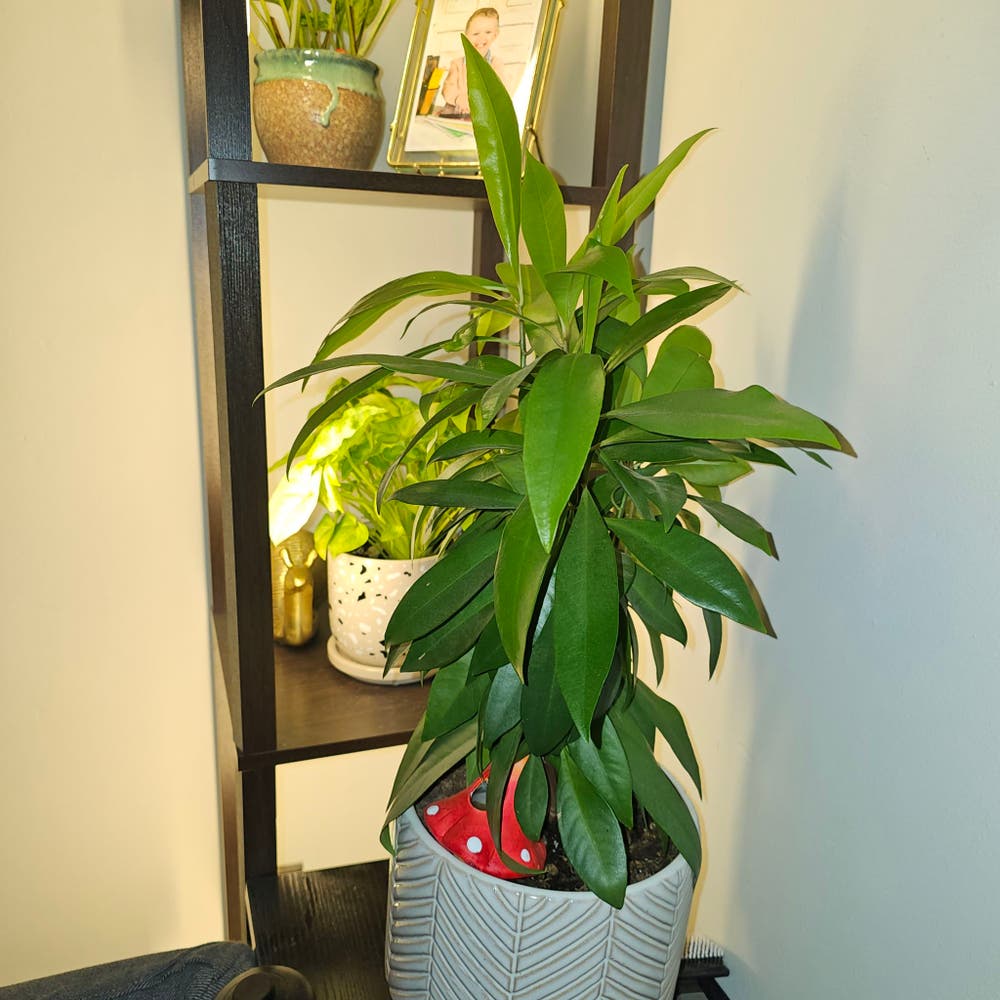
💧 Humidity Needs for Your Tachibana
Ardisia tachibana
By the Greg Editorial Team
Nov 26, 2024•3 min read
This article was created with the help of AI so we can cover more plants for you. May contain errors. See one? Report it here.
Unlock your Tachibana's full potential 🌱 by mastering humidity control for lush growth and thriving fruit! 🍊
- 🌬️ Tachibana thrives at 50-70% humidity for optimal growth and fruiting.
- 📏 Use a hygrometer to accurately measure and maintain humidity levels.
- 💧 Seasonal changes affect humidity; adjust care routines accordingly for best results.
Humidity Needs for Tachibana
🌫️ Absolute vs. Relative Humidity
Understanding humidity is crucial for the health of your Tachibana.
Absolute humidity refers to the total amount of water vapor in a given volume of air, measured in grams per cubic meter.
On the other hand, relative humidity is the percentage of moisture in the air compared to the maximum it can hold at a specific temperature.
For optimal growth and fruit production, Tachibana thrives in a relative humidity range of 50-70%.
🌍 Local Humidity Considerations
Assessing local humidity conditions is essential for your plant's well-being.
Using a hygrometer can help you measure indoor humidity levels accurately and understand how your regional climate impacts it.
Seasonal changes also play a significant role; winter heating can dry out the air, while summer cooling may introduce excess moisture. Adjust your care routine accordingly to maintain a stable environment.
💧 Strategies for Boosting Humidity
Boosting humidity can be achieved through several effective methods.
Using humidifiers is one of the most straightforward approaches. You can choose between cool mist and warm mist models, placing them strategically near your Tachibana for maximum effect.
Another effective strategy is grouping plants together. This creates a microclimate, allowing them to share moisture and thrive.
Water trays and pebble methods are also beneficial. Set up trays filled with water beneath your pots to increase local humidity through evaporation.
Lastly, consider misting techniques. Regularly misting your Tachibana can help maintain humidity levels, but be sure to do it at the right frequency to avoid over-saturation.
🚪 Strategies for Reducing Humidity
Sometimes, reducing humidity is just as important as boosting it.
Ventilation techniques are key; promoting airflow helps prevent stagnant, humid air from settling around your plants.
Be mindful of overwatering as well. Striking a balance between moisture and humidity is crucial, and watch for signs of overwatering like yellowing leaves.
Choosing the right potting mix can also make a difference. Opt for well-draining mixes to ensure excess moisture doesn’t linger around the roots.
📏 Monitoring Humidity Levels
Monitoring humidity levels is vital for maintaining a healthy environment for your Tachibana.
Invest in tools like hygrometers and moisture meters for accurate readings. These instruments can help you stay on top of your plant's needs.
Look out for signs of humidity issues. Low humidity can cause leaf curling and browning tips, while high humidity may lead to mold growth and leaf spots.
⚠️ Common Humidity-Related Issues
Being aware of common humidity-related issues can save your Tachibana from stress.
Symptoms of low humidity stress include wilting leaves and stunted growth, which can have long-term effects on plant health.
Additionally, managing fungal issues is essential. Recognizing symptoms like mold or leaf spots early can help you implement prevention strategies, ensuring proper air circulation around your plants.
By understanding and managing humidity effectively, you can create an ideal environment for your Tachibana to flourish. Next, we will delve into the tools and techniques for monitoring humidity levels more closely.
⚠️ Safety First
This content is for general information and may contain errors, omissions, or outdated details. It is not medical, veterinary advice, or an endorsement of therapeutic claims.
Always consult a qualified healthcare professional before using any plant as food, medicine, or supplement.
Never eat any plant (or feed one to pets) without confirming its identity with at least two trusted sources.
If you suspect poisoning, call Poison Control (800) 222-1222, the Pet Poison Helpline (800) 213-6680, or your local emergency service immediately.
Spotted an error? Please report it here.
Keep your Tachibana thriving 🌿 by using Greg's tailored humidity tips and reminders to create the ideal environment for growth!