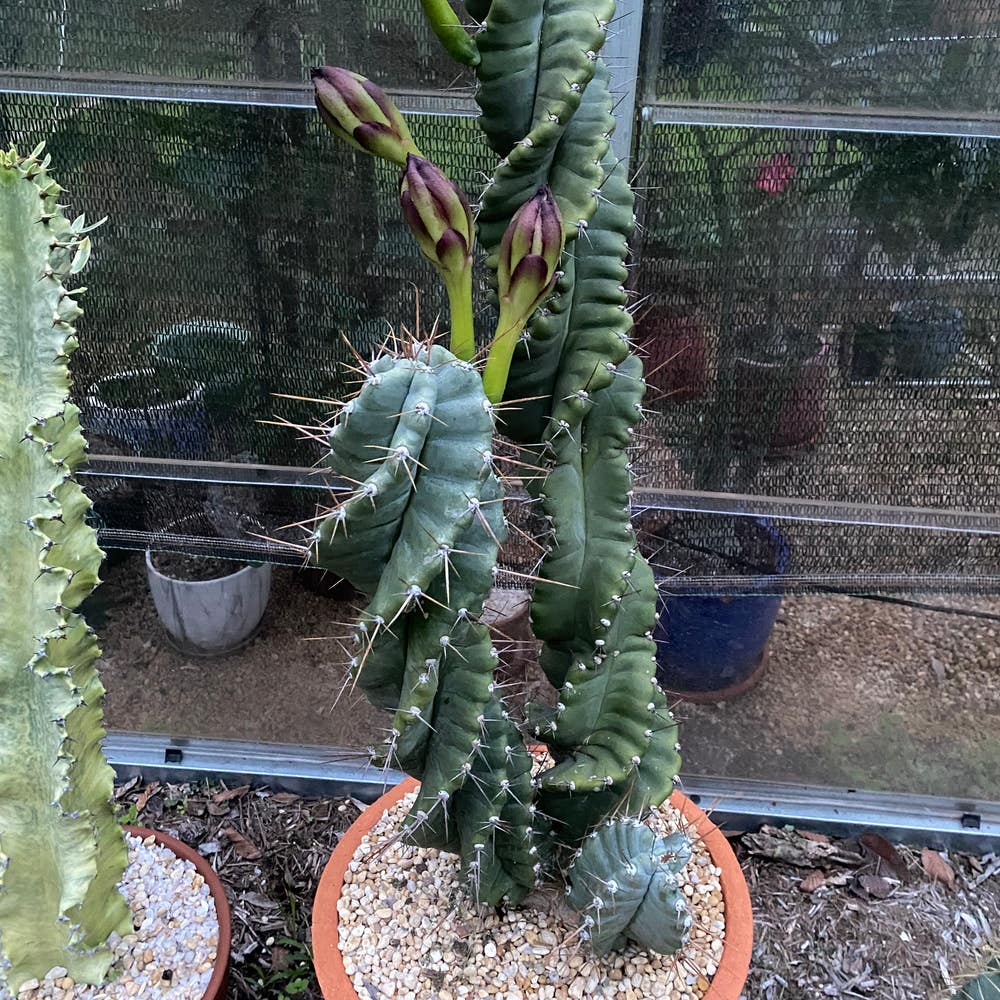
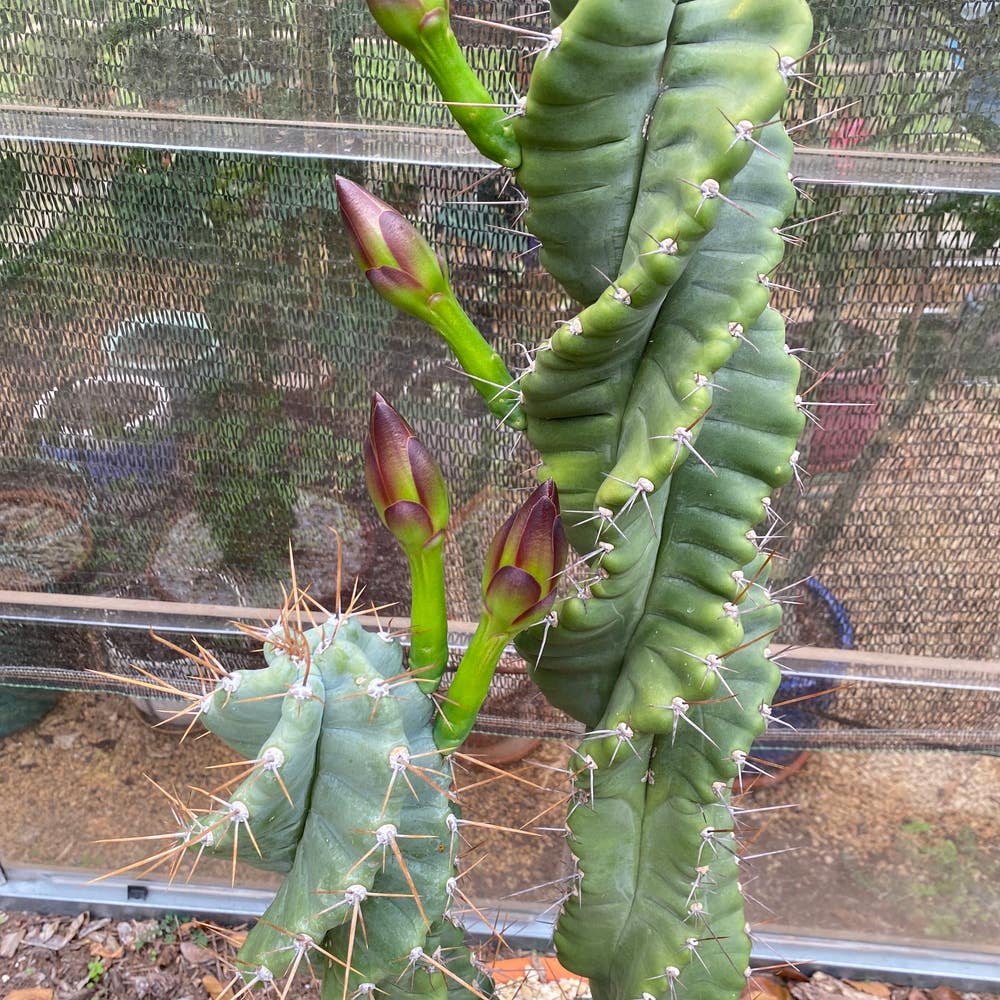
💧 Why Are My Spiral Cactus Leaves Mushy?
Cereus forbesii 'Spiralis'
By the Greg Editorial Team
Jun 18, 2024•3 min read
This article was created with the help of AI so we can cover more plants for you. May contain errors. See one? Report it here.
- Overwatering? Look for soggy leaves, black spots, and root rot.
- Immediate action: Stop watering and inspect roots for mushiness.
- Long-term care: Use well-draining pots and soil, adjust watering schedule.
Spotting the Trouble: Signs Your Spiral Cactus is Too Wet
💦 Overwatering Symptoms
Soggy leaves on your spiral cactus? That's the plant's way of saying you've been a little too generous with the watering can. Black spots? They're not beauty marks; they're SOS signals. If your cactus feels like a wet sponge rather than a desert warrior, it's time to dial back on the H2O.
🌊 Root Rot Red Flags
Below the surface, root rot lurks like a silent assassin. If you unearth roots that resemble swamp creatures—mushy and dark—your cactus is in crisis. Don't wait for a full collapse; these symptoms demand immediate action.
🍄 Fungus Among Us
Fungal foes can turn your cactus into a spotty spectacle. Discoloration and spots on the leaves are the visual cues of an unwanted invasion. If you spot these, it's time to play plant doctor—prune the affected areas and consider a fungicide. Remember, early detection is your best defense.

First Aid for Your Cactus: Immediate Steps to Take
💧 Cutting Back on H2O
Stop watering your spiral cactus immediately. Overwatering is like giving your cactus an unwanted bath; it's time to let it dry out. Think of this as a watering timeout, where the soil's job is to go from wet to wonderfully arid.
🌱 Root Rescue Mission
Gently unpot your cactus to inspect the roots. If they're brown and mushy, it's surgery time. Snip away the rot with sterilized tools, and let the roots air out. This is the cactus equivalent of an open-air spa treatment.
🦠 Fungicide to the Rescue
If you spot signs of a fungal invasion, it's time for the big guns. Choose a fungicide that's safe for cacti and follow the instructions to the letter. It's like sending in a microscopic cleanup crew to get things back to normal.

The Road to Recovery: Long-Term Care for Your Spiral Cactus
💧 Soil and Pot Perfection
Terracotta or unglazed ceramic pots are your cactus's best pals. Their porous nature is like a breathable workout tee for roots, wicking away excess moisture to prevent waterlogging. When it comes to soil, think desert: a gritty mix of sand, perlite, and a touch of organic matter. This isn't just dirt; it's a life support system that keeps your cactus's feet dry and cozy. Repotting every couple of years isn't just a change of scenery; it's a vital refresh that keeps the roots from throwing a tantrum.
💦 Watering Wisdom
Watering your spiral cactus is less about sticking to a strict schedule and more about syncing with the cactus's vibes. In the summer months, it's all about that drink-up life, but when winter hits, your cactus is basically meditating—so keep the waterworks to a minimum. Always check that the soil is as dry as a stand-up comedian's wit before watering again. If you're the type who forgets to text back, consider a moisture meter to avoid accidental ghosting on your cactus's hydration needs.

Keeping It Firm: Prevention Tactics for the Future
🚰 Drainage is Key
Drainage holes are non-negotiable for a happy cactus. They're like escape routes for excess water, ensuring roots don't take an unwanted bath. Terra cotta pots are the go-to; they're the breathable workout gear for your plant's roots.
💨 Airflow and Humidity Hacks
Airflow should be on your radar. Position your cactus where the air isn't stagnant—think of it as avoiding the plant version of bedsores. Keep humidity at bay; if the air's thicker than a thriller plot, consider a dehumidifier. It's like giving your cactus a slice of desert heaven.
⚠️ Safety First
This content is for general information and may contain errors, omissions, or outdated details. It is not medical, veterinary advice, or an endorsement of therapeutic claims.
Always consult a qualified healthcare professional before using any plant as food, medicine, or supplement.
Never eat any plant (or feed one to pets) without confirming its identity with at least two trusted sources.
If you suspect poisoning, call Poison Control (800) 222-1222, the Pet Poison Helpline (800) 213-6680, or your local emergency service immediately.
Spotted an error? Please report it here.
Avoid the mush and master spiral cactus care 🌵 with Greg's custom watering reminders that keep overwatering—and root rot—at bay!