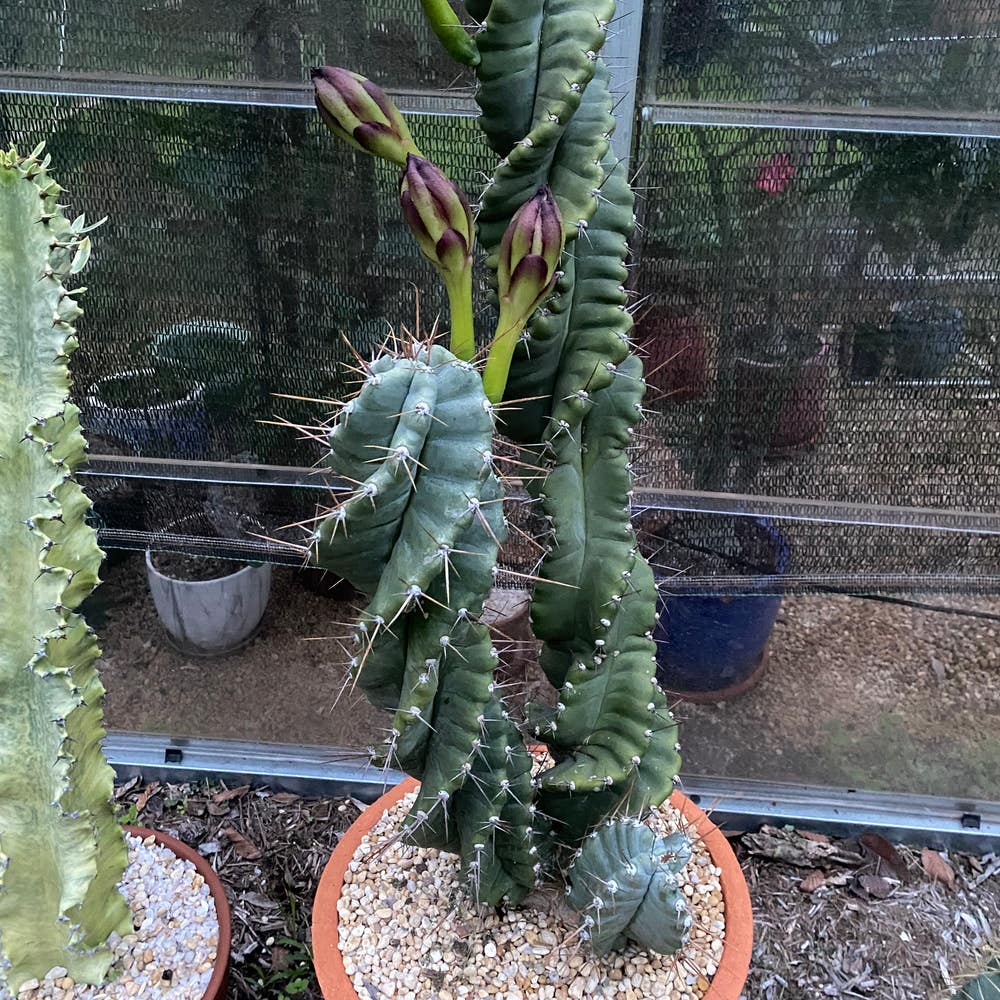
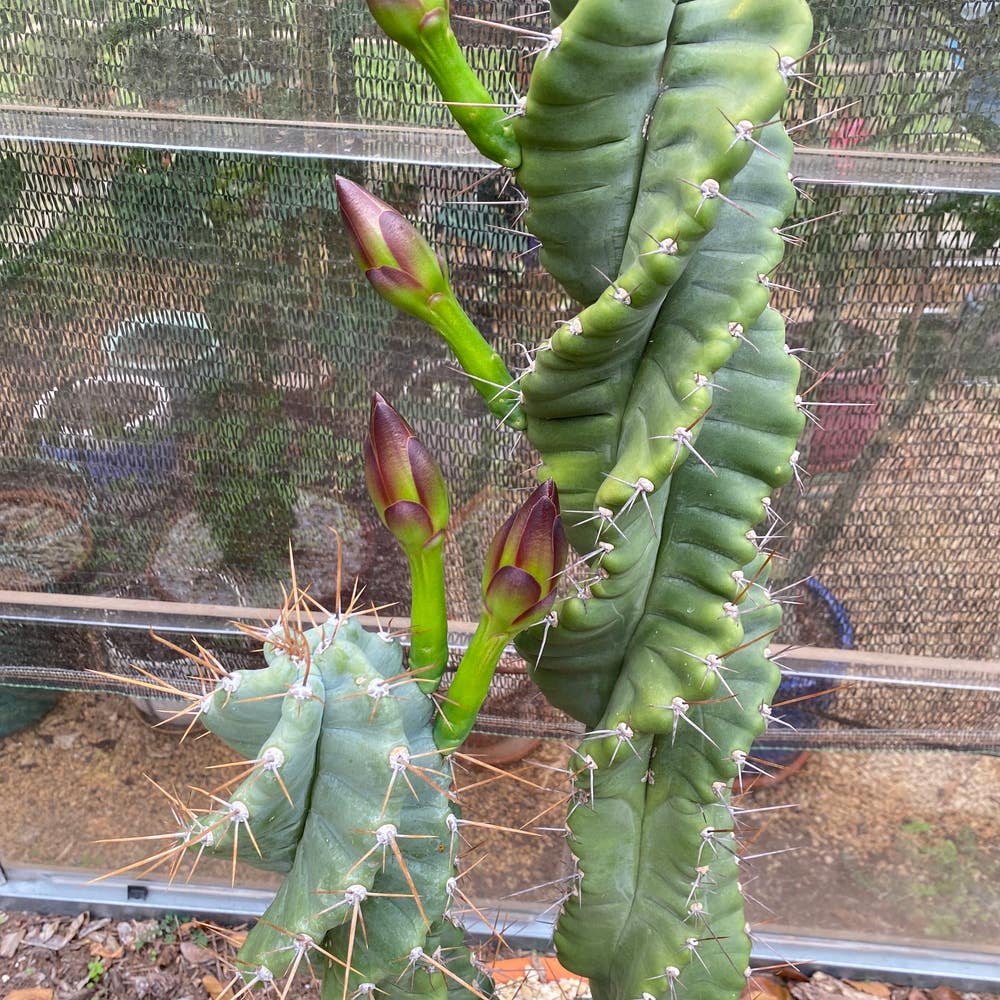
How to Propagate Your Spiral Cactus
Cereus forbesii 'Spiralis'
By the Greg Editorial Team
Jun 18, 2024•5 min read
This article was created with the help of AI so we can cover more plants for you. May contain errors. See one? Report it here.
- Offsets need bright light, moist soil: Harvest when a few inches wide.
- 🌵 Stem cuttings require callusing: Use sterilized tools, cut at 45-degree angle.
- Seeds need clear dome, bottom-watering: Patience is key during germination.
Getting Started with Offsets
🌵 Identifying and Harvesting Offsets
Offsets are your Spiral Cactus' way of cloning itself. Look for these mini-mes around the base of the parent plant. When they're a few inches in diameter, they're ripe for the picking. Use a sharp knife or scissors for a clean cut, and you've got yourself a new plant-in-waiting.
🌱 Prepping and Potting Offsets
Callusing is crucial. Let your offsets dry in a shaded spot for a day or two post-separation. This step wards off rot and infection. Mix potting soil with sand or perlite for drainage, and pot your offsets. Keep the soil slightly moist, but not wet. Overwatering is the fast track to a cactus funeral.
🌿 Initial Care for Offsets
In the early days, your offsets are like rock stars on rehab—keep them in bright, indirect light and resist the urge to overwater. Root development is the first encore; look for firm, white roots. If you're peeking through a transparent container, a visible root network is your green light. Patience, grasshopper—nature's not rushing this gig.

Stem Cuttings: A Step-by-Step Guide
🌱 Choosing and Cutting Your Stems
Selecting the right stem for propagation is the cornerstone of success. Look for healthy, semi-hardwood segments about 4-6 inches long. Ensure they have several leaf nodes, the potential hotspots for root growth.
Sterilize your tools before making the cut. Use sharp scissors or pruners to snip the stem at a 45-degree angle just below a node. This increases the surface area for rooting and helps the cutting absorb more moisture.
🌿 Callusing and Rooting Your Cuttings
Callusing is your cutting's defense mechanism against rot. Place the cut end in indirect light, allowing it to dry and form a callus over a few days. Think of it as a natural band-aid.
For rooting, patience is your ally. Plant the callused end about an inch deep in well-draining soil. Rooting hormone is optional but can give your cuttings a significant advantage. Keep the soil moist, but not soggy, and provide a stable environment with high humidity.
Monitor your cuttings bi-weekly. When you see roots peeking out, it's time to celebrate the tiny victories of propagation. Remember, nature can't be rushed, but the wait is part of the thrill.

Sowing the Future: Propagating from Seeds
🌱 From Seed to Seedling
To propagate your Spiral Cactus from seed, start by collecting seeds from ripe pods or purchasing them. Squeeze out seeds onto a paper towel if harvesting, and let them dry completely.
🌾 Collecting Seeds
Harvest seeds from your own plants or hit up a nursery for a packet. If you're DIY-ing it, gently coax seeds from ripe pods onto a paper towel. Let them air out like laundry on a sunny day—dry is the goal.
🌱 Sowing Seeds
Sow seeds in spring for best results. For tiny seeds, mix with sand for even distribution and skip the soil cover—they're shy but don't need a blanket. Larger seeds, however, appreciate a light soil dusting—think a sprinkle, not a snowstorm.
🌱 Creating the Germination Environment
Germinate with a trifecta of essentials: a pot, a clear humidity dome, and a bottom-watering setup. Think of it as a mini greenhouse, minus the glass and fancy trimmings. Keep the soil moist, but not soggy—seedlings can't swim.
🕰 Monitoring and Care
Patience is key. Germination can be as quick as a week or as leisurely as a month. Once seedlings say hello, gradually introduce them to the real world by lifting the cover bit by bit. It's like teaching a kid to ride a bike, but with less running and more watching.
🏷 Labeling is Crucial
Label your pots unless you fancy a guessing game later. Use tags or go digital with a spreadsheet—whatever floats your boat. Just remember, without labels, you're playing botanical roulette.

Ensuring Propagation Success
💡 Optimal Conditions for Propagation
In the realm of Spiral Cactus propagation, light, temperature, and humidity form the holy trinity. Bright indirect light is the sweet spot; direct sunlight is a no-go as it can cause your cacti to crisp up like overdone toast. Aim for a consistent temperature, ideally between 70 to 75 degrees Fahrenheit—too cold and your cactus cuttings will sulk, too hot and they'll wilt in protest. Humidity is the silent partner, important but easily overdone. Keep it comfortable, not clammy.
🚰 Overcoming Propagation Hurdles
When it comes to propagation, it's not all smooth sailing. Overwatering is the fast track to root rot, so keep the soil moist, not soggy. Think of it as a tightrope walk—balance is key. Air circulation is the unsung hero; ensure it's there to prevent the still, stale air that diseases love. Pests? They're like that one uninvited guest who shows up anyway. Be vigilant and ready to show them the door. Remember, if your cactus is throwing a fit—wilting, discoloring, or looking generally unhappy—it's time to reassess these conditions. Adjust one variable at a time and watch your plant respond, like a dance where you're slowly learning the steps.
⚠️ Safety First
This content is for general information and may contain errors, omissions, or outdated details. It is not medical, veterinary advice, or an endorsement of therapeutic claims.
Always consult a qualified healthcare professional before using any plant as food, medicine, or supplement.
Never eat any plant (or feed one to pets) without confirming its identity with at least two trusted sources.
If you suspect poisoning, call Poison Control (800) 222-1222, the Pet Poison Helpline (800) 213-6680, or your local emergency service immediately.
Spotted an error? Please report it here.
Grow your Spiral Cactus from offsets to seeds with ease, and count on Greg 🌱 to provide tailored care reminders and a community of fellow enthusiasts for every step of the way!