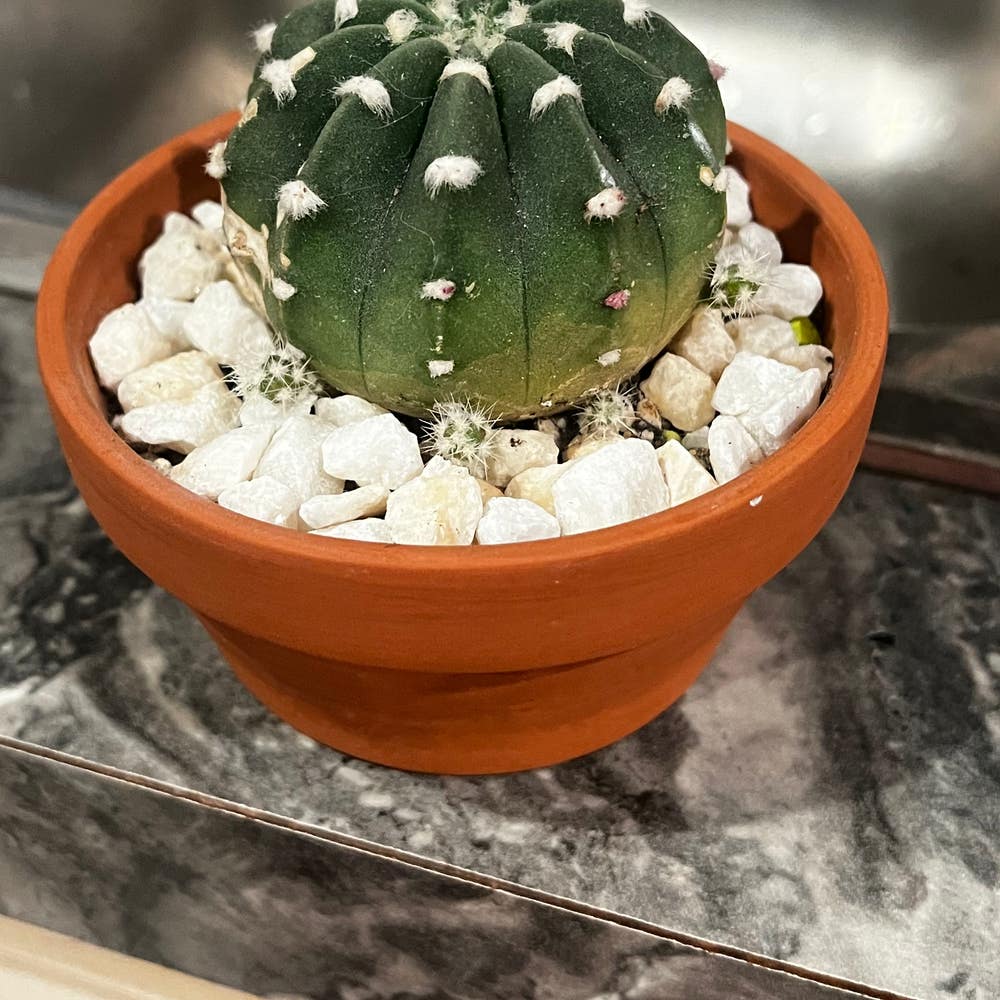
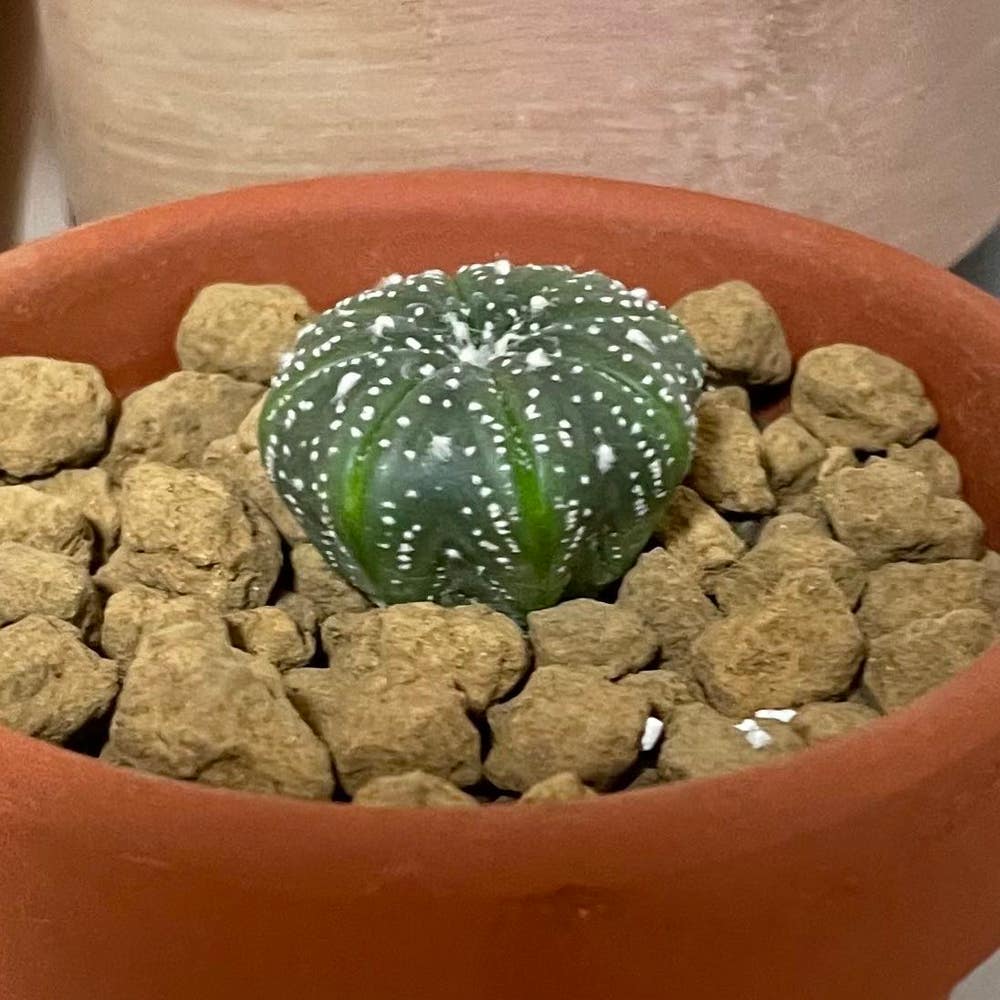
🌵 How Much Sunlight For Your Sand Dollar Cactus
Astrophytum asterias
By the Greg Editorial Team
Jun 18, 2024•4 min read
This article was created with the help of AI so we can cover more plants for you. May contain errors. See one? Report it here.
- 🌞 At least six hours of direct sunlight needed for thriving Sand Dollar Cacti.
- Morning sun and south-facing windows are best; adjust to prevent sunburn.
- Grow lights supplement light; watch for pale growth or sunburn as light indicators.
Soaking Up the Sun Outdoors
🌞 Finding the Sweet Spot
Direct sunlight is like a VIP pass for the Sand Dollar Cactus, but it's all about moderation. These cacti need a solid six hours of sunbathing daily to maintain their plump and happy selves. The morning sun is their best friend, offering gentler rays that won't leave them reaching for aloe vera.
🌞 Too Much of a Good Thing?
Sunburn on a cactus looks as bad as it does on us—white or brown spots that scream 'shade needed!' If your cactus starts to dress up in a bleached coat, it's time to play musical chairs with its location. Seasonal shifts in the sun's intensity mean you'll need to adjust your cactus's spot to avoid accidental roasting.

Setting Up the Perfect Indoor Light Oasis
🌵 Window Real Estate: Where to Plant Your Cactus
Finding the optimal spot for your Sand Dollar Cactus indoors is crucial. A south-facing window is the jackpot, bathing your cactus in the most sunlight. However, not all windows are created equal. East or west-facing windows can also be contenders, offering gentler morning or afternoon light.
To ensure your cactus gets consistent rays, monitor the light throughout the day. The intensity can drop off a cliff as you move away from the window. So, keep your cactus close, but not so close it's pressing its face against the glass.
💡 Let There Be (Artificial) Light!
When the sun just isn't enough, grow lights step in to save the day. LEDs are the cool kids on the block, energy-efficient with a lifespan that laughs in the face of fluorescents. But don't discount the old-school charm of fluorescent lights; they're easier on the wallet upfront.
Setting up your grow light is more art than science. Aim for a cozy 6 to 12 inches above your cactus. If it's adjustable, you're in business—simulate the sun's arc across the sky. And if you've got a hood or reflector, you're basically a light wizard, channeling every precious photon directly to your spiky green friend.

When Your Cactus Wants to Show Off: Light and Flowering
🌟 The Light-Flower Connection
Yes, the Sand Dollar Cactus can flower, but it's a diva when it comes to light. It demands the spotlight to strut its stuff with blooms. Direct sunlight is like applause for these cacti, coaxing the buds to unfurl into a floral spectacle. Without this standing ovation of photons, your cactus might just sulk in its pot, bloomless.
🎭 Adjusting Light to Encourage Blooming
To get those shy flowers to take center stage, you'll need to adjust the lighting. Think of it as directing a play where the star is a bit temperamental. Too little light, and your cactus is just rehearsing. Too much, and it's overwhelmed, missing its cue to bloom. Aim for a sweet spot of bright, indirect light, and consider a period of drought to mimic the natural stress that often triggers flowering in the wild. It's like telling your cactus, "Showtime's coming, better get those flowers ready!"

Reading the Leaves: Signs Your Cactus Needs a Light Check-Up
🌞 Too Little Light
Your Sand Dollar Cactus is a sun worshipper. If it's not getting enough, it'll let you know. Look for pale colors and elongated growth—like it's stretching for a sunbeam it can't quite reach. This condition, known as etiolation, is the cactus's silent plea for more light. If the vibrant greens have turned to dull, washed-out hues, it's time to find a brighter spot.
🌵 Too Much Light
Conversely, too much sun can send your cactus into a crispy meltdown. Telltale signs include yellowing or brown spots that appear suddenly, like unwelcome guests at a party. If the cactus starts to look like it's been in a tanning bed too long, with reddish hues or a sunburned appearance, it's begging for some shade. Remember, sunburn is irreversible, so it's better to err on the side of caution.
⚠️ Safety First
This content is for general information and may contain errors, omissions, or outdated details. It is not medical, veterinary advice, or an endorsement of therapeutic claims.
Always consult a qualified healthcare professional before using any plant as food, medicine, or supplement.
Never eat any plant (or feed one to pets) without confirming its identity with at least two trusted sources.
If you suspect poisoning, call Poison Control (800) 222-1222, the Pet Poison Helpline (800) 213-6680, or your local emergency service immediately.
Spotted an error? Please report it here.
Let Greg fine-tune your Sand Dollar Cactus's sunbathing for a blooming success 🌵, by tracking light exposure and providing the best positioning tips.