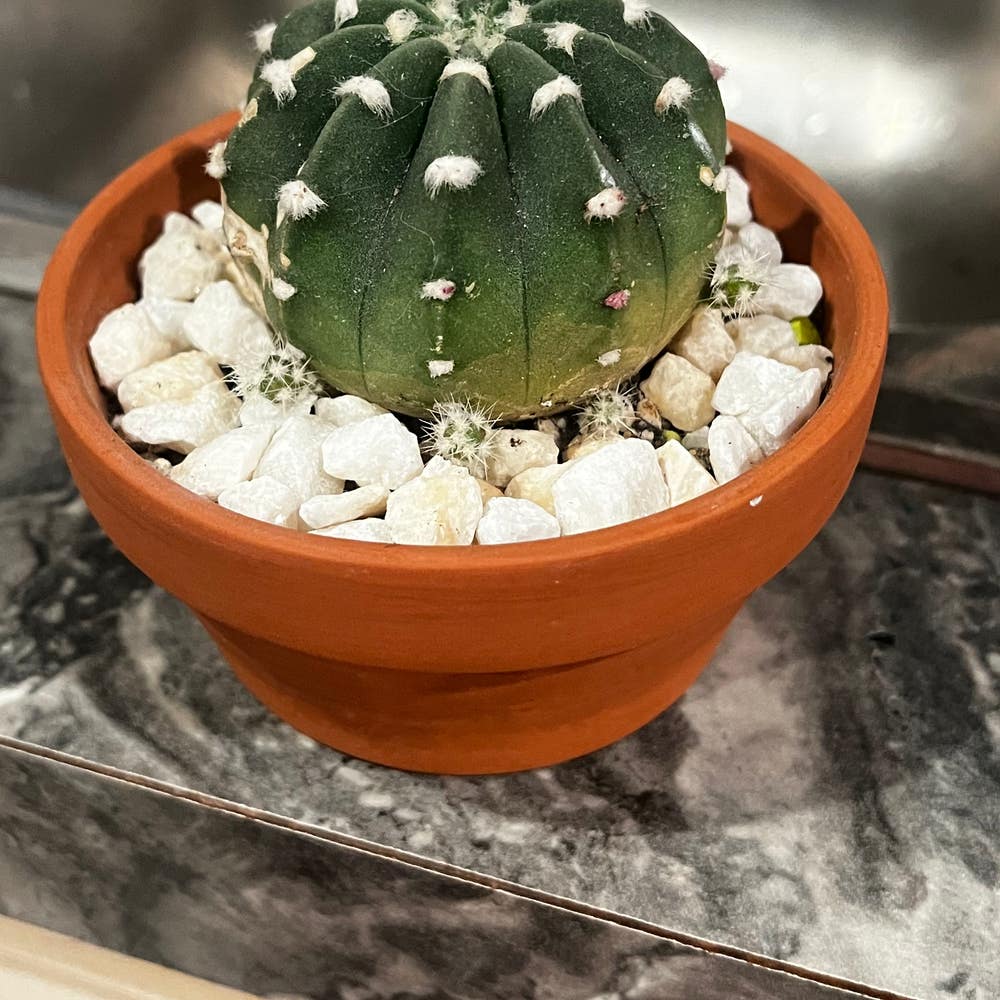
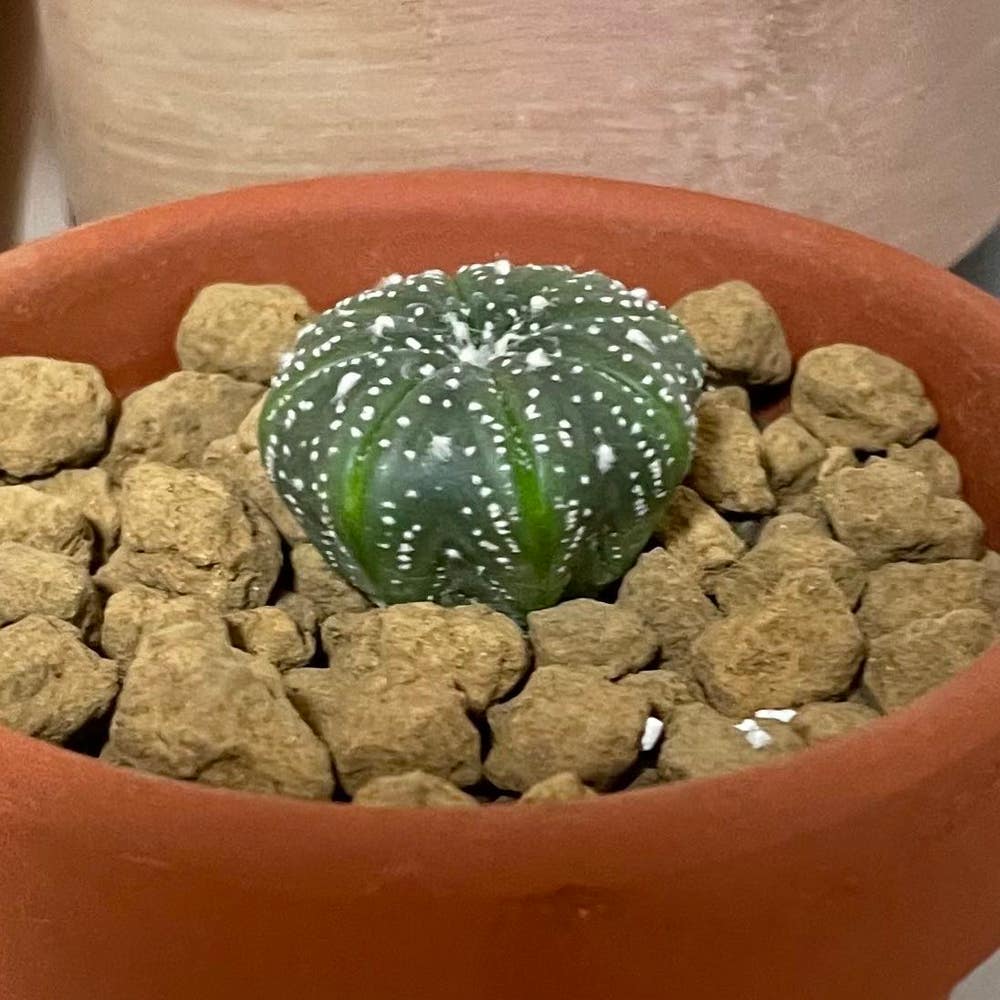
🌵 What Do Sand Dollar Cactus Flowers Mean?
Astrophytum asterias
By the Greg Editorial Team
Jun 18, 2024•4 min read
This article was created with the help of AI so we can cover more plants for you. May contain errors. See one? Report it here.
- 🌸 Blooms symbolize resilience and beauty, reflecting personal strength.
- ☀️ Six hours of direct sunlight essential for flowering.
- 🌵 Balanced, low-nitrogen nutrition during active growth for blooms.
Decoding the Message of Sand Dollar Cactus Blooms
🌵 Cultural and Symbolic Significance
The Sand Dollar Cactus (Astrophytum asterias) isn't just a plant; it's a testament to endurance. Its rare blooms are a celebration of life's tenacity, symbolizing resilience and beauty in the face of adversity. Culturally, these flowers are more than just eye candy; they're seen as warm embraces in the desert's harshness, akin to motherly love.
Personal and Emotional Resonance
When your Sand Dollar Cactus blooms, it's personal. It's as if the universe is giving you a nod, saying, "You're doing just fine." These flowers might resonate with you as a symbol of your strength and adaptability. They're a reminder that, like the cactus, you can thrive in any environment, no matter how tough. So, when you spot that pale yellow flower with its orange-red center, take it as a sign—your own resilience is in full bloom.

Prime Conditions for Sand Dollar Cactus Flowering
💡 Light: The Ultimate Flower Conductor
The sweet spot for Sand Dollar Cactus blooms is a Goldilocks scenario: not too little, not too much. Direct sunlight is non-negotiable for at least six hours daily, but watch out for the scorching midday sun. A little afternoon shade won't hurt, especially in the peak of summer.
🌡️ Temperature and Humidity: Setting the Stage
These desert darlings need warmth, but not a sauna. Aim for a comfortable 50 to 75 degrees Fahrenheit (10-24 degrees Celsius). Humidity? Think dry, with a slight uptick. Too much moisture in the air is about as welcome as socks in sandals.
🚰 Water and Soil: The Foundation of Flowers
Watering is a high-stakes game of precision—too much, and it's goodbye roots. Let the soil dry out completely before giving it a deep soak. The soil should be the cactus equivalent of a fast-draining penthouse—airy, with a pH of 6.5-7.5. Mix in some sand or perlite to keep it loose and luxurious.

Feeding Your Cactus for Fabulous Flowers
💐 Nutrient Mix for Maximum Bloom
Balanced nutrition is the secret sauce for Sand Dollar Cactus blooms. A fertilizer with a low nitrogen content is key, as too much nitrogen leads to a leafy, soft cactus rather than a sturdy, flowering one. Aim for a 1-1-1 or 2-1-1 N-P-K ratio to hit that sweet spot. Remember, it's about quality, not quantity.
🕰 Timing and Techniques for Fertilizer Application
Fertilize during the cactus's active growth periods—typically spring and summer. This isn't a daily chore; monthly feedings are plenty. When applying, dilute the fertilizer to 1/4-1/2 the recommended strength to avoid nutrient overload. It's like seasoning food; a little goes a long way. Use clean tools to prevent buildup and ensure even distribution.
Under-fertilization shows up as a lackluster bloom, so if your cactus is more fizzle than sizzle, it might need a nutrient boost. Conversely, over-fertilization is a silent killer; it's the equivalent of overfeeding, leading to an unhealthy plant. Stick to a light, balanced approach, and your cactus will be less prickly and more showy.
Organic fertilizers are the gourmet meal for your cactus's soil, improving its structure and supporting a healthy ecosystem. They release nutrients slowly, which is perfect for the cactus's modest appetite. Whether you choose synthetic or organic, the goal is to support robust flowering without going overboard.
Remember, the difference between a blooming and a bland cactus can often come down to the details of your care. Stay observant, and adjust your fertilizing regimen as needed to support those precious buds as they develop.

Encouraging Your Cactus to Put on a Floral Show
🌸 Insights into the Flowering Lifecycle
Understanding the flowering lifecycle of your Sand Dollar Cactus is like cracking a secret code. These cacti are performers, waiting for the right moment to unveil their blooms. Cooler temperatures and longer nights in fall signal the plants to start the blooming process. It's a waiting game, but when the conditions mimic their natural habitat, the show begins.
🚀 Tips for Boosting Flower Production
To coax your cactus into the spotlight, remember that fresh growth is your ticket to a floral display. A dormant winter followed by a sun-drenched spring sets the stage for blooming. Here's the play-by-play:
- Winter dormancy: Place your cactus in a cool, dry, but not dark location. Watering? Cut it out completely.
- Spring awakening: Ramp up the sunshine and reintroduce watering. It's like a wake-up call for your cactus.
Inspect regularly for pests or problems; early detection means you're more likely to keep those buds intact. And when you see buds forming, it's time to double down on care—keep the soil moist and stick to your fertilizing routine.
Remember, the difference between a blooming and a bland cactus can often hinge on these care details. So stay sharp, and with a bit of luck, you'll be the proud owner of a Sand Dollar Cactus in full, glorious bloom.
⚠️ Safety First
This content is for general information and may contain errors, omissions, or outdated details. It is not medical, veterinary advice, or an endorsement of therapeutic claims.
Always consult a qualified healthcare professional before using any plant as food, medicine, or supplement.
Never eat any plant (or feed one to pets) without confirming its identity with at least two trusted sources.
If you suspect poisoning, call Poison Control (800) 222-1222, the Pet Poison Helpline (800) 213-6680, or your local emergency service immediately.
Spotted an error? Please report it here.
Nurture your Sand Dollar Cactus into a symbol of strength 🌵 with Greg's tailored care reminders for the right balance of sunlight, water, and nutrients.