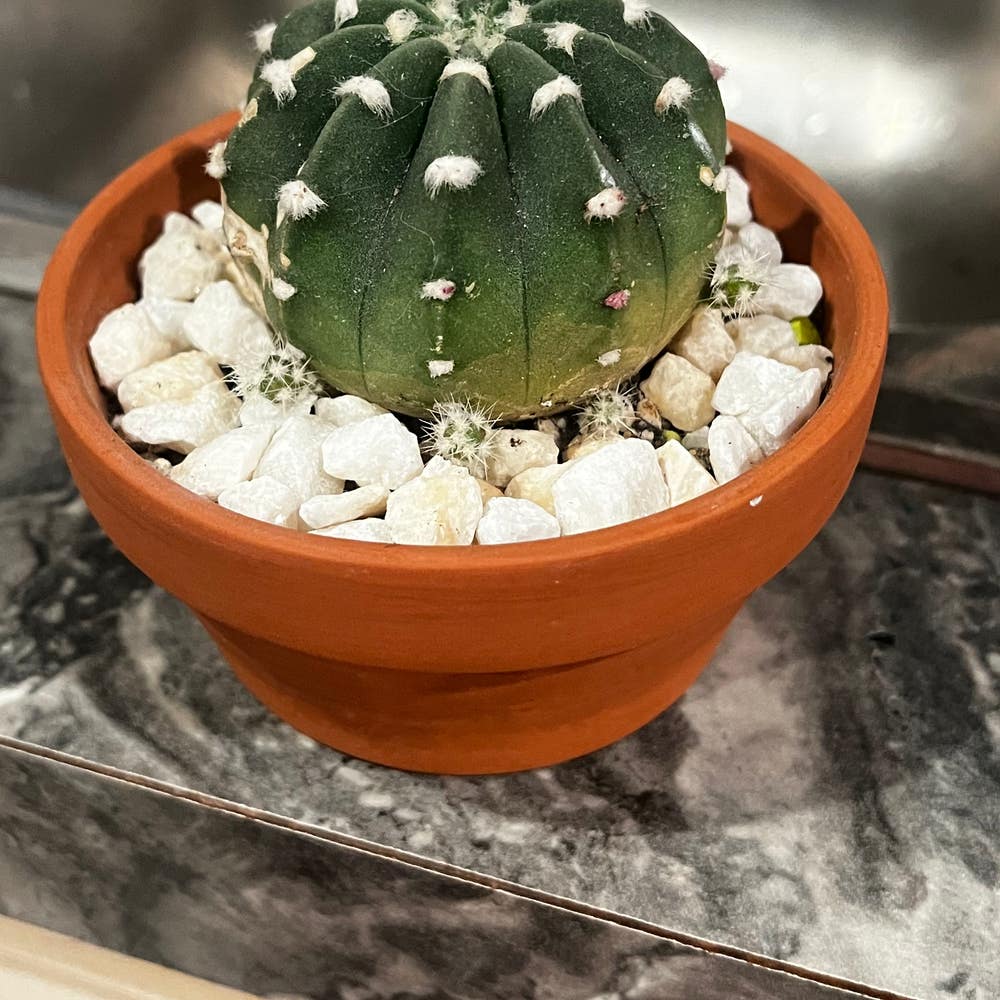
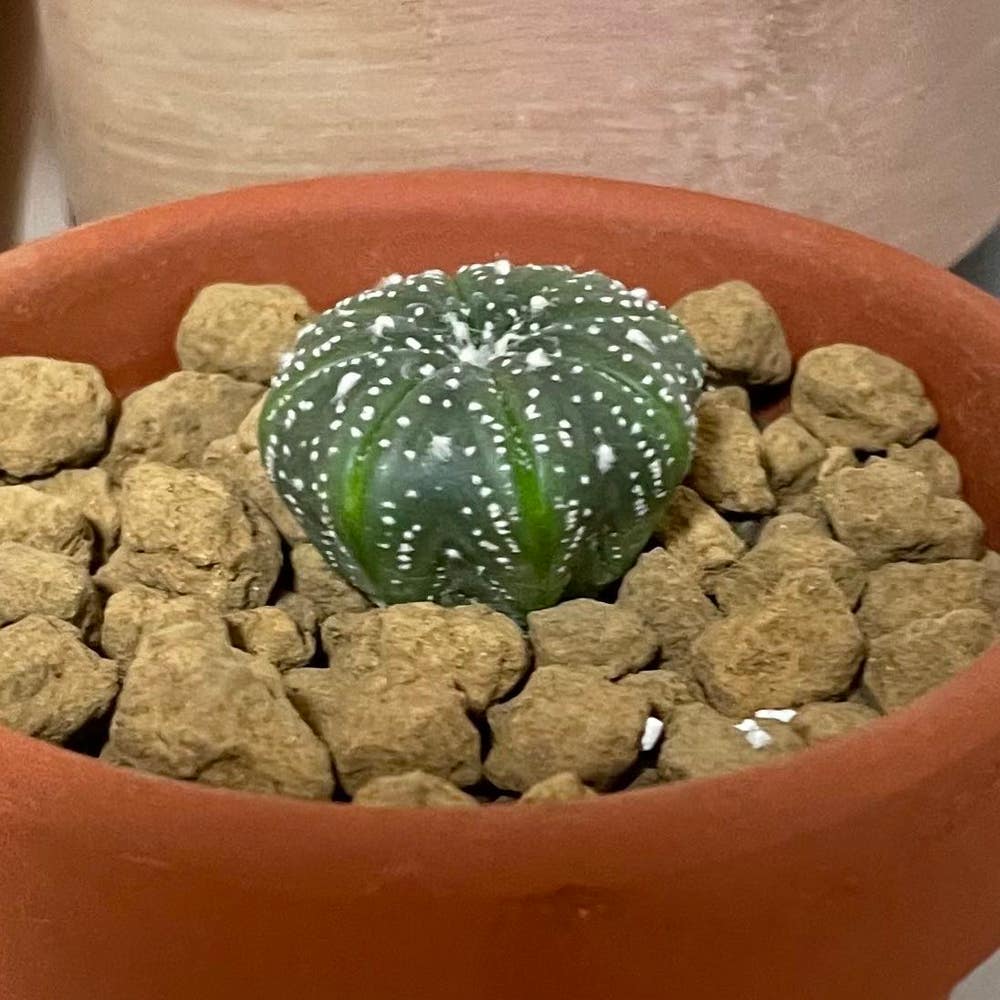
Should I Repot My Sand Dollar Cactus?
Astrophytum asterias
By the Greg Editorial Team
Jun 18, 2024•5 min read
This article was created with the help of AI so we can cover more plants for you. May contain errors. See one? Report it here.
- Roots packed, water issues, growth halt? Time to repot your cactus.
- Repot in spring/summer for cactus recovery; terracotta pots preferred for breathability.
- Post-repot: Water sparingly, provide indirect sunlight, and monitor for stress.
When to Give Your Cactus a New Home
🌵 Spotting the Tell-Tale Signs
Root check: Give your cactus pot a gentle squeeze. If it feels like a packed suitcase, it's time to repot. Visually, roots peeking out of drainage holes are crying for space.
Water behavior: If water zips through the soil like a kid on a waterslide, the roots have taken over. Conversely, water that sits tight like a stubborn stain suggests poor drainage, another repot signal.
Growth check: A cactus that's stopped growing is a silent plea for more room. It's not being lazy; it's cramped.
Timing is Everything
Best seasons: Spring into action during spring or summer. Your cactus is in growth mode and will bounce back faster.
Frequency: No need to repot as often as you hit the gym. Every 2-3 years is a good rhythm, or when you spot the tell-tale signs.

The Great Pot Debate: Material Matters
🌱 Terracotta vs. Ceramic vs. Plastic
Terracotta pots, breathable and classic, are your go-to for preventing soggy soil syndrome. They wick away excess moisture, making them a solid pick for the overzealous waterer. But, they're not gym weights for a reason; they can be heavy and fragile when Jack Frost hits.
Ceramic pots come in a kaleidoscope of colors and often sport a glaze that could make a donut jealous. They retain moisture well, but that's a double-edged sword—ensure they have drainage holes to avoid creating a mini swamp for your cactus. And if you're planning to play musical chairs with your plants, remember, these pots can be as hefty as a holiday turkey.
Plastic pots are the featherweights of the pot world—easy to shuffle around and great for locking in hydration. But watch out, they can turn into a petri dish for root rot if you're heavy-handed with the hose. Plus, if you're eco-conscious, they might just nag your conscience.
Size and Shape Considerations
Finding the right pot size is like choosing jeans—not too tight, not too loose. Aim for a pot that's just a smidge (1-2 inches) wider than the last. Go too big, and your cactus might drown in soil and loneliness. Too small, and it's cramped quarters for your prickly pal. Shape-wise, whether it's tall and slender or short and squat, ensure the pot complements your cactus without turning into a deep well or a shallow puddle.

The Repotting Rodeo: A Step-by-Step Guide
🛠️ Prepping for the Big Move
Before you dive into the repotting process, assemble your arsenal. You'll need a new pot—preferably one with drainage holes—a couple of inches larger than the old one. Ensure it's not too large; a pot that's too spacious can lead to waterlogged soil and a sad cactus. Grab some protective gloves (think leather or thick gardening gloves), a trowel, and your trusty watering can. Don't forget to lay down some newspaper or a tarp to catch any stray soil.
🌵 The Main Event: Repotting Step by Step
- Gently coax your cactus out of its current pot. If it's playing hard to get, try a little twist and shout—rotate and tap the pot to loosen the grip.
- Shake off the old soil and inspect the roots. If they're a tangled mess, it's definitely time for a new pad. Trim any dead or rotting roots with clean scissors.
- In the new pot, create a welcoming base with a well-draining soil mix. A concoction of perlite, sand, and potting soil usually does the trick.
- Position your cactus in the center and backfill with soil, tucking it in snugly without compacting the roots. Think of it as setting up a cozy bed that's firm yet breathable.
- Water sparingly after repotting. Your cactus needs time to acclimate to its new digs, and too much H2O can lead to root rot.
Remember, repotting is like a fresh start for your prickly friend. Treat it with care, and it'll thrive in its new home.

Post-Repot Pampering
🌵 The First Few Days
After repotting, hold off on watering your Sand Dollar Cactus for about a week. This gives any damaged roots a chance to heal. When you finally water, do so sparingly; think of it as giving your cactus a cautious welcome drink rather than a full-on housewarming party.
Bright, indirect sunlight is the sweet spot for your cactus post-move. Direct sunlight can be as harsh as a critic's review, so aim for that happy medium. Keep the temperature steady; your cactus despises fluctuations as much as a cat dislikes a surprise bath.
Long-Term Love
Monitor your cactus for signs of stress or euphoria. New growth? That's a high-five from your cactus. Brown spots or wilting? Time to play plant detective. Adjust your care routine as needed, but do it with the precision of a watchmaker.
Resist the urge to fertilize for the first month. Your cactus isn't ready for a full course meal just yet. When you do start, a low-dose cactus fertilizer monthly during the growing season will suffice. Remember, it's not about drowning your cactus in care, but about providing a stable environment for it to thrive in its new pot.
⚠️ Safety First
This content is for general information and may contain errors, omissions, or outdated details. It is not medical, veterinary advice, or an endorsement of therapeutic claims.
Always consult a qualified healthcare professional before using any plant as food, medicine, or supplement.
Never eat any plant (or feed one to pets) without confirming its identity with at least two trusted sources.
If you suspect poisoning, call Poison Control (800) 222-1222, the Pet Poison Helpline (800) 213-6680, or your local emergency service immediately.
Spotted an error? Please report it here.
Repot your sand dollar cactus with confidence, and count on Greg 🌵 for custom care reminders to ensure it settles perfectly into its new pot.