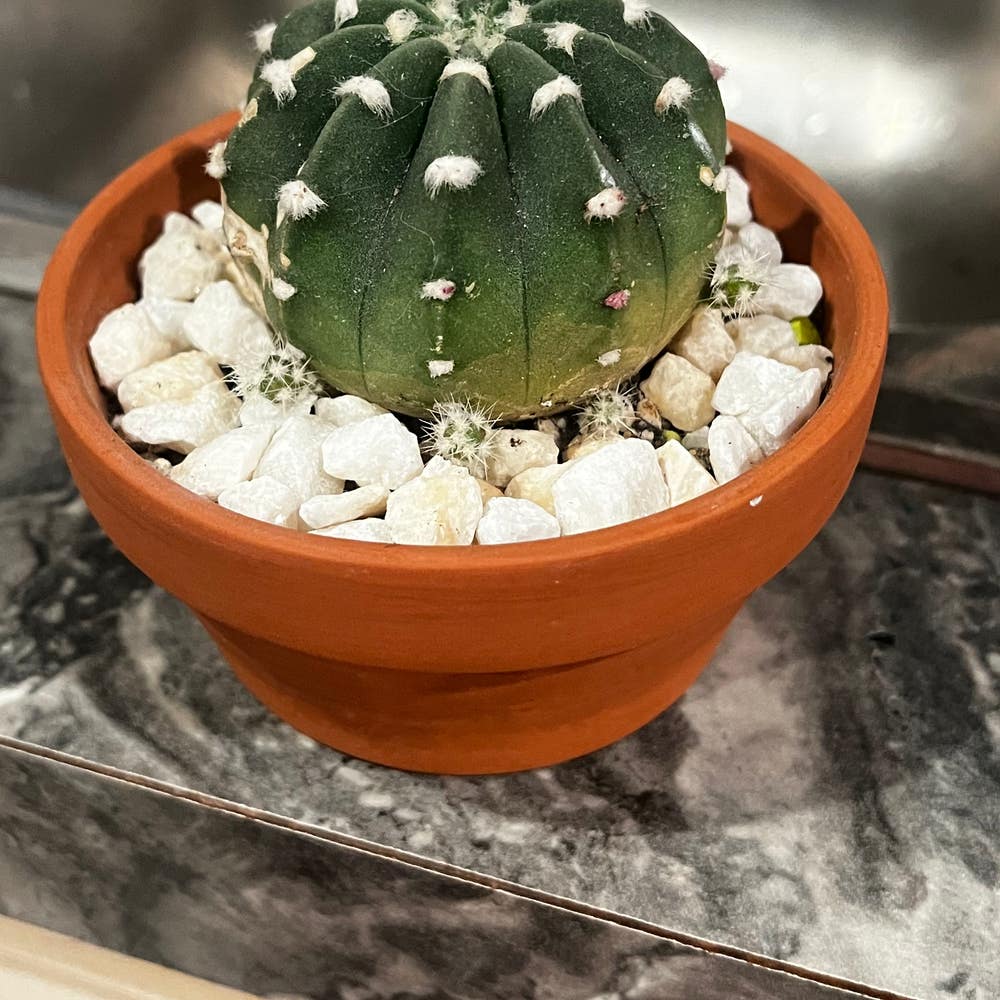
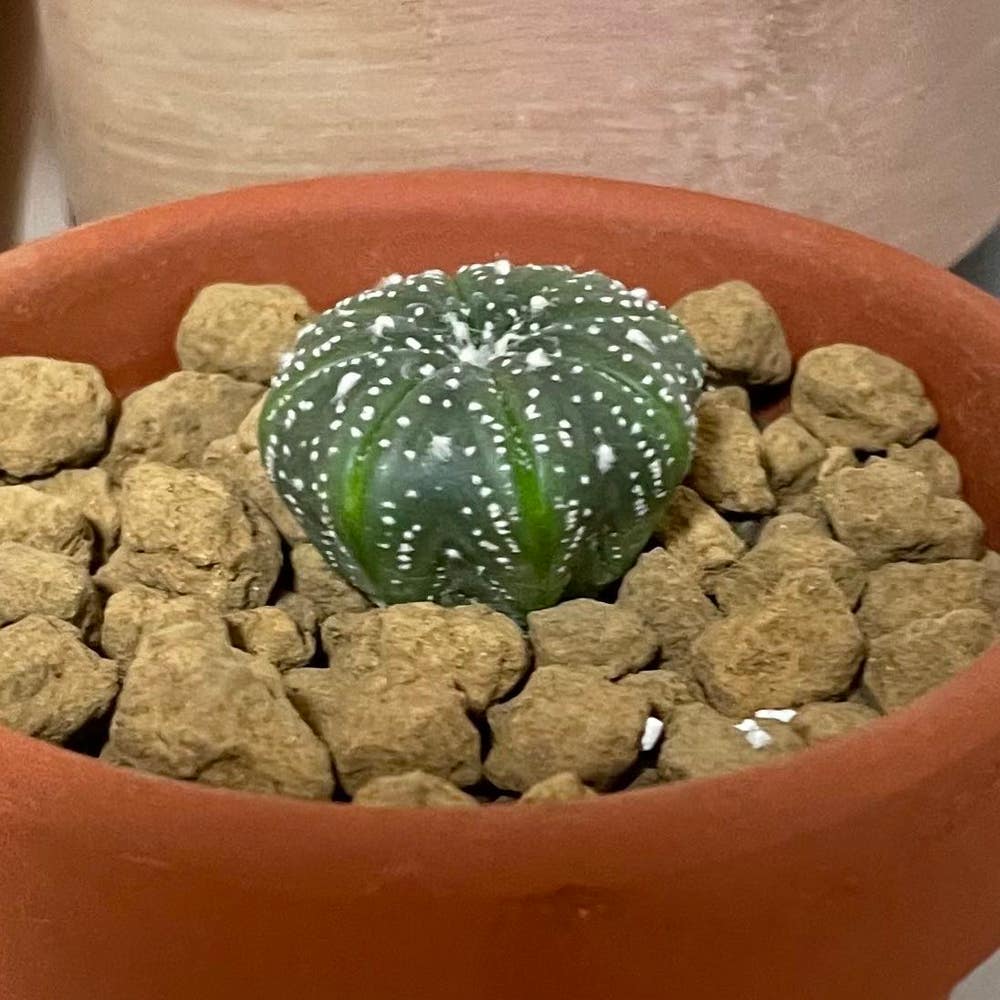
9 Tips for Selecting the Best Pot for Sand Dollar Cactus 🪸
Astrophytum asterias
By the Greg Editorial Team
Sep 30, 2024•6 min read
This article was created with the help of AI so we can cover more plants for you. May contain errors. See one? Report it here.
- 🌱 Choose the right pot size: 3-10 inches based on cactus growth stage.
- 🕳️ Always select pots with drainage holes to prevent root rot and promote health.
- 🧱 Clay and terracotta pots are ideal for moisture control and drainage for cacti.
Importance of Pot Size for Growth Stages
🌱 Growth Stages
Selecting the right pot size is crucial for your Sand Dollar Cactus at different growth stages.
Seedling Stage: Start with smaller pots, ideally 3-4 inches in diameter. This size helps retain moisture while allowing roots to establish without overcrowding.
Young Plant Stage: As your cactus grows, transition to medium pots measuring 5-7 inches. This provides ample space for roots to expand and thrive.
Mature Plant Stage: For fully grown cacti, larger pots of 8-10 inches are essential. They offer stability and prevent tipping, especially as the plant matures.
📏 Effects of Container Size on Growth
The size of the container significantly impacts your cactus's health.
Shallow Roots: Cacti have shallow root systems, making pot depth and width vital. A pot that’s too shallow can restrict growth and lead to stress.
Root Development: An appropriately sized container promotes healthy root systems. It allows roots to spread out, absorbing nutrients and water efficiently.
Overcrowding: Using pots that are too small can lead to overcrowding. This not only stunts growth but also increases the risk of root binding, which can harm your cactus.
Understanding these factors will help you choose the right pot size, ensuring your Sand Dollar Cactus thrives at every stage of its life. Next, let’s explore the ideal pot materials that complement your cactus's needs.
Ideal Pot Materials
Choosing the right pot material is crucial for the health of your Sand Dollar Cactus. Each type has its unique benefits and drawbacks that can significantly impact your plant's growth.
🏺 Clay Pots
Clay pots are a popular choice for many cactus enthusiasts. Their breathable nature allows moisture to evaporate, reducing the risk of overwatering.
However, they come with some downsides. Clay pots are heavier and can break easily, which might not be ideal for everyone.
🥤 Plastic Pots
Plastic pots are lightweight and durable, making them a convenient option. They are often less expensive, which is a bonus for budget-conscious gardeners.
On the flip side, plastic pots are less breathable. This can lead to moisture retention, which isn't great for cacti that prefer drier conditions.
🍂 Terracotta Pots
Terracotta pots excel in drainage and moisture control, making them perfect for cacti. They allow excess water to escape, helping to prevent root rot.
The downside? They can dry out quickly, meaning you'll need to water your cactus more frequently.
📊 Comparison of Pot Materials
Here's a quick comparison of the three pot materials:
| Material | Moisture Retention | Drainage Capability |
|---|---|---|
| Clay | Moderate | Excellent |
| Plastic | High | Poor |
| Terracotta | Low | Excellent |
When selecting pots for your Sand Dollar Cactus, consider its specific needs. If you tend to overwater, clay or terracotta might be your best bet. For those who prefer a low-maintenance option, plastic could work, but keep an eye on moisture levels.
Understanding these materials will help you create the ideal environment for your cactus to thrive. Next, let’s explore the role of drainage holes in pot selection.
Role of Drainage Holes in Pot Selection
💧 Importance of Drainage
Proper drainage is crucial for the health of your Sand Dollar Cactus. It prevents root rot, a common issue caused by overwatering, which can quickly turn your thriving plant into a sad, wilting mess.
To ensure effective water flow, aim for drainage holes that are at least 1/4 inch in diameter. This size allows excess water to escape while still retaining enough moisture for your cactus.
🪴 Choosing Pots with Drainage Holes
When selecting pots, look for those with built-in drainage holes. Options like clay, terracotta, and even some plastic pots often come equipped with these essential features.
If you find a pot you love that lacks drainage holes, don’t fret! You can easily modify it by drilling holes in the bottom or using a layer of gravel to help with drainage. Just remember, your cactus will thank you for the extra effort!
With the right pot and drainage setup, your Sand Dollar Cactus will flourish, setting the stage for its next growth phase. Now, let’s explore when and how to repot your cactus for optimal growth.
Repotting Considerations
🕒 When to Repot
Repotting your Sand Dollar Cactus is essential for its health. Look for signs like root-bound conditions, where roots start to emerge from the drainage holes, or stunted growth, indicating the plant is outgrowing its current pot.
It's generally recommended to repot every 2-3 years or as needed. Keeping an eye on your cactus will help you determine the right timing for this important task.
🪴 Choosing the Right Pot for Repotting
Selecting the right pot size is crucial for your cactus's growth stage. For seedlings, opt for smaller pots, while mature plants will thrive in larger containers.
Consider the materials based on moisture needs and drainage. Clay or terracotta pots are excellent for cacti due to their drainage capabilities, while plastic pots can be a lightweight alternative.
By matching the pot size and material to your cactus's needs, you ensure a healthy environment for growth. This thoughtful approach will set the stage for your cactus to flourish.
As you prepare to repot, remember that the right pot can make all the difference in your cactus's journey. Next, let's explore common mistakes in pot selection to avoid pitfalls in your gardening adventure.
Common Mistakes in Pot Selection
🚫 Choosing Pots Without Drainage
Selecting pots without drainage holes can lead to serious consequences for your Sand Dollar Cactus. Without proper drainage, excess water accumulates, increasing the risk of root rot and ultimately harming your plant's health.
To avoid these pitfalls, always prioritize pots with drainage holes. If you find a pot you love that lacks drainage, consider DIY solutions like drilling holes or using a layer of gravel at the bottom to improve water flow.
📏 Selecting Pots That Are Too Large or Too Small
Choosing the wrong pot size can be detrimental to your cactus's growth. Oversized pots can retain too much moisture, leading to root issues and potential rot.
On the flip side, pots that are too small can stunt growth and cause root binding. Always match the pot size to your cactus's current growth stage to ensure a healthy, thriving plant.
By avoiding these common mistakes, you'll set your Sand Dollar Cactus up for success. Next, let's explore the importance of repotting and how to choose the right pot for this crucial process.
⚠️ Safety First
This content is for general information and may contain errors, omissions, or outdated details. It is not medical, veterinary advice, or an endorsement of therapeutic claims.
Always consult a qualified healthcare professional before using any plant as food, medicine, or supplement.
Never eat any plant (or feed one to pets) without confirming its identity with at least two trusted sources.
If you suspect poisoning, call Poison Control (800) 222-1222, the Pet Poison Helpline (800) 213-6680, or your local emergency service immediately.
Spotted an error? Please report it here.
Choose the perfect pot for your Sand Dollar Cactus with Greg's tailored tips and reminders, ensuring it thrives in its ideal environment! 🌵