Why Are My Sand Dollar Cactus Leaves Curling?
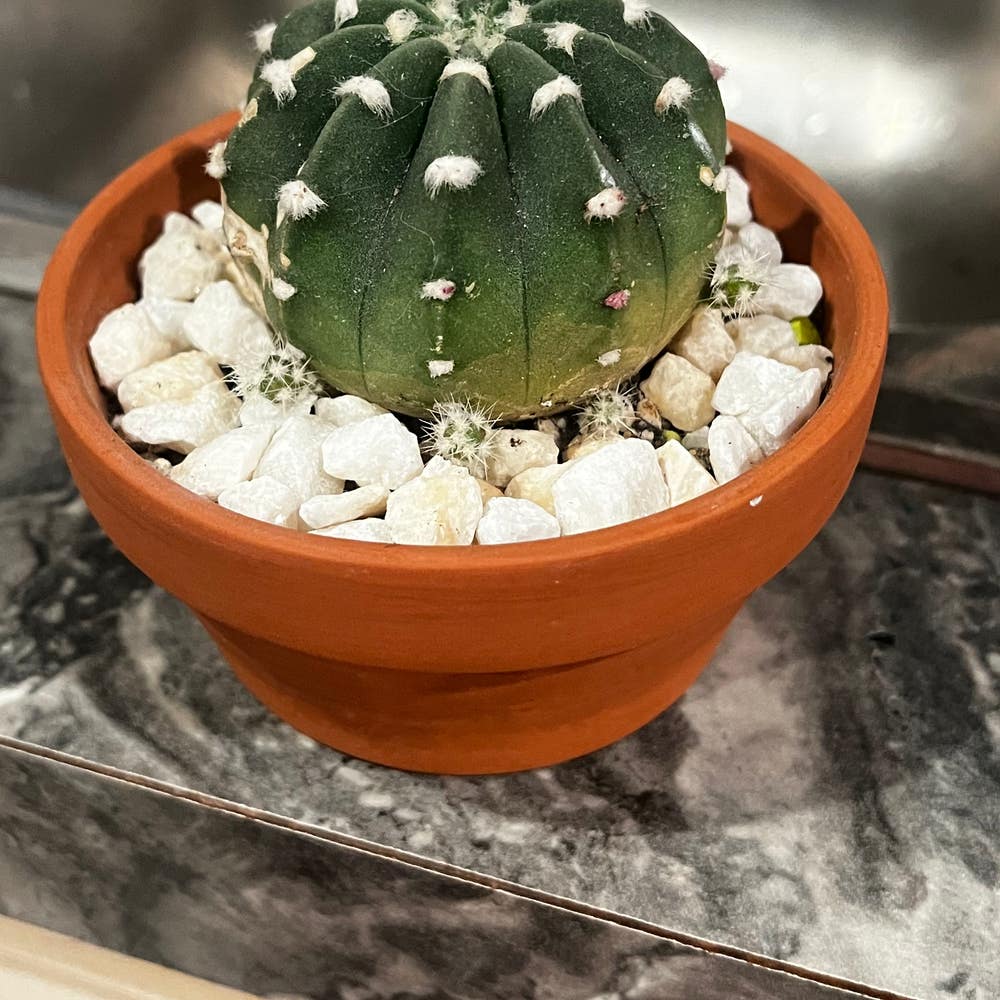
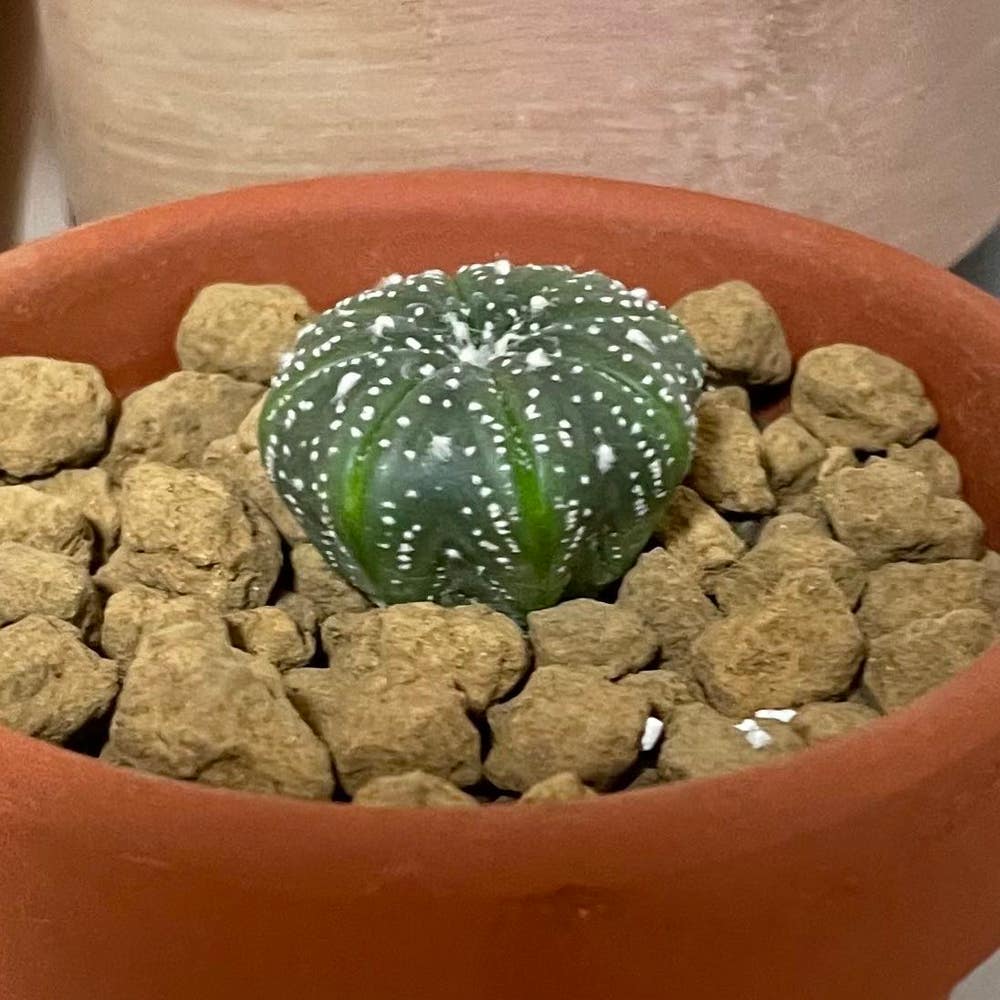
Astrophytum asterias
By the Greg Editorial Team
Jun 18, 2024•4 min read
This article was created with the help of AI so we can cover more plants for you. May contain errors. See one? Report it here.
- 🌞 Sun stress? Aim for 4-6 hours of indirect sunlight.
- 💧 Water woes? Check soil moisture before watering.
- 🐜 Pests detected? Isolate and treat your cactus promptly.
When the Sun's Too Much or Too Little
🌞 Spotting Sun Stress
Your Sand Dollar Cactus can go full vampire when overexposed to sunlight, curling up to avoid the harsh rays. Look for telltale signs like brown spots, leaves that are dry and crispy, or a bleached, sunburned appearance. On the flip side, too little light will make your cactus stretch out awkwardly, seeking the sun like a lost tourist.
Finding the Sweet Spot
To uncurl those leaves, think of your cactus as a Goldilocks plant; it needs its sunlight just right. Aim for 4-6 hours of bright, indirect sunlight daily. If your cactus is catching too many direct rays, diffuse the light with a sheer curtain or move it to a spot with milder sun exposure. Remember, it's about gradual change—no sudden moves. Transition your cactus to new lighting conditions like you're easing into a hot bath, not diving into the deep end.

Water Woes: Striking the Right Balance
💧 Signs of Thirst and Drowning
Cacti are the camels of the plant world, but even they have their limits. Overwatering turns leaves into mushy, yellow messes, while underwatering leaves them wrinkled and gasping for moisture. The soil's moisture level is your crystal ball—dry an inch down means grab the watering can; damp means back off.
Fine-Tuning Your Watering Technique
Getting watering right is less about sticking to a strict schedule and more about responding to your cactus's needs. Drainage holes are non-negotiable; they prevent your cactus from sitting in a puddle. Watering should be a seasonal affair—less in winter, more in summer. When in doubt, err on the side of too dry rather than too wet; your cactus will forgive you for making it thirsty, but not for drowning it.

The Dirt on Soil: Getting It Just Right
🌵 Soil Mix Mishaps
Curling leaves on your Sand Dollar Cactus might be screaming, "Get me out of this soil!" If your cactus is planted in a mix that's more suited to a swamp than a desert, you're in trouble. Avoid ingredients like coconut coir and peat moss that retain too much moisture. They're a no-go for cacti, which prefer to stay on the dry side.
🌱 Repotting for Relief
When it's time for a soil switcheroo, think gritty and well-draining. A mix that's one-third organic material and two-thirds mineral components hits the sweet spot. Aim for a pot that's the Goldilocks of homes—not too big, not too small, with drainage holes to boot. And when you repot, do it with the tenderness of a bomb squad technician. Your cactus's roots are delicate, and they don't take kindly to rough handling.

Bug Off! Keeping Pests and Diseases at Bay
🕵️ Spotting Trouble
Pests and diseases are the ninjas of the plant world, sneaking up on your Sand Dollar Cactus and causing those leaves to curl. Spider mites leave fine webs, while mealybugs give themselves away with a cotton-like residue. Catching these signs early is like finding a needle in a haystack, but it's crucial.
🌱 Nipping Problems in the Bud
Isolation is your cactus's best friend when you detect pests. Think of it as a time-out corner where it can't spread the love to your other plants. For fungal foes, fungicides are your go-to, but remember to check compatibility. Bactericides help with bacterial issues, but timing is everything—apply at the first sign of trouble.
Regular inspections should become as routine as your morning coffee. If you do find unwanted guests, a swipe with alcohol on a cotton swab can handle small infestations. For bigger issues, bring out the big guns: insecticidal soap or neem oil. And remember, prevention is better than cure—keep the airflow around your cactus like it's your personal space bubble at a concert.
⚠️ Safety First
This content is for general information and may contain errors, omissions, or outdated details. It is not medical, veterinary advice, or an endorsement of therapeutic claims.
Always consult a qualified healthcare professional before using any plant as food, medicine, or supplement.
Never eat any plant (or feed one to pets) without confirming its identity with at least two trusted sources.
If you suspect poisoning, call Poison Control (800) 222-1222, the Pet Poison Helpline (800) 213-6680, or your local emergency service immediately.
Spotted an error? Please report it here.
Keep your Sand Dollar Cactus perfectly poised against curling by letting Greg tailor sunlight and watering reminders 🌵 to your specific environment!