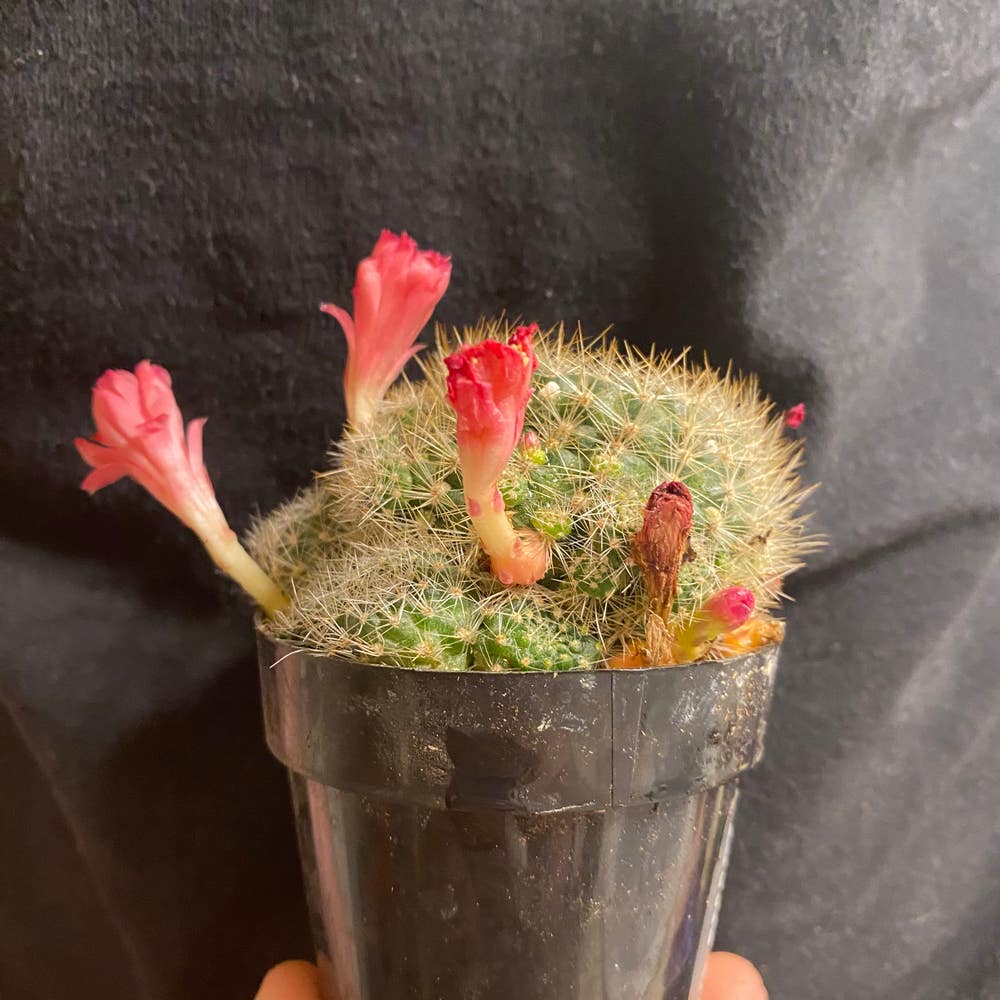
Why Are My Rebutia minuscula Leaves Curling?
Rebutia minuscula
By the Greg Editorial Team
Mar 06, 2024•4 min read
This article was created with the help of AI so we can cover more plants for you. May contain errors. See one? Report it here.
Unravel the mystery of curling Rebutia minuscula leaves and revive your cactus's charm 🌵✨!
- Under/overwatering causes curling: Check soil moisture to guide watering.
- 🌡️ Keep 65-75°F and bright light: Mimic natural habitat to prevent curling.
- Regular monitoring and clean plant: Catch early signs and reduce pest risk.
Spot the Signs: Identifying Curling Leaves in Rebutia minuscula
🚨 Visual Cues of Stress
Curling leaves on your Rebutia minuscula can range from subtle waves to tight spirals. If the leaves resemble a gymnast's ribbon, it's a visual shout for help. Crispy edges? Your plant's sending an SOS.
🌱 Common Mistakes in Care
Overwatering and underwatering are the usual suspects in leaf curling crimes. Leaves curling downwards might be swamped, while an upward curl suggests they're thirsty. Check the soil; if it's soggy, give it a rest, if it's dry, it's time for a drink.
Unraveling the Curl: Common Causes of Leaf Curling
🏜️ Thirsty Roots: The Perils of Underwatering
Dryness can make Rebutia minuscula leaves curl inward, a desperate move to conserve water. If the soil feels like a barren wasteland, it's time to hydrate.
To combat underwatering, water deeply when the soil is dry to the touch, allowing excess to drain freely. This encourages roots to seek moisture, preventing future curl crises.
💧 Drowning in Excess: Overwatering Woes
Leaves that feel like a damp sponge might be victims of overwatering. They curl, droop, and can even yellow.
Rescue begins by letting the soil dry out. Consider repotting with fresh, well-draining soil if the situation is dire. Moving forward, water only when the top inch of soil feels dry.
🌡️ Heat Wave or Chill Factor: Temperature Stress
Extreme temperatures are like bad actors in a plant's life drama, causing leaves to curl as a defense.
Keep your Rebutia minuscula in a temperature range of 65-75°F (18-24°C). Avoid placing it near heaters or AC units to prevent temperature-induced curling.
🌞 Light: Finding the Sweet Spot
Too much light scorches, too little starves. Both can lead to leaf curling as the plant struggles to adapt.
Find a spot with bright, indirect light for your Rebutia minuscula. If natural light is scarce, consider a grow light but avoid the midday sun's harsh spotlight.
The Cure: Remedies for Curling Leaves
💧 Fine-Tuning Watering Habits
Watering frequency and quantity are pivotal in the health of your Rebutia minuscula. Overwatering can lead to root rot, while underwatering leaves your plant parched. Check the soil before watering; it should be dry an inch down. When you water, do so thoroughly, allowing excess water to drain.
Adopt the soak and dry method: water deeply, then wait for the soil to dry out before watering again. This encourages strong root growth. Remember, the goal is moist soil, not a swamp.
🏡 Creating a Cozy Environment
Creating a stable environment for your Rebutia minuscula is like being a stage manager for a play. You're in charge of ensuring the temperature and light are just right. Avoid placing your plant near heat sources or drafty windows.
Light exposure is crucial. Too much direct sunlight can scorch leaves, while too little can weaken your plant. Aim for bright, indirect light. If you're dealing with temperature extremes, consider using a shade cloth or moving your plant to a more temperate spot.
Maintain a consistent temperature range, ideally between 65-75°F (18-24°C), to prevent stress from temperature fluctuations. If your home is dry, especially in winter, use a humidifier or pebble tray to increase humidity.
Rotate your plant regularly to ensure even light distribution, which can help prevent curling. Remember, your Rebutia minuscula doesn't need a sauna or an igloo; it craves a comfortable middle ground.
Prevention: Keeping Leaves Flat and Happy
🕵️ Regular Check-ups
Regular monitoring of your Rebutia minuscula is crucial. Look for changes in leaf color or texture as these can be early warnings of distress. It's like being on a stakeout; you need to catch the signs before they escalate.
🛡️ Proactive Measures
Consistency in care is key to preventing leaf curl. Establish a watering and fertilizing routine that's as reliable as your favorite weekly TV show. Adjust for seasonal changes; your cactus's needs will shift like your wardrobe from summer to winter. Keep the plant in conditions that mimic its natural habitat—think bright light and dry soil. And remember, a clean plant is less prone to pests, so keep those dead leaves cleared out like unwelcome cobwebs.
⚠️ Safety First
This content is for general information and may contain errors, omissions, or outdated details. It is not medical, veterinary advice, or an endorsement of therapeutic claims.
Always consult a qualified healthcare professional before using any plant as food, medicine, or supplement.
Never eat any plant (or feed one to pets) without confirming its identity with at least two trusted sources.
If you suspect poisoning, call Poison Control (800) 222-1222, the Pet Poison Helpline (800) 213-6680, or your local emergency service immediately.
Spotted an error? Please report it here.
Keep your Rebutia minuscula's leaves perfectly poised by tuning in 🎚 to Greg's custom watering and environment reminders for stress-free plant care.