Rebutia minuscula - Ultimate Guide to Fertilizing
Rebutia minuscula
By the Greg Editorial Team
Mar 06, 2024•4 min read
This article was created with the help of AI so we can cover more plants for you. May contain errors. See one? Report it here.
Transform your cactus into a blooming wonder with our ultimate Rebutia fertilizing guide. 🌵✨
- Choose wisely: Organic for gradual, synthetic for quick nutrient release.
- Fertilize monthly during growth, ease off during dormancy.
- Phosphorus and potassium boost blooms; watch for over-fertilization signs.
Choosing the Right Fertilizer for Your Rebutia Minuscula
💡 Organic vs. Synthetic: Which way to go?
In the organic corner, we have fertilizers that are like a slow-cooked meal for your Rebutia minuscula. They release nutrients gradually, fostering a robust soil ecosystem. Synthetic fertilizers, on the other hand, are the nutrient equivalent of a fast-food binge – quick and potent. They offer precision but come with a higher risk of overfeeding your cactus.
💡 Decoding NPK: What does your Rebutia really crave?
Your Rebutia minuscula doesn't have a big appetite for nitrogen. Too much, and you'll get a lanky cactus with few flowers. Aim for a low-N fertilizer, something in the ballpark of a 5-10-10 NPK ratio. This supports sturdy growth and encourages those coveted blooms. Remember, it's not about dumping food on your plant; it's about providing a balanced diet tailored to your cactus's specific needs.
Timing is Everything: When to Fertilize
🌱 Growth Spurts: Fertilizing during active growth
Spring and summer are Rebutia minuscula's prime time. This is when your cactus is in a growth frenzy, pushing out new spines and prepping for blooms. Fertilize monthly during these seasons. It's like giving a sprinter energy gel mid-race—timely and crucial.
❄️ Winter Whispers: Understanding the dormant period
Come fall and winter, your Rebutia hits the brakes. It's the plant equivalent of hibernation. Ease off the fertilizers; think of it as respecting your cactus's need for a peaceful nap. Over-fertilizing now is like offering espresso shots to a sleeping bear—unnecessary and potentially disruptive.
The Art of Fertilizer Application
💧 Mixing it Right: Dilution ratios for happy cacti
Dilution is not just a suggestion; it's a mandate for the well-being of your Rebutia minuscula. Half-strength is the mantra here—mix liquid fertilizer with water at this ratio to avoid the root burn blues. If you're working with granular types, think of it as a sprinkle-and-dash affair: apply, then water to activate.
🌱 Method Matters: Best practices for applying fertilizer
Precision is your best friend when it comes to applying liquid fertilizer. Use a measuring tool, like a syringe, to ensure you're not overdoing it. Apply the diluted mix directly to moist soil, targeting the root zone while avoiding the stem. This is like giving your cactus a gourmet meal; it should be nourishing, not overwhelming. For granular fertilizers, channel your inner chef and evenly distribute the granules over the soil, then water immediately. Stick to the script—follow the label instructions to a T.
Blooming Marvels: Fertilizing for Flower Power
💪 Phosphorus and Potassium: The blooming boosters
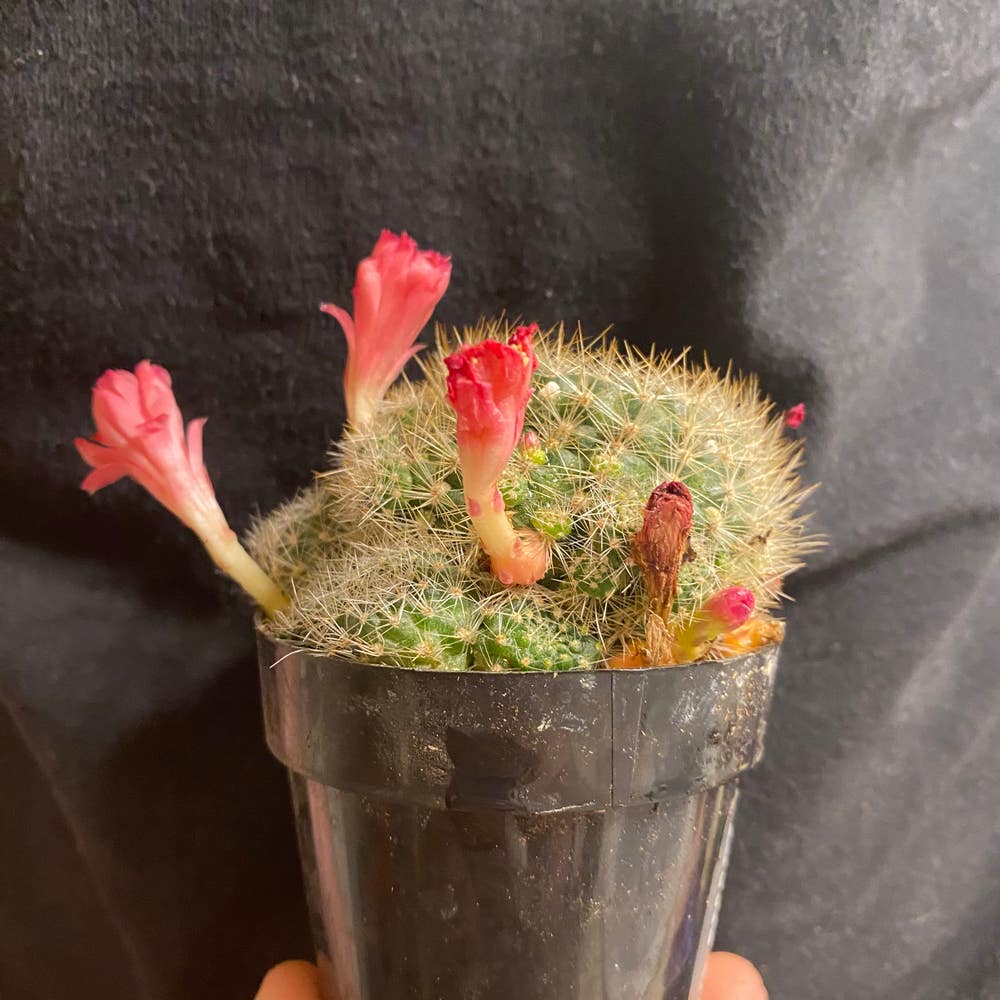
Phosphorus is your Rebutia minuscula's ticket to a vibrant floral show. It's the nutrient that nudges buds into full bloom. Potassium, the silent partner, ensures the plant's overall vigor, fortifying it to support and sustain those blooms. Together, they're the dynamic duo of the fertilizing world.
🌸 Adjusting for the Show: Tweaking the routine in bloom season
When the Rebutia minuscula hints at blooming, it's time to pivot your fertilizing strategy. Shift focus to a fertilizer with a higher phosphorus content to champion those flowers. But keep it cool—overdoing it is like yelling in a library, unnecessary and potentially damaging. Maintain a steady hand with application, and watch your cactus put on a show that could rival Broadway's finest.
Recognizing and Fixing Over-Fertilization
🚨 Spotting Trouble: Symptoms of too much love
Yellowing leaves or a crusty fertilizer residue on the soil's surface are telltale signs that your Rebutia minuscula may be getting more nutrients than it can handle. Over-fertilization can also manifest as burned or brown leaf tips and edges, which should raise immediate red flags. While lush, dark green foliage might seem like a sign of health, be wary of unnatural leaf curling or a slowdown in growth—these are your cactus's subtle distress signals.
Back on Track: Remedies for an overfed Rebutia
If you suspect your Rebutia minuscula has had a bit too much of a good thing, it's time for a soil detox. First, stop all fertilization; your plant needs a break. Flush the soil with water to leach out the excess nutrients—think of it as a refreshing rainstorm to wash away the buildup. If the roots are already suffering, don't hesitate to repot your cactus in fresh, well-draining soil. Remember, balance is key—once you've corrected the issue, stick to the recommended dosage and frequency for future feedings.
⚠️ Safety First
This content is for general information and may contain errors, omissions, or outdated details. It is not medical, veterinary advice, or an endorsement of therapeutic claims.
Always consult a qualified healthcare professional before using any plant as food, medicine, or supplement.
Never eat any plant (or feed one to pets) without confirming its identity with at least two trusted sources.
If you suspect poisoning, call Poison Control (800) 222-1222, the Pet Poison Helpline (800) 213-6680, or your local emergency service immediately.
Spotted an error? Please report it here.
Nurture your Rebutia minuscula to full bloom 🌼 with Greg's personalized feeding reminders, ensuring your cactus gets just the right nutrients at the right time!