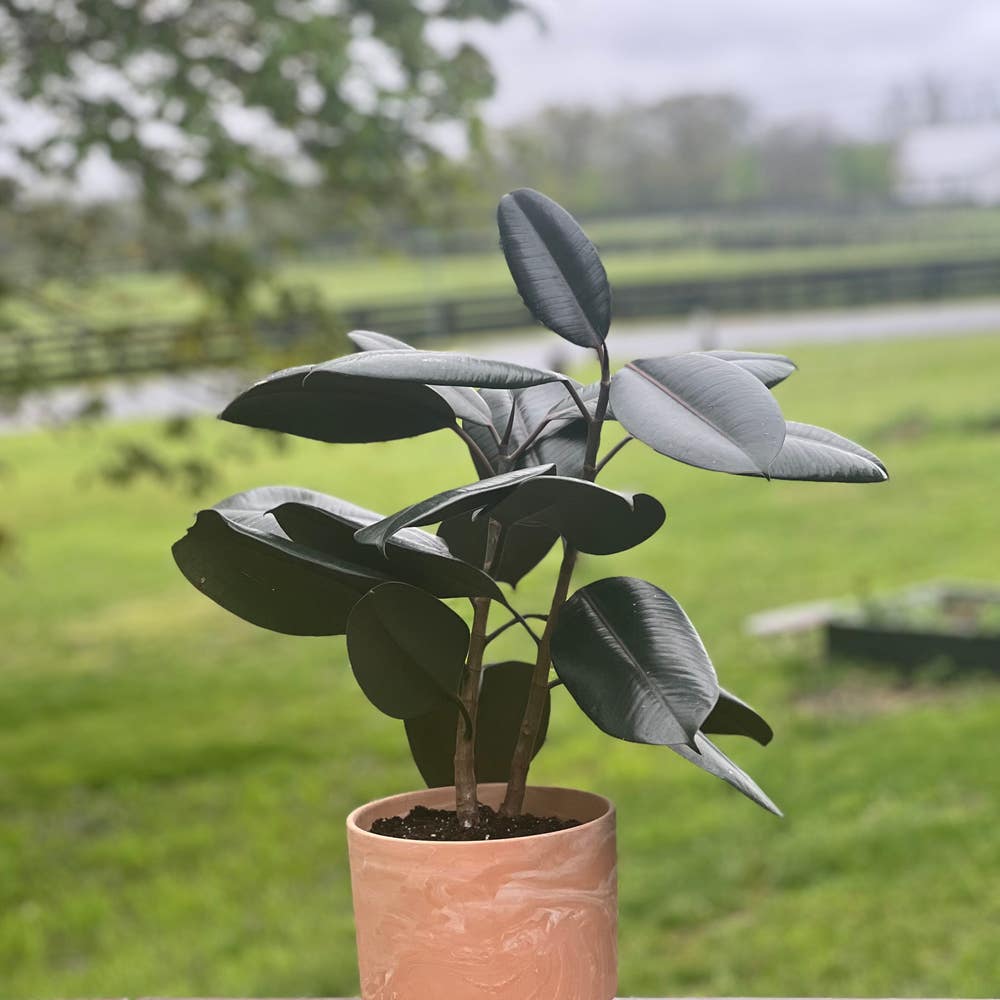
🌸 How and When to Pollinate Purple Rubber Plant
Ficus elastica 'Burgundy'
By the Greg Editorial Team
Oct 17, 2024•5 min read
This article was created with the help of AI so we can cover more plants for you. May contain errors. See one? Report it here.
Master the art of pollination for your Purple Rubber Plant and watch your garden thrive! 🌼
- 🌼 Purple Rubber Plants have hidden flowers that can self-pollinate or cross-pollinate.
- 🐝 Key pollinators include bees and butterflies, enhancing genetic diversity and resilience.
- 🌱 Hand pollination boosts seed production, ensuring plant survival and adaptability.
Flower Structure
🌼 Description of Characteristics
The Purple Rubber Plant features small, inconspicuous flowers that cluster together, making them easy to overlook. Their color is typically greenish-yellow, allowing them to blend seamlessly with the lush foliage.
These flowers are arranged in axillary clusters, often hidden among the leaves. This unique positioning helps protect them while still allowing for effective pollination.
🐝 Role in Pollination
The flower structure of the Purple Rubber Plant is adapted for both self-pollination and cross-pollination. This flexibility is crucial for ensuring successful reproduction, especially in varying environmental conditions.
Moreover, the characteristics of these flowers play a vital role in attracting pollinator species. Their subtle design facilitates pollen transfer, enhancing the chances of fertilization and the plant's overall reproductive success.
Understanding these features not only highlights the beauty of the Purple Rubber Plant but also underscores the intricate relationships between plants and their pollinators.
As we delve deeper into the pollination process, we’ll explore how these adaptations come into play during self and cross-pollination.
Pollination Process
Self-Pollination Explanation 🌱
The Purple Rubber Plant has a fascinating mechanism for self-pollination. This process allows the plant to fertilize itself, ensuring reproduction even in the absence of pollinators.
Self-pollination offers significant benefits, particularly in stable environments. It guarantees seed production, which is crucial for the plant's survival and propagation.
Cross-Pollination Explanation 🐝
While self-pollination is effective, cross-pollination plays a vital role in enhancing genetic diversity. This diversity is essential for the resilience and adaptability of the species.
Key pollinators for the Purple Rubber Plant include bees, butterflies, moths, and hummingbirds. These creatures interact with the plant, transferring pollen and significantly boosting pollination success.
Understanding both self and cross-pollination helps gardeners appreciate the intricate relationships within ecosystems. This knowledge can guide efforts to support these beautiful plants and their pollinators.
Natural Pollination Mechanisms
🌼 Pollen Transfer Mechanisms
Pollination in the Purple Rubber Plant primarily occurs through natural mechanisms. Pollen is transferred from the male stamens to the female pistils, often facilitated by visiting pollinators like bees and butterflies.
Environmental factors play a crucial role in this process. Temperature and humidity can significantly impact pollen viability and the activity of pollinators, making these elements vital for successful pollination.
🐝 Importance of Pollination
Pollination is essential for the reproduction of the Purple Rubber Plant. It ensures the production of seeds, which are necessary for the plant's lifecycle.
Moreover, pollination contributes to genetic diversity within the species. This diversity enhances resilience, allowing the plant to adapt to changing environmental conditions and thrive in various habitats.
Hand Pollination Techniques
Hand pollination can be a rewarding way to ensure the reproductive success of your Purple Rubber Plant. Here’s a straightforward guide to help you navigate the process.
Step 1: Identifying Male and Female Flower Parts 🌸
First, you need to identify the male and female flower parts. The male parts, called stamens, produce the pollen, while the female parts, known as pistils, receive the pollen.
Step 2: Collecting Pollen 🧹
Next, gather your tools. A small brush or cotton swab works best for collecting pollen. Timing is crucial; make sure to collect pollen when the flowers are fully open for optimal results.
Step 3: Transferring Pollen 🔄
Now, it’s time to transfer the pollen. Gently apply the collected pollen to the stigma of the female flowers. Handle the flowers carefully to ensure successful fertilization.
By following these steps, you can effectively assist in the pollination of your Purple Rubber Plant, enhancing its growth and vitality.
As you become more familiar with these techniques, you’ll find that hand pollination not only supports your plant but also deepens your connection to the gardening process.
Supporting Pollinators
🌼 Creating a Pollinator-Friendly Environment
Creating a habitat for pollinators is essential for the health of your garden and the success of your Purple Rubber Plant. Pollinators like bees and butterflies thrive in environments that provide food, water, and shelter.
To attract these vital species, consider planting native plants that are well-suited to your local ecosystem. Additionally, incorporating water sources, such as shallow dishes or birdbaths, can provide hydration for thirsty pollinators. Don't forget to include sheltered areas, like shrubs or small trees, where they can rest and nest.
🌱 Companion Plants
Companion planting is a fantastic way to enhance pollination success. Certain plants naturally attract beneficial pollinators, creating a vibrant ecosystem in your garden.
Consider adding lavender, bee balm, and marigolds to your planting scheme. These flowers not only draw in pollinators but also provide a beautiful display. By fostering a diverse plant community, you can significantly boost the chances of successful pollination for your Purple Rubber Plant.
Incorporating companion plants not only supports pollinators but also enriches your garden's overall health. This symbiotic relationship can lead to a flourishing environment where both plants and pollinators thrive.
As you cultivate a pollinator-friendly space, you'll set the stage for a more resilient garden. Next, let’s explore the challenges that can arise in the pollination process and how to overcome them.
Pollination Challenges and Solutions
Common Obstacles 🌪️
Pollination can be tricky for the Purple Rubber Plant due to various environmental factors. Temperature fluctuations and humidity levels can hinder the delicate process, while a lack of pollinators can leave flowers unvisited.
Seasonal variations also play a significant role in pollination success. During certain times of the year, pollinator activity may drop, impacting the plant's reproductive capabilities.
Solutions for Overcoming Challenges 💪
Fortunately, there are effective strategies to enhance pollination success. Adjusting care practices based on environmental conditions is crucial; for instance, providing adequate moisture during dry spells can help.
When natural methods fall short, hand pollination becomes a valuable tool. This technique ensures that pollen reaches the stigma, boosting the chances of successful fertilization.
By being proactive and attentive, you can significantly improve the pollination outcomes for your Purple Rubber Plant. This not only supports its growth but also contributes to the overall health of your garden ecosystem.
⚠️ Safety First
This content is for general information and may contain errors, omissions, or outdated details. It is not medical, veterinary advice, or an endorsement of therapeutic claims.
Always consult a qualified healthcare professional before using any plant as food, medicine, or supplement.
Never eat any plant (or feed one to pets) without confirming its identity with at least two trusted sources.
If you suspect poisoning, call Poison Control (800) 222-1222, the Pet Poison Helpline (800) 213-6680, or your local emergency service immediately.
Spotted an error? Please report it here.
Boost your Purple Rubber Plant's pollination success 🌱 with Greg's tailored reminders and tips for creating a thriving environment that attracts essential pollinators!