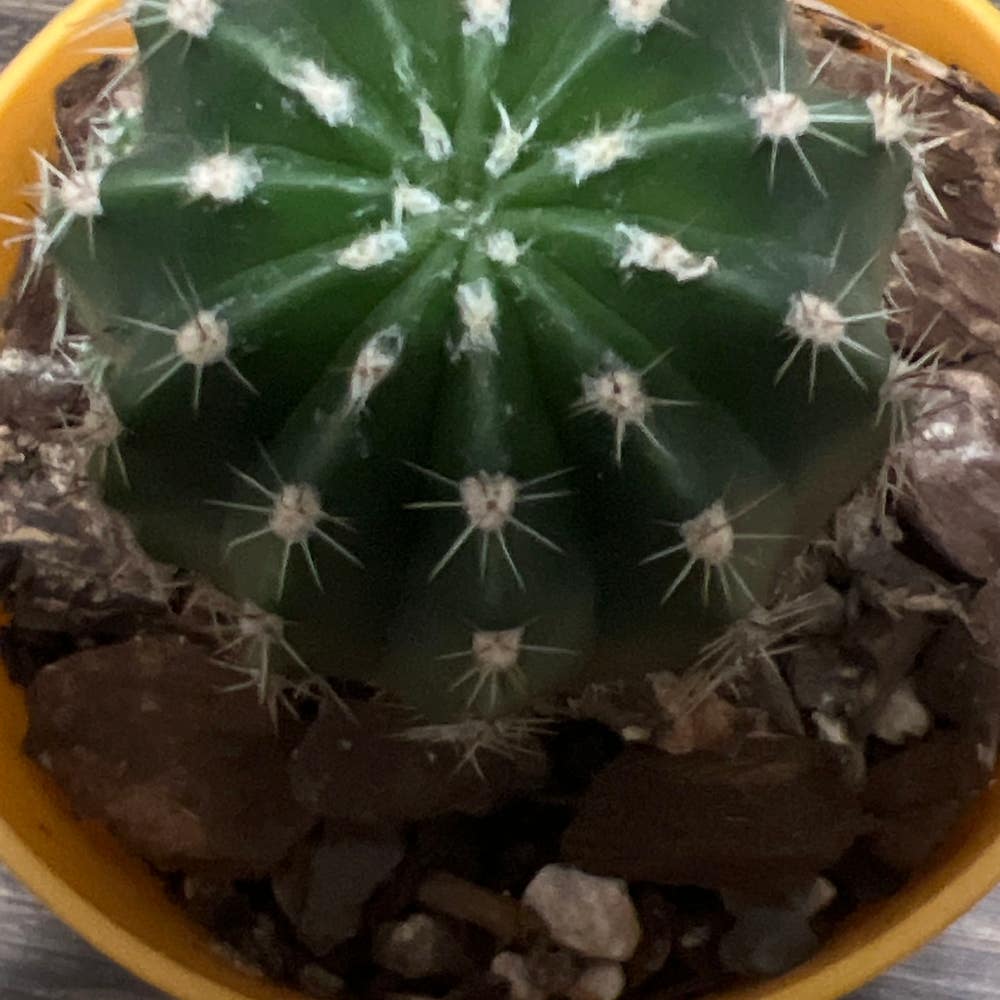
Echinopsis 'Rose Quartz'
About Echinopsis 'Rose Quartz'
Echinopsis 'Rose Quartz' is a relatively rare houseplant 🌿 that is easy to grow and needs very little water to thrive. They do best in long-lasting, direct light ☀️ and should be less than 1 foot from a window.
Echinopsis 'Rose Quartz' likes soil that is extremely well-draining. Your plant shouldn't need added fertilizers if you repot each time it doubles in size.
Echinopsis 'Rose Quartz' belongs to the Echinopsis genus, and is native to This is a cultivated hybrid variety.
Taxonomy

Echinopsis 'Rose Quartz'
Echinopsis
Cactaceae
Caryophyllales
Also known as
Chamelobibia rose quartz

How to care for Echinopsis 'Rose Quartz'
How often to water your Echinopsis 'Rose Quartz'

every 12
Echinopsis 'Rose Quartz' needs 0.5 cups of water every 12 when it doesn’t get direct sunlight and is potted in a 5" pot.
Use our water calculator to personalize watering recommendations to your environment or download Greg for more advanced recommendations for all of your plants.

Water 0.5 cups every
12
Finding light for Echinopsis 'Rose Quartz' in your home

a window
Echinopsis 'Rose Quartz' love being close to bright, sunny windows 😎.
Place it less than 1ft from a south-facing window to maximize the potential for growth.
Echinopsis 'Rose Quartz' does not tolerate low-light 🚫.
Select your region to see how the current weather in your area affects the placement of Echinopsis 'Rose Quartz' in your home 🏡.
How to fertilize Echinopsis 'Rose Quartz'

Most potting soils come with ample nutrients which plants use to produce new growth.
By the time your plant has depleted the nutrients in its soil it’s likely grown enough to need a larger pot anyway.
To replenish this plant's nutrients, repot your Echinopsis 'Rose Quartz' after it doubles in size or once a year—whichever comes first.
-
I've had this tiny cactus for a year. I propagated it. I have had no experience how to overwinter cacti, and the tiny "Athena" has suffered a lot. She has lost all her green colour in 1 month. I was anxious whether she would survive. I changed the environment, hoping my diagnosis was right. I'm excited to show her photo here on the road to recovery. There's some green at last 🌵💚🤗 #cactusclique #cactus #cacti #echinopsis #greggang #greggers #desertdweller
-
I learned the hard way that there's no such thing as overwintering #cacti in Queensland, Australia. My beloved #cactus #echinopsis Athena has suffered much because of my ignorance, but has pulled through and is showing more green. I was sad because of what I did to Athena. I bought this hamster to cheer me up. #cactusclique
-
I learned the hard way that there is no such thing in Queensland, Australia as overwintering cacti. My #cactus #echinopsis Athena is still quite yellow, it has suffered much because of my ignorance, but it has pulled through and doing better. More of the green colour is visible. I bought this little hamster to cheer me up. I'm sad that I made my belved cactus suffer. #cactusclique
-
Happy Easter from me and all my plants to you my friends on Greg. Have a nice relaxing time, and let all your plants thrive. 💚 This cute Easter bunny is printed on a 3D printer. I'll be away for 2 months, but I left one plant in my room. It doesn't need much water. Will it be ok? What do you think?😆 🤗💚🌵🪴🌿 #happyplants #plantsmakepeoplehappy #greggang #greggers #succulentsquad #succulentlove #peperomia #peperomiapals #echinopsis #echeveria
-
This #echinopsis Lime Green pup Athena is plump and strong, she is growing slowly but surely. She was very undersized when planted. She is my very first propagation project. My pride and joy. 🤗💚🌵 #cactusclique #cactus #succulentsquad #succulentlove #greggang #happyplants
-
How cleverly this #echeveria #FireandIce hid itself in a patch of weeds. It's a wolf in a sheep skin LOL 😜😊 #happyplants #plantsmakepeoplehappy #succulentsquad #succulentlove
-
Why is this tiny gremlin #Cactus #Echinopsis growing on one side only? I've been turning it many times, no effect. #cactusclique #succulentsquad #succulentlove #GregGang #greggerssupportinggreggers
-
#Echinopsis Baby Athena with her dad Einstein; a happy family 💚🌵 #cactusclique #succulentsquad #succulentlove #greggang #plantsmakepeoplehappy #Athena
-
I wonder how old this #Echinopsis #cactus could be. Any ideas? #plantaddict
-
Can someone tell me if the top of spike looks healthy? #Echinopsis #HappyPlants #PlantsMakePeopleHappy #PlantAddict


Care Summary for Echinopsis 'Rose Quartz'

Echinopsis 'Rose Quartz'
 Greg recommends:
 Water
Water
0.5 cups every 12 days
 Placement
< 1ft from a window
 Nutrients
Repot after 2x growth
Based on the 4” pot your plant is in, and that it doesn’t get direct sunlight.
 Trending in your area











 Similar to Echinopsis 'Rose Quartz'

✨ Discover rare plants

Picasso's Paintbrush

Anthurium 'Fantasy Lo…

Anthurium Fingers

Hoya sipitangensis

Large Leaf Elephant B…

Chinese Evergreen 'Go…

Carolina Reaper

Red Mistletoe Cactus
Phalaenopsis schiller…

Betel

Electric Blue Gecko

Aeonium 'Blushing Bea…
Philodendron 'Gabby'

Orange Lipstick Plant
Hoya 'Memoria'

Croton Nervia

Lithops