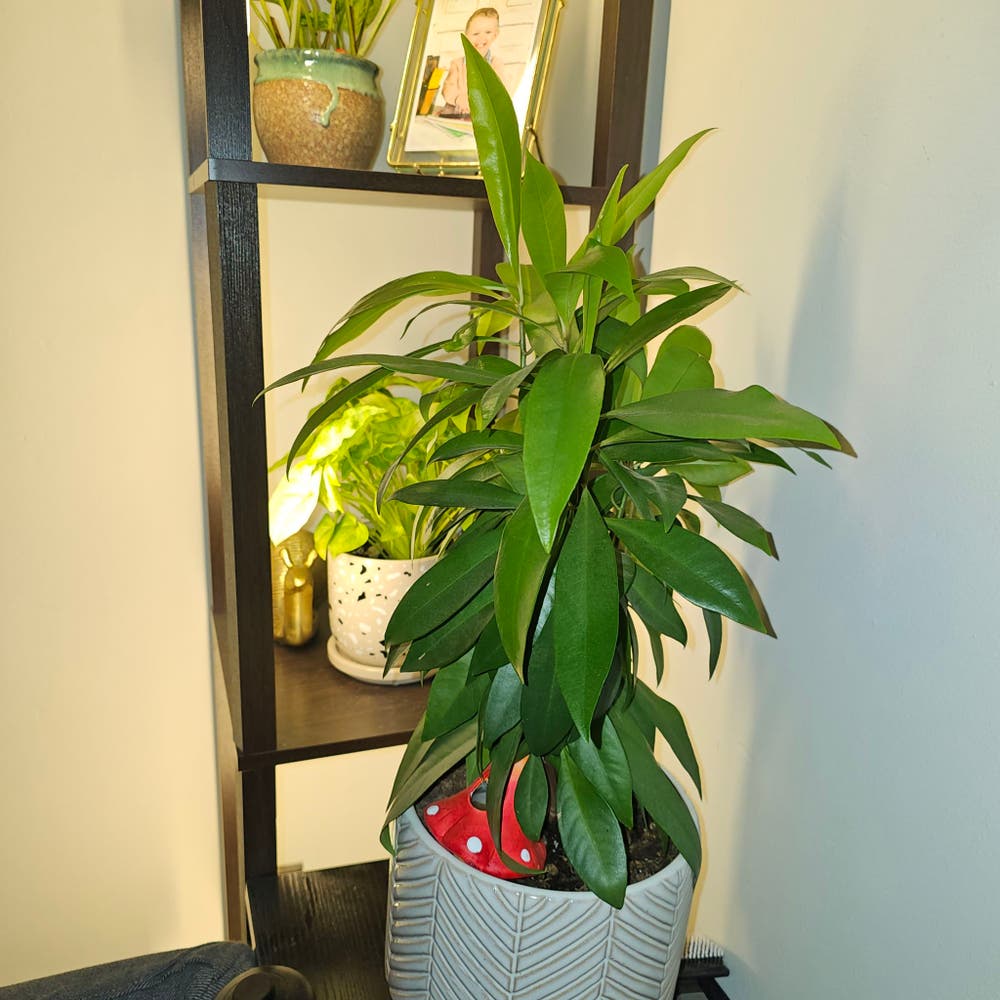
Why Are the Leaves on My Island Marlberry Turning Yellow?
Ardisia escallonioides
By the Greg Editorial Team
Mar 05, 2024•4 min read
This article was created with the help of AI so we can cover more plants for you. May contain errors. See one? Report it here.
Revive your Island Marlberry's vibrance by pinpointing and fixing yellow leaf causes! 🌿✨
- Watering balance is key; too much or too little causes yellow leaves.
- Nutrient deficiencies signal distress, leading to yellowing and stunted growth.
- Pests and diseases can turn leaves yellow; use IPM for prevention and treatment.
Spotting the Trouble Signs
🚨 Recognizing Yellow Leaves
Yellowing leaves on your Island Marlberry are like a check engine light; they're a signal something's off. Uniform yellowing across leaves often points to systemic issues like watering mishaps or nutrient shortages. If yellowing is more of a polka dot affair or concentrated at the edges, think sunburn or temperature tantrums.
🌡️ Environmental Stress Signals
Island Marlberry is no drama queen, but it does have its preferences. Too much light can lead to a leafy sunburn, while too little leaves them lackluster. If your plant's leaves are more crispy than a fall leaf on the sidewalk, dial down the sun. Stable temperatures and humidity levels keep your Marlberry from throwing a yellow flag. Quick fixes? Think sheer curtains for softer light and a consistent thermostat setting for that just-right feel.
Water Woes and Soil Struggles
💧 The Balancing Act of Watering
Overwatering turns your Island Marlberry's roots into a swampy mess, while underwatering leaves it gasping for moisture. Yellow leaves often signal you've missed the mark. To nail the watering routine, think of your plant like a VIP guest—check in regularly, but don't smother with attention.
- Check soil moisture before watering; it should feel like a wrung-out sponge.
- Adjust watering frequency with the seasons—more in summer, less in winter.
🌱 Soil Health Check
Soil quality is a game-changer for leaf health. Poor soil can send your Marlberry's leaves to a yellow graveyard. Refreshing the soil might be the revival your plant needs.
- Conduct a soil test to check for pH imbalances and nutrient deficiencies.
- Choose a well-draining soil mix to prevent waterlogged roots.
Remember, your plant's not trying to give you a hard time—it's trying to tell you something. Listen up, and you might just crack the code to those perfect green leaves.
Feeding Your Island Marlberry Right
🌿 Spotting Nutrient Deficiencies
Yellow leaves can be a distress signal for nutrient deficiencies in your Island Marlberry. Nitrogen, phosphorus, and potassium are the usual suspects when it comes to a lackluster green. A pale yellow hue or leaves with yellow veins could point to a lack of these essential nutrients.
To determine if your plant is hungry for more, look for stunted growth or an overall lackluster appearance. These are telltale signs that your Marlberry might need a nutrient boost.
🌱 Fertilizing Fixes
Selecting the right fertilizer is crucial. Opt for a balanced, water-soluble type that caters to the needs of your Marlberry without overwhelming it. Remember, more is not always better.
When feeding your plant, follow the recommended dosage on the fertilizer label to avoid over-fertilization, which can be just as harmful as underfeeding. Consistency is key—stick to a regular feeding schedule to maintain optimal plant health.
Battling Pests and Diseases
🐛 Common Culprits
Yellowing leaves on your Island Marlberry might be a red flag for pest infestations or diseases. Aphids, mealybugs, and scale insects are the usual suspects, sucking the life out of your plant. These critters are stealthy; aphids are tiny and love new growth, while mealybugs hide in nooks like mini cotton balls. Scale insects? They're the bumps on stems and leaves you probably mistook for plant acne.
Fungal diseases also love to crash the leaf party, with symptoms like a yellow halo around brown or black spots. Nematodes are root attackers, causing yellowing from the ground up. And let's not forget botrytis blight, the gray mold that's about as welcome as mold on your favorite bread.
💥 Fight Back Strategies
Integrated Pest Management (IPM) is your battle plan. It's a mix of cultural, biological, and when necessary, chemical warfare. Start with the basics: inspect those leaves, top and bottom, like you're looking for hidden treasure. Found bugs? Show them the door with insecticidal soap or neem oil. They're tough on pests but won't mess up Mother Nature's vibe.
Encourage the good guys, like ladybugs, to move in—they're natural aphid assassins. And practice good hygiene; keep your plant's area clean to avoid giving pests a place to crash.
Got a fungal fiesta? Improve air circulation and avoid making the leaves wet when you water. If things get serious, consider fungicides, but use them like hot sauce—a little goes a long way.
Remember, the best offense is a good defense. Regular check-ups and prompt action can save your Island Marlberry from turning into a yellow wasteland. Keep those leaves green, and your plant will be the envy of the neighborhood.
⚠️ Safety First
This content is for general information and may contain errors, omissions, or outdated details. It is not medical, veterinary advice, or an endorsement of therapeutic claims.
Always consult a qualified healthcare professional before using any plant as food, medicine, or supplement.
Never eat any plant (or feed one to pets) without confirming its identity with at least two trusted sources.
If you suspect poisoning, call Poison Control (800) 222-1222, the Pet Poison Helpline (800) 213-6680, or your local emergency service immediately.
Spotted an error? Please report it here.
Prevent yellowing and achieve vibrant health 🍃 for your Island Marlberry with Greg's precise watering and nutrient reminders, tailored to your plant's needs.