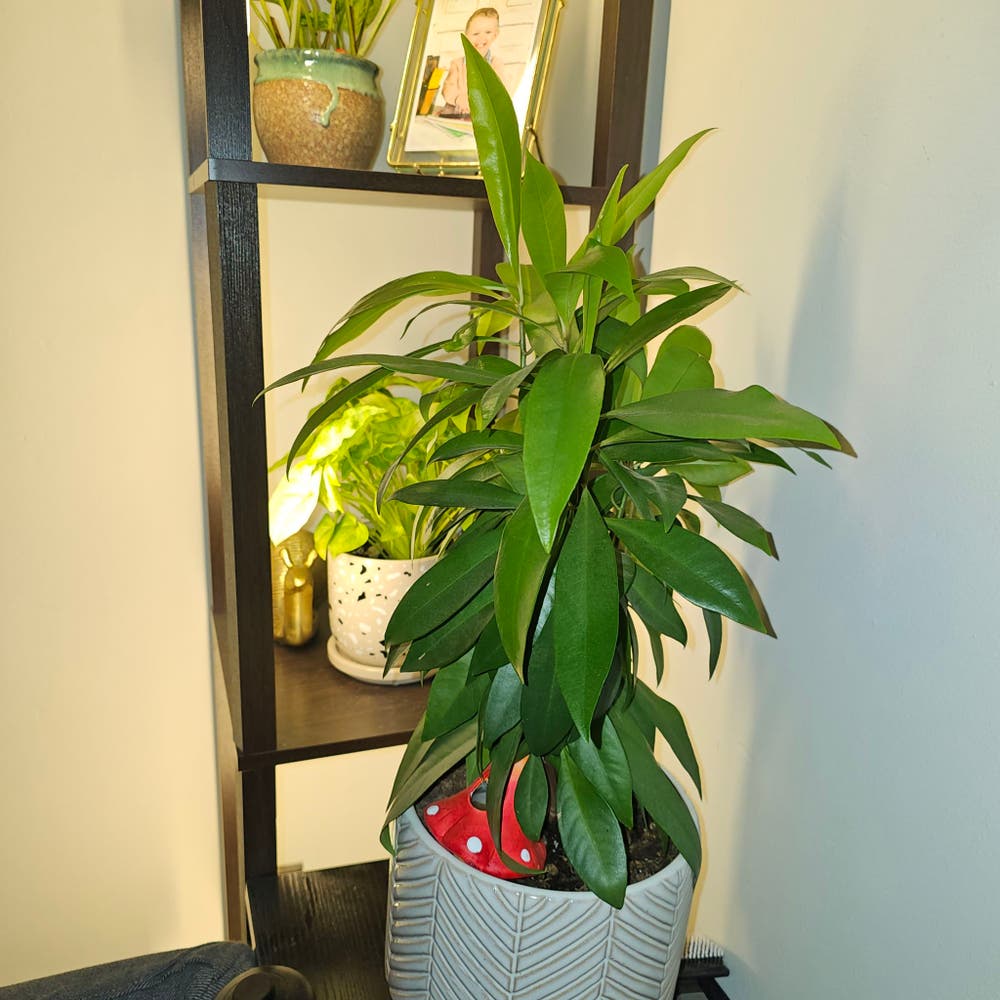
Why Are My Island Marlberry Leaves Droopy?
Ardisia escallonioides
By the Greg Editorial Team
Mar 05, 2024•5 min read
This article was created with the help of AI so we can cover more plants for you. May contain errors. See one? Report it here.
Discover the secret to perky Marlberry leaves and prevent plant distress with our targeted care guide! 🌿✨
- Droopy leaves signal distress; check for underwatering, overwatering, and heat stress.
- Adjust care routines for watering, drainage, and light to revive your plant.
- Prevent droopiness with consistent watering and an ideal environment.
Spotting the Slump: Identifying Droopy Leaves
🍃 Visual Cues: The Look of a Droopy Leaf
Island Marlberry leaves in distress often hang limply, a stark contrast to their usual perky posture. A healthy leaf should be firm and resilient, not sagging towards the ground with a defeatist air. If your plant's leaves resemble a slouched figure on a couch, it's time to perk up and pay attention.
🖐 Touch and Tell: The Feel of a Droopy Leaf
When you gently press a leaf, it should exhibit some resistance, snapping back into place like a well-tuned guitar string. If it clings to your finger with the enthusiasm of a wet noodle, you're likely dealing with an unhappy plant. Mushy or limp foliage is a distress signal that should set off your inner plant doctor alarms.
🚨 Recognizing Stress Signals
Look out for leaves that have lost their vibrant green, turning pale or developing unsightly spots. Leaves curling inwards, as if trying to roll into themselves, are broadcasting a clear message of plant stress. These visual and tactile clues are the plant's way of crying out for help.
🕵 Assessing the Severity
Not every droopy leaf is a sign of the apocalypse for your Island Marlberry. However, consistent symptoms across the plant are more telling than an isolated incident. If the droop is accompanied by discoloration or stunted growth, it's time to don your detective hat and get to the root of the problem.
The Usual Suspects: Pinpointing the Culprits
🏜️ Underwatering Woes
Spotting the thirst: Your Island Marlberry might be giving you the silent treatment if it's underwatered. Look for leaves that are as limp as a forgotten salad in the back of your fridge. If the soil crumbles at your touch, it's time to bring on the hydration.
Soil sleuthing: To check for dryness, forget fancy gadgets; your finger is your best tool. Probe the soil an inch deep. If it feels like a dry spell in the Sahara, it's a clear sign your plant is parched.
🚰 Overwatering Overkill
Soggy soil signals: Overwatering is like an overbearing friend—it means well but can smother. Leaves that are more swollen than your ankle after a marathon are waving a white flag. If the soil sticks to your fingers like unwanted chewing gum, you've overdone it.
Root rot revelations: When roots are as mushy as overcooked pasta, it's a sign of root rot. This is the plant equivalent of cold, wet feet, and nobody likes that. If your leaves are wilting despite wet soil, it's time to ease up on the watering can.
🌞 Climate Culprits
Too hot to handle: Heat stress can make your Marlberry's leaves droopier than a teenager asked to do chores. If your plant is in a spot that's hotter than your last spicy meal, consider relocating it.
Light levels: Finding the sweet spot between a tanning bed and a cave is key. Too much light and your leaves might get a sunburn; too little and they'll fade into the background like a wallflower at a dance.
Bouncing Back: Rescue and Recovery Tactics
💧 Watering Wisdom
Fine-tuning your watering routine is crucial for the revival of your Island Marlberry. The key is to water when the top inch of soil feels dry to the touch. Be vigilant, as overwatering can be just as detrimental as underwatering.
Drainage is non-negotiable. Ensure your pot has drainage holes, and consider adding a layer of gravel at the bottom to prevent water from pooling around the roots.
🌞 Climate Control
Adjusting light exposure can prevent further stress. Your Island Marlberry should be positioned where it receives bright, indirect sunlight. Too much direct sun can exacerbate the droopiness.
Temperature plays a role too. Keep your plant in a room that's consistently between 65-75°F (18-24°C). Sudden temperature fluctuations are a no-go.
Remember, recovery is more marathon than sprint. Monitor your plant closely and be ready to adjust your tactics as it bounces back to health.
Future-Proofing Foliage: Prevention Practices
💧 Crafting the Perfect Watering Calendar
Consistency is the backbone of plant care. To prevent your Island Marlberry from becoming a droopy mess, establish a watering schedule that's just right. Not too much, not too little. Think of it as setting up a calendar alert for plant prosperity. Use tools like moisture meters or apps to remind you when it's time to water. Remember, your plant's thirst varies with the seasons—more water in the heat, less in the cool.
🌿 Environment Essentials
Creating an ideal environment is non-negotiable. Bright, indirect light keeps your Marlberry's leaves perky without the risk of sunburn. Make sure the temperature is stable; these plants despise surprises. If your home is drier than a desert, consider misting or a pebble tray to increase humidity. Rotate the plant regularly for even light exposure and prune with purpose—snip away the old to encourage the new. And don't forget, a gentle leaf wipe-down does wonders for photosynthesis and pest prevention.
💦 Watering and Soil Management
Proper watering is crucial. Let the soil dry out between waterings to avoid root rot. Mix in peat moss or vermiculite to improve soil moisture retention. Always water with room temperature liquid—cold water can shock the roots. And for the love of foliage, keep leaves dry to prevent fungal invasions.
🔄 Adjusting Watering Practices
Your watering can is your best friend and your worst enemy. To avoid the tragedy of mushy leaves, water early in the day and avoid getting the leaves wet. Mulching helps conserve soil moisture and regulate temperature, but keep it away from the stem to prevent rot. During the growing season, a monthly dose of half-strength water-soluble fertilizer will suffice; overfeeding is a no-go.
🌱 Long-Term Care to Prevent Leaf Loss
Aim for a stable environment with consistent light and temperature. If your home is more arid than a comedian's humor, mist those leaves or use a pebble tray to up the humidity. And remember, a happy plant is a healthy plant, so keep those roots happy with tailored watering practices.
⚠️ Safety First
This content is for general information and may contain errors, omissions, or outdated details. It is not medical, veterinary advice, or an endorsement of therapeutic claims.
Always consult a qualified healthcare professional before using any plant as food, medicine, or supplement.
Never eat any plant (or feed one to pets) without confirming its identity with at least two trusted sources.
If you suspect poisoning, call Poison Control (800) 222-1222, the Pet Poison Helpline (800) 213-6680, or your local emergency service immediately.
Spotted an error? Please report it here.
Banish droopiness from your Island Marlberry by optimizing watering 🚿 with Greg's custom schedules and environmental insights for plant perkiness!