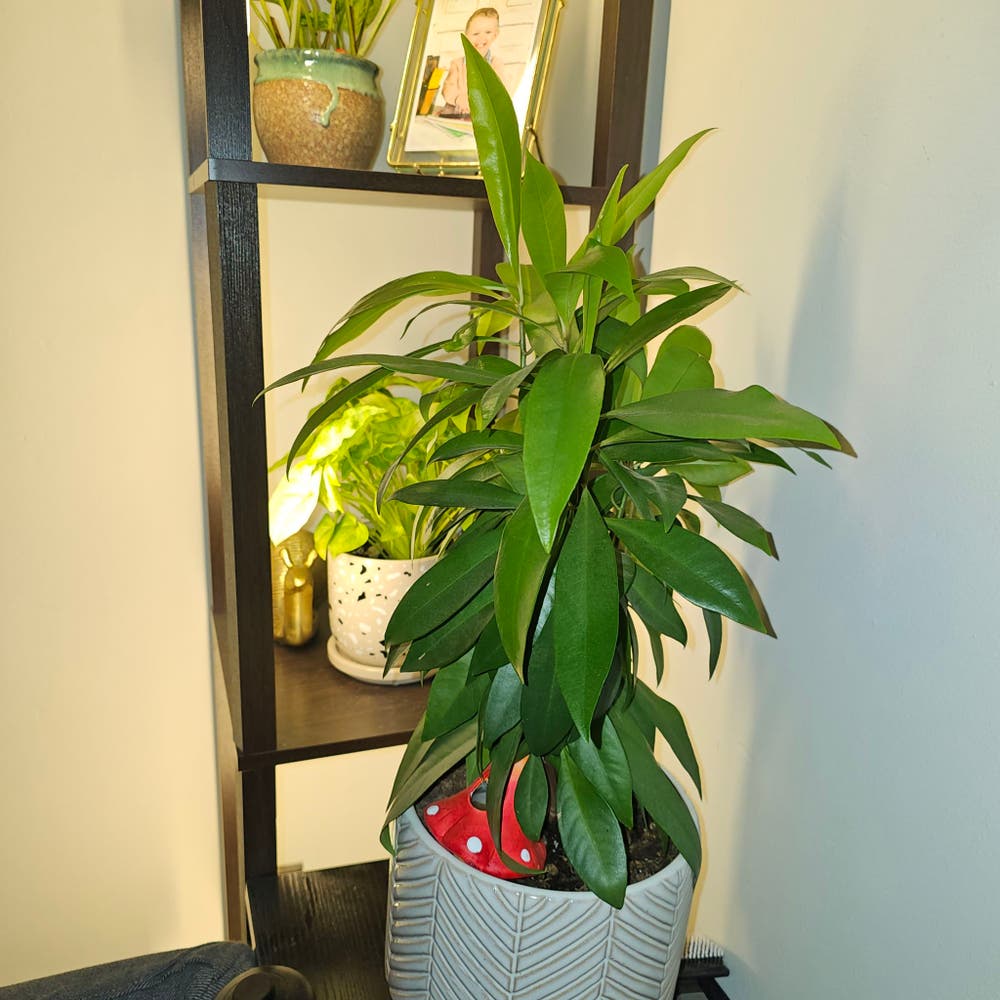
💧 Why Are My Island Marlberry Leaves Mushy?
Ardisia escallonioides
By the Greg Editorial Team
Mar 05, 2024•3 min read
This article was created with the help of AI so we can cover more plants for you. May contain errors. See one? Report it here.
Rescue your Island Marlberry from mushy leaf misery 🍂 by tackling overwatering and root rot.
- Overwatering and root rot are key causes of mushy leaves.
- Improve drainage with perlite, sand, and proper pots.
- Prune and increase airflow to combat and prevent fungal issues.
Spotting the Trouble: Signs Your Island Marlberry is Unhappy
🚰 Telltale Signs of Overwatering
Mushy leaves and waterlogged soil are the equivalent of your Island Marlberry waving a white flag. If the soil squishes more than your favorite stress ball, it's time to reassess your watering habits.
🍄 Root Rot: The Hidden Culprit
Beneath the surface, dark, mushy roots and a foul odor are the telltale signs of root rot. It's a silent scream for help from your plant's underground world.
🍄 Fungal Foes
Powdery mildew or downy mildew are like unwanted party crashers on your Island Marlberry's leaves. If you spot these fungal gatecrashers, it's time to up your plant care game.
First Aid for Your Island Marlberry
💧 Cutting Back on H2O
Island Marlberry's disdain for soggy soil is no secret. Adjust your watering to when the top inch of soil feels dry. This may mean less frequent watering than you're used to, but your Marlberry will thank you with firm, healthy leaves.
🚰 Soil SOS: Boosting Drainage
Perlite and sand are your go-to additives for transforming that water-retentive soil into a well-draining paradise. Mix them into your existing soil, and watch your Marlberry's root environment go from swampy to splendid.
Pruning and Cleaning: A Fresh Start
✂️ Snip and Sanitize
Pruning your Island Marlberry is like hitting the reset button on its health. Sanitize your shears with rubbing alcohol or a bleach solution to prevent spreading any diseases. Dive right in and remove any mushy, dead, or damaged leaves, making clean cuts just above leaf nodes. This encourages the plant to focus its energy on new, healthy growth. Keep your tools clean, wiping them down after each use, to ensure they're ready for the next round of plant care.
💨 Airflow and Humidity: Fungal Infection's Enemy
Boosting airflow around your Island Marlberry is like giving it its own personal space bubble. It helps prevent the damp, still conditions that fungi love. Consider using a fan to keep air moving, but keep it gentle; you're not trying to simulate a hurricane. Humidity should be kept in check – too much moisture invites fungal gatecrashers. If your plant's leaves are constantly wet, it's time to rethink your watering strategy. Remember, a dry leaf is a happy leaf, so avoid the temptation to mist like you're trying to recreate a rainforest.
Root Rehab: Getting to the Bottom of It
🌱 Inspecting and Treating Root Rot
Unearth your Island Marlberry and inspect the roots. Healthy roots should be firm and white, not brown and mushy. If they resemble overcooked noodles, it's time to take action. With sterilized shears, cut away the rotten parts. It's a tough-love approach, but necessary.
🌿 The Repotting Ritual
Repot your plant in fresh, well-draining soil. Choose a pot with adequate drainage holes to prevent future waterlogging. When repotting, handle the roots with care, as if they're the lifeblood of your plant—because they are. Keep the soil level consistent to avoid burying the plant's neck. After repotting, adjust your watering habits to ensure the soil dries out between waterings. This isn't just a new pot; it's a fresh start for your Marlberry.
⚠️ Safety First
This content is for general information and may contain errors, omissions, or outdated details. It is not medical, veterinary advice, or an endorsement of therapeutic claims.
Always consult a qualified healthcare professional before using any plant as food, medicine, or supplement.
Never eat any plant (or feed one to pets) without confirming its identity with at least two trusted sources.
If you suspect poisoning, call Poison Control (800) 222-1222, the Pet Poison Helpline (800) 213-6680, or your local emergency service immediately.
Spotted an error? Please report it here.
Revive your Island Marlberry by adjusting watering habits 💧 with Greg's custom reminders, turning overwatered woes into lush, healthy growth.