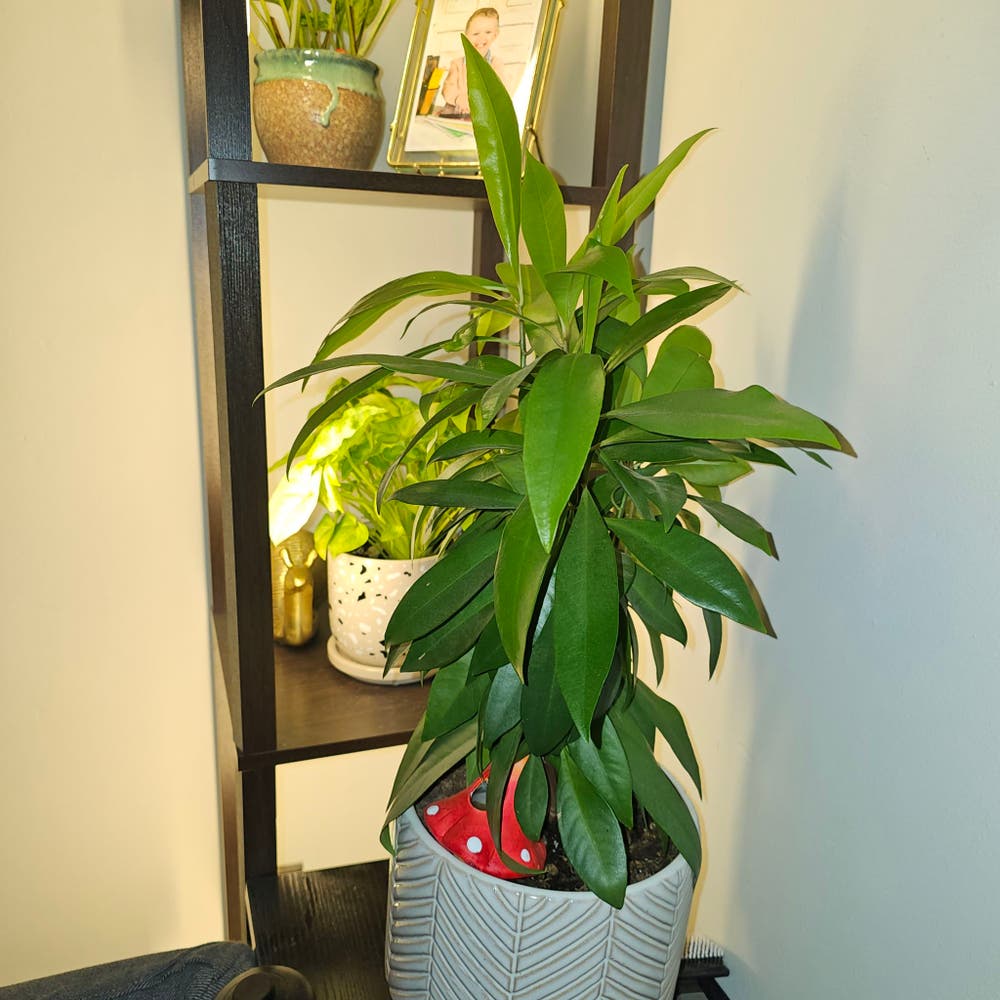
Best Soil Potting Mix for Island Marlberry
Ardisia escallonioides
By the Greg Editorial Team
Mar 05, 2024•3 min read
This article was created with the help of AI so we can cover more plants for you. May contain errors. See one? Report it here.
Transform your Island Marlberry's life 🌿 with the perfect soil mix recipe for peak plant happiness!
- Wilting leaves? Over-saturated soil might be the culprit.
- 🌱 Well-draining, slightly acidic soil is key for Island Marlberry.
- Customize your mix with peat moss, perlite, and pine bark for best results.
Spotting and Fixing Unhappy Island Marlberry Soil
🚩 Signs Your Soil is Bringing Your Plant Down
Wilting leaves despite your regular watering routine? That's a classic cry for help from over-saturated soil. Mold creeping in? Look for a greenish-white fuzz or a musty smell; these are the unwelcome flags of excess moisture. And if your nose wrinkles at a foul odor from the soil, that's the distress signal for immediate action.
Turning the Soil Ship Around
Got waterlogged soil? Ensure your pot has drainage holes. Mix in perlite or coarse sand to improve the situation. Mold taking over? Cut back on watering, boost airflow, and let your plant bask in some sunlight. In the worst cases, a fresh start with sterile soil is your best bet. To freshen up, remove any decaying matter and replace the top layer of soil. Remember, a soil that's as nutrient-depleted as a picked-over buffet won't cut it. When leaves lose their shine or growth stalls, it's time for a soil intervention.
The Quest for the Best Soil Potting Mix
🌱 What Makes a Soil Mix Island Marlberry-Approved
Island Marlberry plants are picky about their soil, and rightly so. They demand a mix that's well-draining and slightly acidic to mimic their natural habitat.
Well-draining soil is non-negotiable; it prevents water from pooling around the roots, which can spell disaster. A slightly acidic pH, somewhere between 5.5 and 6.5, is the sweet spot for these plants.
When shopping for a commercial potting mix, look for ingredients like coconut coir or peat moss for moisture retention, and perlite or sand for improved drainage. Some mixes come with a mycorrhizal inoculant, a bonus for root growth and nutrient uptake.
❌ No-No's in Marlberry Soil Selection
Avoid the common blunder of choosing a mix that retains too much moisture. Island Marlberry doesn't do soggy.
Steer clear of soils heavy in compost or bark, which can lead to an unwelcome gnat party. And remember, just because a mix is labeled for a different plant—like cacti or African violets—doesn't mean it won't work. It's about the components, not the branding.
Overly dense or non-sterilized mixes are also a no-go. They can harbor diseases and don't provide the aeration your Marlberry craves. Keep it light, keep it airy, and your plant will thank you.
Crafting Your Own Island Marlberry Soil Mix
🌱 The Recipe for Success
Creating the ideal soil mix for your Island Marlberry is like being a plant's personal chef. You want to whip up a substrate that's nutritious, well-draining, and just the right texture. Ratios are crucial here; they can mean the difference between a flourishing plant and a faltering one. Aim for a mix that is one-third organic matter, one-third aeration, and one-third moisture retention.
📦 Soil Mix Ingredients Breakdown
Peat moss is your moisture manager, ensuring the soil stays damp but not soggy. Perlite is the aeration agent, preventing compaction and promoting root health. Pine bark adds structure and further improves drainage. These ingredients are the backbone of your mix, but don't be afraid to get creative. Alternative materials like coco coir or vermiculite can also play a role in your custom blend. Remember, the best soil mix is the one that your Island Marlberry thrives in, so observe and tweak as needed.
⚠️ Safety First
This content is for general information and may contain errors, omissions, or outdated details. It is not medical, veterinary advice, or an endorsement of therapeutic claims.
Always consult a qualified healthcare professional before using any plant as food, medicine, or supplement.
Never eat any plant (or feed one to pets) without confirming its identity with at least two trusted sources.
If you suspect poisoning, call Poison Control (800) 222-1222, the Pet Poison Helpline (800) 213-6680, or your local emergency service immediately.
Spotted an error? Please report it here.
Ensure your Island Marlberry flourishes with a tailored soil mix and Greg's 🌿 custom watering reminders for that just-right touch of moisture!