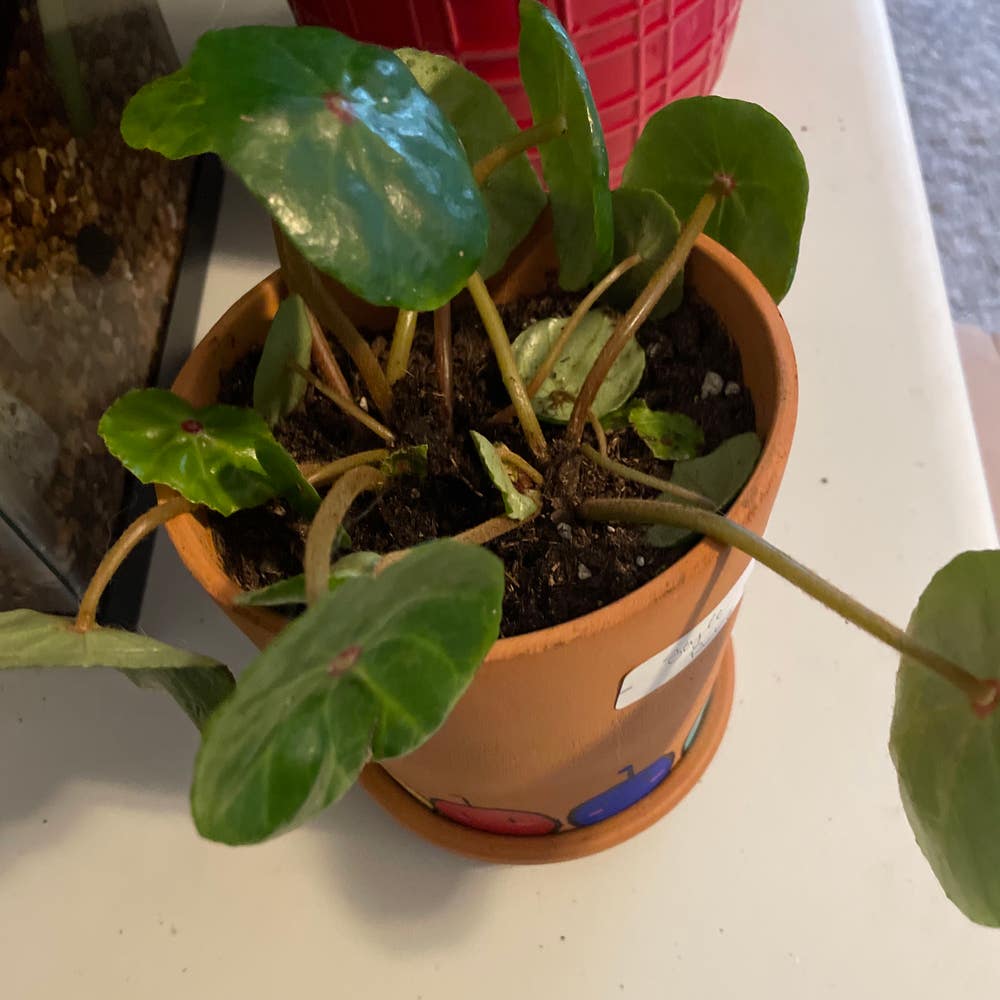
Should I Repot My Begonia conchifolia And If So, How?
Begonia conchifolia
By the Greg Editorial Team
Feb 09, 2024•5 min read
This article was created with the help of AI so we can cover more plants for you. May contain errors. See one? Report it here.
Give your Begonia conchifolia room to bloom 🌿—discover the when, why, and how of repotting for plant prosperity!
- Root-bound signs mean repot, like slow growth and visible roots.
- 🌱 Terracotta pots are best for breathability; ensure drainage holes.
- Post-repot care is crucial: monitor, water carefully, and avoid fertilizing initially.
Spot the Telltale Signs It's Time for a Change
🌱 Root-tangled Troubles
Roots on the run through drainage holes are your Begonia conchifolia's version of a white flag. It's not just exploring; it's root-bound. When you spot a dense root ball upon unpotting, it's a clear SOS.
🌿 Thirsty Roots and Slow Growth
A Begonia conchifolia that's always thirsty or growing slower than a snail in peanut butter might be craving more space. If watering turns into a flash flood with water zipping through the pot, it's a sign: your plant's living quarters are too tight.
🚩 Visual Cues: Seeing is Believing
Visible roots are not a style statement; they indicate your plant is ready to break free. Cracked pots or roots surfacing like a Loch Ness Monster are not just interesting features—they're red flags.
🍽️ The Silent Plea for Nutrients
If your green buddy isn't thriving despite your best feeding efforts, it might be time to give it a new dining room. A root-bound plant struggles to absorb nutrients, much like trying to eat with a fork that's too small.
Choosing the Perfect Home: Pot Material Matters
🏺 Terracotta vs. Plastic vs. Ceramic: Balancing Moisture and Breathability for Begonia conchifolia
Terracotta pots are the classic choice for Begonia conchifolia, thanks to their porous nature that promotes air circulation and prevents waterlogging. They're like the breathable sneakers of the pot world—functional yet stylish. Plastic pots, meanwhile, are the rain boots—great for puddles but not so much for ventilation. They keep the soil moist for longer, which can be a double-edged sword if you're prone to overwatering.
Ceramic pots are the high heels—elegant and perfect for a night out, but not always the most practical. They often come glazed, which reduces their breathability, but they're still a step up from plastic when it comes to preventing soggy soil. Just make sure they have drainage holes; otherwise, you're setting up your Begonia for a swampy disaster.
🏋️ The Weight Debate: How Pot Heaviness Impacts Your Begonia's Comfort
When it comes to weight, terracotta is the middleweight champion. It's sturdy enough to hold its ground but won't break your back when you decide to play musical chairs with your plant collection. Plastic is the featherweight contender—easy to move but might get knocked over by a strong gust of wind or an enthusiastic pet.
Ceramic pots are the heavyweights. They're stable and won't tip over easily, but they're not the best option if you like to rearrange your greenery on a whim. Consider the pot's location and your own willingness to engage in a mini workout when you water before committing to ceramic.
The Repotting Rendezvous: A Step-by-Step Guide
🌱 Preparing for the Big Move
Size matters when selecting a new pot for your Begonia conchifolia. Aim for a pot that's 1-2 inches larger in diameter than the current one to avoid the dreaded soggy soil syndrome. As for the soil mix, think "Goldilocks": not too dense, not too light, but just right for moisture and breathability.
Before the actual move, give your Begonia a pre-repotting pep talk with a thorough watering. This eases the transition and makes the roots more pliable for the upcoming change.
🌿 The Gentle Uproot
Time to coax your Begonia out of its old pot. No yanking—gently tilt and encourage the plant out, respecting its personal space. If it's playing hard to get, a gentle squeeze of the pot or a tap on the bottom should prompt it to leave its comfort zone.
Inspect the roots like a detective on a case. Trim any dead or diseased roots to ensure a healthy transition. Remember, it's not about punishment; it's about giving the plant a clean slate.
🏡 Settling into the New Abode
In the new pot, create a throne of fresh soil and position your Begonia with the dignity it deserves. Ensure the planting depth is similar to its previous setup—no deep burials or shallow lays.
After tucking the roots in with soil, it's time for the first watering in its new home. This isn't just hydration; it's a welcome party for the roots to settle and recover from the move.
Aftercare: Helping Your Begonia conchifolia Thrive Post-Repotting
🌱 The Recovery Phase
Expect your Begonia conchifolia to sulk a bit after the repotting ordeal. It's normal. The plant's roots are getting acquainted with their new surroundings, which can take a few weeks. During this time, leaves may droop or yellow, signaling the plant's discomfort. Patience is key; it's like waiting for a good bread to rise—rush it, and you'll spoil the loaf.
🕵️ Monitoring and Adjusting Care
💧 Watering Wisdom
Watering post-repotting is like threading a needle—do it with precision. Wait for the top inch of soil to dry out before watering. Overdoing it could lead to root rot, and nobody wants that. It's a balancing act; keep the soil moist but not waterlogged.
💡 Light and Location
Place your plant in a spot with bright, indirect light. Think of it as a cozy reading nook for your Begonia—inviting but not too intense. Direct sunlight is a no-go; it's like throwing your plant into a tanning bed—harsh and unnecessary.
🍽️ Feeding Finesse
Hold off on fertilizing for a few months. Your Begonia's got enough on its plate settling into its new home. When it's time, opt for a half-strength liquid organic fertilizer, maybe something with a fishy whiff. And remember, come winter, your plant's appetite wanes, so ease up on the feeding frenzy.
🌡️ Temperature and Humidity
Keep the temperature consistent—Begonia conchifolia despises dramatic fluctuations. It's not a fan of sauna-like humidity either, so keep the air around it as fresh as a crisp morning breeze.
👀 The Watchful Eye
Be vigilant. New growth is your green light, a sign that your plant is bouncing back. If you spot wilting or discoloration, it's time to tweak your care strategy. Adjust the watering schedule or shuffle the plant to a better spot. It's like adjusting the sails when the wind changes—necessary for smooth sailing.
⚠️ Safety First
This content is for general information and may contain errors, omissions, or outdated details. It is not medical, veterinary advice, or an endorsement of therapeutic claims.
Always consult a qualified healthcare professional before using any plant as food, medicine, or supplement.
Never eat any plant (or feed one to pets) without confirming its identity with at least two trusted sources.
If you suspect poisoning, call Poison Control (800) 222-1222, the Pet Poison Helpline (800) 213-6680, or your local emergency service immediately.
Spotted an error? Please report it here.
Repot your Begonia conchifolia with confidence and let Greg optimize watering 🌱 to ensure your plant recovers and flourishes post-transplant.