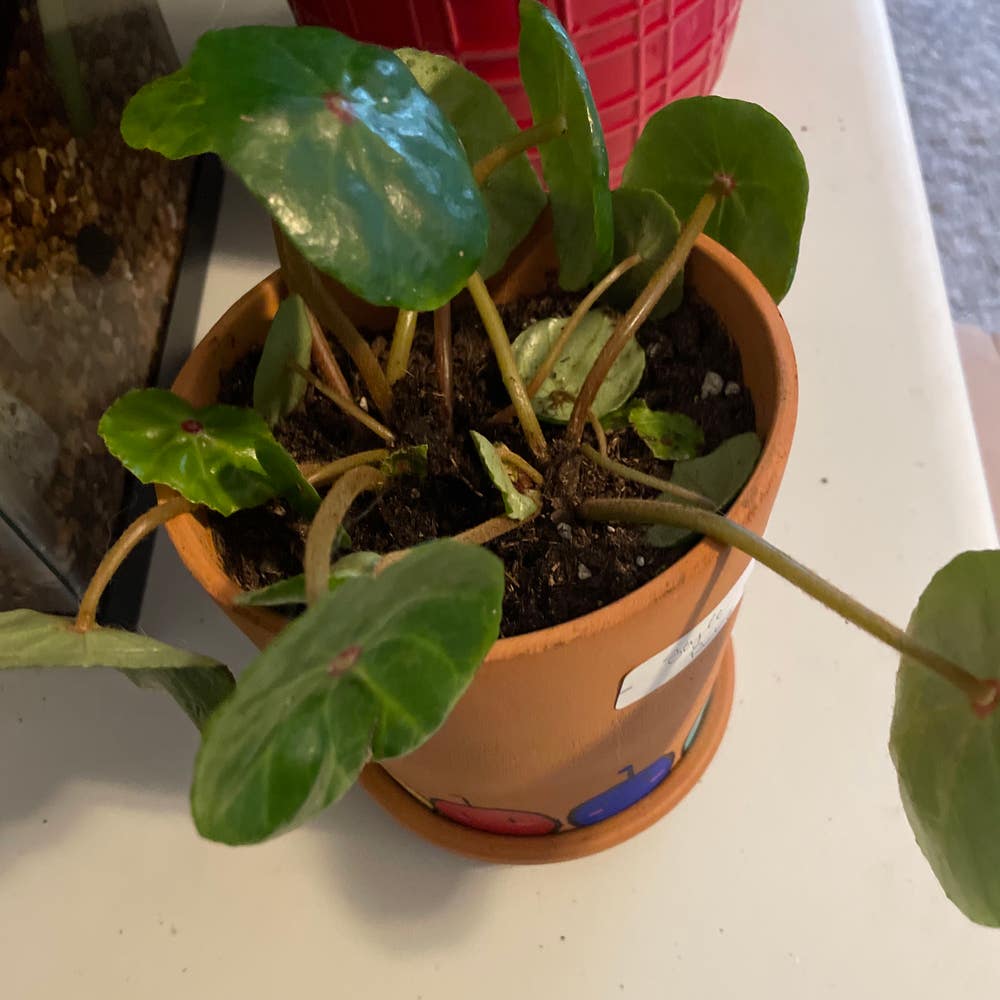
Why Are There Black Spots on My Begonia conchifolia Leaves?
Begonia conchifolia
By the Greg Editorial Team
Feb 09, 2024•5 min read
This article was created with the help of AI so we can cover more plants for you. May contain errors. See one? Report it here.
Eradicate black spots on your Begonia 🍃 and reclaim your plant's vibrant health with these expert tips!
- Fungi and bacteria cause black spots, affecting plant health.
- Proper air circulation and smart watering prevent disease spread.
- Use fungicides or home remedies to treat existing black spots.
Spotting the Trouble: Recognizing Black Spots
🕵️ What Black Spots Look Like
Dark, irregular patches on your Begonia conchifolia's leaves? That's the first sign of trouble. These spots can be small specks or grow into larger blotches, often with yellow halos or dark margins. Texture varies; they might be raised or sunken, and sometimes they give off a slimy feel.
Beyond Cosmetic Concerns
Black spots are more than unsightly; they're a distress signal. If you notice a random distribution of spots, it's time to pay attention. These invaders can hinder photosynthesis, stunting your plant's growth and vitality. Keep an eye out for spots that change in size or texture—they're telling you that something's amiss.
Rooting Out the Causes
🍄 Fungal Foes: Identifying Common Fungi Behind the Spots
Powdery mildew and botrytis are the usual suspects when it comes to black spots on Begonia conchifolia leaves. Powdery mildew is the more discreet of the two, preferring to spread its spores across leaves in a white, powdery film. Botrytis, however, is the bolder offender, manifesting as gray mold that can lead to leaf drop. Both thrive in moist environments and can sneak in through the smallest of wounds or natural openings on your plant.
🌬️ Conditions that Invite Fungal Guests
Fungi love a good bash in the warm, wet conditions of an overwatered Begonia. They're not picky guests, either; they'll take advantage of poor air circulation to spread their spores. To keep these party crashers at bay, ensure your Begonia isn't stuck in a stagnant, humid corner with soggy soil.
🦠 Bacterial Bullies: When Bacteria Cause Blackening
Bacterial leaf spot diseases, caused by pathogens like Pseudomonas and Acidovorax, can be just as devastating. These bacteria create irregular brown or black spots that may have a water-soaked appearance. Often, these spots are outlined with a yellow halo, a tell-tale sign of bacterial invasion.
🌧️ How Bacteria Can Take Hold in Your Begonia's Environment
Bacteria thrive in conditions similar to fungi: high humidity and poor air circulation. They particularly enjoy a celebration in the overwatered soils of your Begonia's pot. Ensuring your plant has a well-draining home and isn't drowning in excess water is key to keeping bacterial bullies from gatecrashing.
Battling Black Spots: Treatment Tactics
🛡️ Fungicide to the Rescue
When black spots infiltrate your Begonia conchifolia, think of fungicides as your plant's personal bodyguards. Protectant fungicides act as a preemptive shield, ideal for when you're just setting up defenses. On the flip side, if your plant's already hosting a fungal shindig, systemic fungicides are the undercover agents that work from the inside out. Stick to the script—the label's instructions are your bible here.
💡 Home Remedies: Natural approaches to tackle fungi and bacteria
Sometimes, the best weapons are homegrown. A concoction of baking soda or neem oil might just do the trick, like a home remedy for your leafy friend's flu. Remember, timing is everything—apply during the cool of the evening to avoid sun-scorched leaves. And don't forget about corn meal; it's like a probiotic for your plant, fostering beneficial fungi that keep the bad guys in check.
🌱 Cultural Practices: Adjusting plant care to prevent disease spread
Adjusting your Begonia's lifestyle can be a game-changer. Boost air circulation—it's like giving your plant room to breathe. Remove infected leaves promptly; think of it as cutting off the problem at the knees. And when it comes to watering, keep it low to avoid moisture on the leaves; it's like avoiding splashes in a puddle—neat and tidy wins the race.
Keeping Black Spots at Bay: Prevention Strategies
💡 Light and Humidity: Balancing the Environment
Bright, indirect light is the sweet spot for Begonia conchifolia. It's like giving your plant a pair of sunglasses—protection without the blackout. To keep the humidity just right, think of your living room, not a jungle. Hygrometers are your best friends here, letting you monitor moisture like a hawk. If things get too muggy, a dehumidifier will cut the humidity down to size. Too dry? A humidifier or pebble tray can up the ante.
🚰 Water Wisdom: Smart Watering to Prevent Pathogens
Watering is a high-stakes game of precision. Water at the base, avoiding the leaves like they're made of sugar. Only when the top inch of soil feels like a dry sponge should you give it a drink. And let's talk pots—choose ones that don't hoard water like a dragon with gold. Well-draining soil is non-negotiable; it's the difference between a comfy bed and a swamp for your Begonia's roots.
🌱 Techniques for Watering Without Inviting Trouble
Splash-free leaves are happy leaves. Use a watering can with a long spout to target the soil, not the foliage. Fallen leaves are a no-go; they're like a welcome mat for disease. Keep the area around your plant as clean as a whistle.
🍃 Soil and Drainage Tweaks for a Healthier Begonia
Repotting isn't just a makeover; it's a strategic move against black spots. Fresh, well-draining soil is like a new lease on life for your Begonia. And while you're at it, clean your tools as if they're going into surgery. It's all about creating an environment that says, "Not today, pathogens."
⚠️ Safety First
This content is for general information and may contain errors, omissions, or outdated details. It is not medical, veterinary advice, or an endorsement of therapeutic claims.
Always consult a qualified healthcare professional before using any plant as food, medicine, or supplement.
Never eat any plant (or feed one to pets) without confirming its identity with at least two trusted sources.
If you suspect poisoning, call Poison Control (800) 222-1222, the Pet Poison Helpline (800) 213-6680, or your local emergency service immediately.
Spotted an error? Please report it here.
Keep your Begonia conchifolia radiant and healthy 🌿 by leveraging Greg's smart watering techniques and humidity tracking to banish those black spots for good.