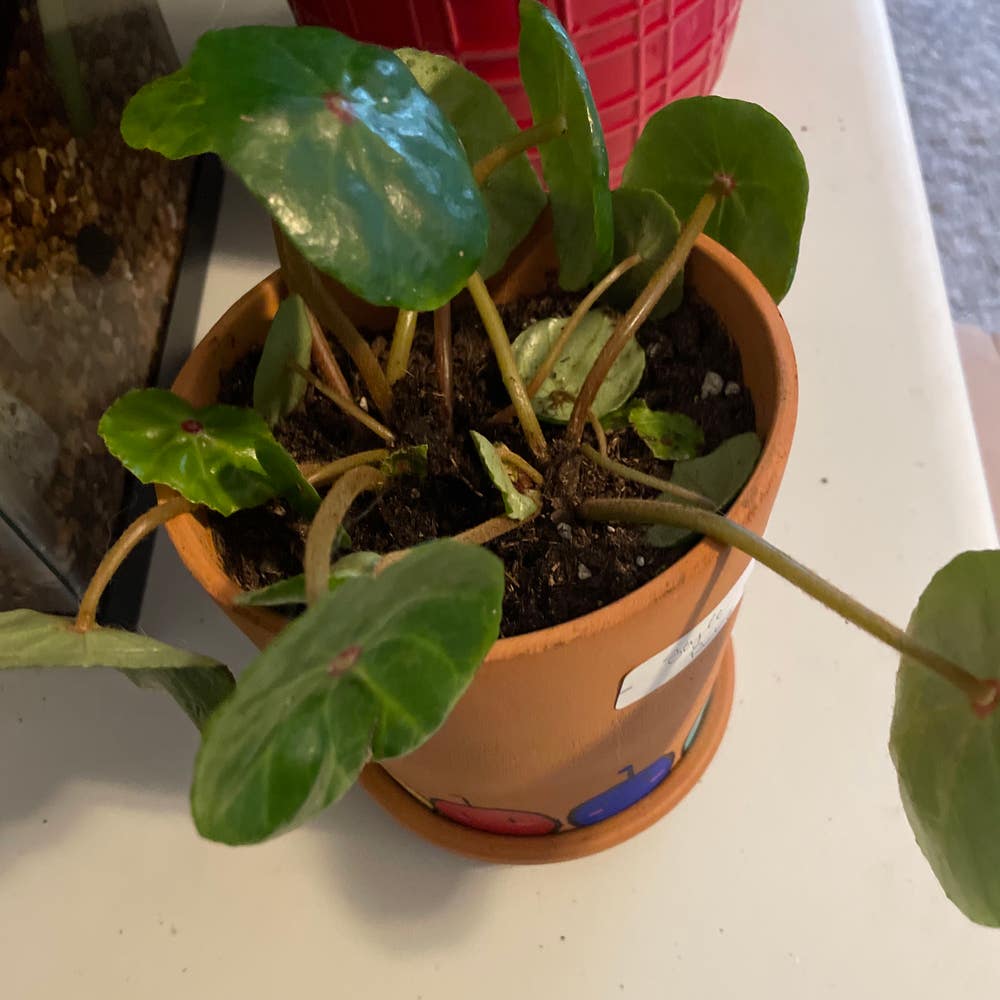
Why Are My Begonia conchifolia Leaves Curling?
Begonia conchifolia
By the Greg Editorial Team
Feb 09, 2024•5 min read
This article was created with the help of AI so we can cover more plants for you. May contain errors. See one? Report it here.
Unravel the mystery of curling Begonia leaves 🍃 and revive your plant's splendor with targeted care tips!
- 💧 Balance watering: Too much or too little causes leaf curl.
- 🌞🌡️ Stable climate is crucial: Aim for consistent humidity and 65-80°F.
- 🐛 Watch for pests: Early detection and treatment prevent leaf curl.
When Thirst Goes Wrong: Watering Mishaps
💧 Too Much Love: Overwatering Woes
Leaf curling in Begonia conchifolia can often be a distress signal for overwatering. Signs include yellowing leaves, a soil consistency that's too damp, and a general look of being over-loved with water. To adjust, ensure your plant's pot has unobstructed drainage holes and let the top inch of soil dry out before watering again.
🏜️ Parched Plants: The Underwatering Problem
Conversely, leaves curling upwards indicate your Begonia is too dry. If the soil feels like a desert and the leaves are as crispy as autumn leaves, it's time to hydrate. Water your plant until the soil is moist, but not saturated, and consider a regular watering schedule that accounts for environmental changes.
It's Not You, It's the Climate: Environmental Stress
🌞 Sunburn and Shade: Finding the Light Balance
Begonia conchifolia leaves are drama queens when it comes to light. Too much sun and they'll crisp up like they're auditioning for a role in a desert biopic. Not enough, and they'll stretch out, reaching for a spotlight that's just not there.
To prevent a botanical meltdown, adjust your plant's sun exposure. Keep it in bright, indirect light, where it can soak up the rays without the risk of a sunburn. Think of it as setting up a VIP lounge for your Begonia, exclusive and perfectly lit.
💦 Humidity and Temperature Tango
Humidity and temperature fluctuations make Begonia leaves curl faster than a new hairdo in the rain. They don't appreciate the surprise of a sudden chill or a blast of dry air. Stability is key here.
Create a microclimate that's as consistent as your favorite coffee shop. Aim for a humidity level that makes the air feel like a soft morning mist, not a tropical storm or desert dryness. Keep temperatures between 65-80°F (18-27°C), away from drafts and heat sources, to avoid turning your Begonia's leaves into reluctant accordions.
Feeding Frenzy: Nutrient Needs and Deficiencies
💊 The Calcium and Magnesium Connection
Begonia conchifolia's leaves curling could be a cry for help—a sign of nutrient deficiencies, specifically calcium and magnesium. Let's dive into the symptoms and solutions.
🚨 Spotting Signs of Nutrient Deficiencies
Yellowing leaves or stunted growth can signal a calcium or magnesium shortage. These elements are like the plant's daily vitamins, crucial for their well-being. If your Begonia is looking more 'meh' than 'magnificent', it's time to investigate the soil's nutrient levels.
🛠 Correcting Soil Nutrient Imbalances
First things first, never guess; a soil test is your best friend here. Once you've pinpointed the deficiency, it's time to act. For calcium, consider adding lime or crushed eggshells. Magnesium? Epsom salts are your go-to. But remember, it's not about dumping in nutrients willy-nilly; precision and care are key.
Adjust your fertilization strategy based on the soil test results. Look for a balanced fertilizer that includes micronutrients. If calcium and magnesium are missing from your current mix, supplement with a CalMag product. Keep an eye on your plant's response and tweak as necessary.
Remember, overdoing it can lead to nutrient burn, so find that sweet spot. It's a bit like feeding a fussy toddler: too little and they won't grow, too much and you've got a whole different problem on your hands. Keep it balanced, and your Begonia will thank you with lush, uncurled leaves.
Uninvited Guests: Pest Problems
🐛 Common Culprits: Identifying Pests
Detecting pests that cause leaf curling can be like playing a game of hide-and-seek. Inspect the undersides of leaves and stem joints; these are the critters' favorite hideouts. Look for signs like tiny webs, sticky honeydew, or visible insects.
Aphids, spider mites, and thrips are often the guilty parties when it comes to curled leaves on your Begonia conchifolia. Aphids are sap-suckers that leave a sticky residue, while spider mites are tiny and can cause a fine webbing on the plant. Thrips, on the other hand, are minuscule but can be spotted by the silver streaks they leave on leaves.
🐜 Effective Pest Control Solutions
Once you've caught them red-handed, it's time for action. A blast of water can dislodge many of the freeloaders. For a more targeted approach, insecticidal soap or neem oil can be your go-to weapons. Apply with vigilance, focusing on the affected areas.
Natural predators such as ladybugs and lacewings are allies in this battle. They're like the bouncers of your garden, keeping the riff-raff in check. Encouraging these beneficial insects can help maintain a pest-free zone.
Regular cleaning of your plant's leaves can also deter pests. Dust and debris are like a welcome mat for these uninvited guests. Wipe leaves with a damp cloth and keep your Begonia conchifolia's environment tidy to reduce the chances of infestation.
Remember, the key to pest management is regular monitoring. Catching these critters early can prevent a full-blown infestation. Stay alert and ready to act, and your Begonia conchifolia will thank you with lush, uncurled leaves.
⚠️ Safety First
This content is for general information and may contain errors, omissions, or outdated details. It is not medical, veterinary advice, or an endorsement of therapeutic claims.
Always consult a qualified healthcare professional before using any plant as food, medicine, or supplement.
Never eat any plant (or feed one to pets) without confirming its identity with at least two trusted sources.
If you suspect poisoning, call Poison Control (800) 222-1222, the Pet Poison Helpline (800) 213-6680, or your local emergency service immediately.
Spotted an error? Please report it here.
Keep your Begonia conchifolia leaves uncurled 🌀 with Greg's custom reminders for watering, light, and feeding, tailored to your plant's needs and your unique home environment.