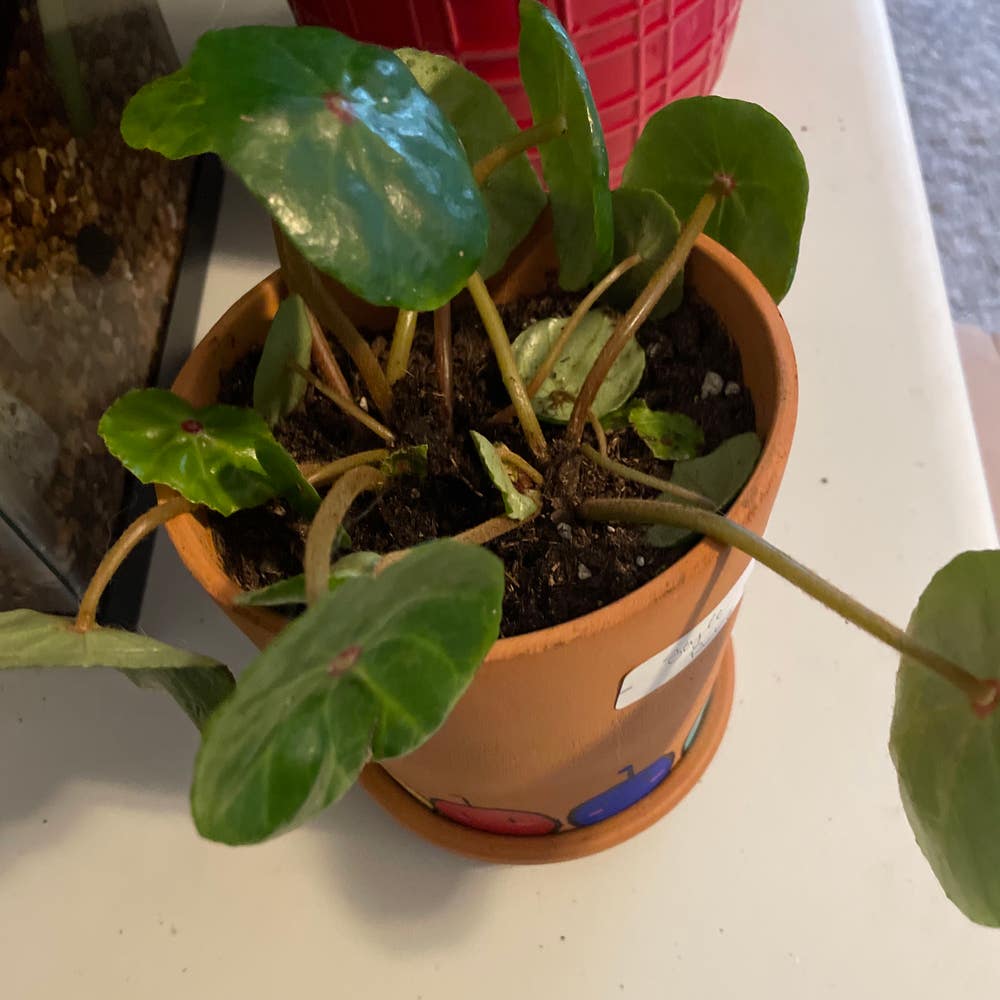
How Do I Fix Begonia Conchifolia Root Rot?
Begonia conchifolia
By the Greg Editorial Team
Feb 09, 2024•5 min read
This article was created with the help of AI so we can cover more plants for you. May contain errors. See one? Report it here.
Save your wilting Begonia 🌿 from root rot's clutches with life-saving repotting and care tips!
- 🚫 Cease watering and repot to halt root rot progression.
- ✂️ Prune roots and leaves to rehabilitate your Begonia conchifolia.
- 🌱 Use organic fungicides and adjust watering based on topsoil moisture.
Spotting the Red Flags: Symptoms of Root Rot
💛 Yellowing Leaves and Wilting
Yellowing leaves and wilting in Begonia conchifolia are like the plant's version of a white flag. They're not just changing color for the season; they're signaling a cry for help from the roots. If your plant's leaves are drooping like they've lost all hope, it's time to spring into action.
🤢 Unpleasant Surprises
A foul odor emanating from the soil is the equivalent of a bad review for your plant's living conditions. It's a telltale sign that something's decaying down below. If your Begonia conchifolia's roots smell like they've been left to marinate in yesterday's garbage, you've got a problem. Other symptoms, such as a general stunted growth or leaves dropping faster than a hot potato, are also red flags that root rot may be the culprit.
First Response: Immediate Actions to Combat Root Rot
🚱 Stop the Waterworks
Cease watering immediately. Your Begonia conchifolia isn't on a water slide; it's suffocating. Let the soil go Sahara before you even think about the watering can again. It's a drought on purpose, and your plant will thank you for it.
🚀 The Great Escape
Time for a repotting rescue mission. Get a pot with enough drainage holes to make a colander blush. Fresh, well-draining soil is your plant's new best friend—think of it as a comfy, breathable cotton tee. Don't just change the scenery; ensure the new pot is a snug fit, not a mansion. Too much space can lead to waterlogging, which is like throwing a pool party with no one swimming.
Surgical Strikes: Pruning and Cleaning Up
🌱 Root Rehab
In the trenches of root rot, your Begonia conchifolia needs a careful but decisive hand. Here's how to perform root rehab:
- Sterilize your pruning tools. This is non-negotiable.
- Gently remove the plant from its pot and wash the roots under tepid water.
- Identify the healthy roots (firm and white) versus the rotted ones (soft and discolored).
- Trim the affected roots at the junction with healthy tissue. Precision over enthusiasm here.
- Disinfect your tools after each cut to prevent spreading any pathogens.
- Post-trim, let the roots air out before repotting, giving them a breather.
🍃 Leafy Triage
Now, let's talk foliage. Your plant's leaves can give you clues about its health:
- Brown or yellow leaves are a no-go. They've got to go.
- If a leaf is partially affected, you might opt for a partial amputation.
- Don't strip more than 20% of the foliage; it's a trim, not a buzz cut.
- Healthy leaves stay. They're the morale boosters your plant needs.
Remember, every snip is a step towards recovery. Your Begonia conchifolia will thank you for the tough love with lush growth.
Fungus Among Us: Dealing with the Invisible Enemy
🌱 Going Natural or Chemical
When root rot strikes your Begonia conchifolia, the invisible enemy—fungus—must be confronted. Organic fungicides like neem oil or potassium bicarbonate are gentler on the ecosystem and your plant. They're the equivalent of a soft-spoken diplomat navigating a peace treaty. On the flip side, chemical fungicides pack a punch with heavy-hitters like tebuconazole but can be the bull in a china shop, potentially disrupting your garden's harmony.
🏥 Application Know-How
When applying any treatment, think of it as performing delicate surgery on your Begonia conchifolia. Direct application to affected areas is crucial; avoid a one-size-fits-all approach. With chemicals, less is more—overuse can lead to a toxic environment for both plant and soil. For organics, consistency is key; they may require more frequent applications. Always read the label—it's not just bureaucratic jargon, it's your battle plan.
Future-Proofing Your Begonia Conchifolia
💧 Water Wisdom
Watering your Begonia conchifolia is less about sticking to a strict schedule and more about observing and responding to your plant's needs. The topsoil should be your tell; when it's dry to the touch, it's time for a drink. Overwatering is the fast track to root rot, so let the soil's moisture level be your guide. In the cooler months, cut back on watering and use lukewarm water to minimize shock and discourage fungal growth.
🏡 Home Sweet Home
Choosing the right pot and soil mix is like setting up a good home for your plant. A terracotta pot is a smart choice; it's breathable and helps prevent water from overstaying its welcome. For the soil, think loose and airy with a mix of peat moss, sterile compost, and a dash of sand or perlite for that well-draining magic. This setup helps your Begonia conchifolia avoid the dreaded soggy bottom and keeps those roots healthy.
🌡️ Climate Control
Your Begonia conchifolia doesn't just want the right soil and pot; it craves the perfect environment. Humidity and temperature tweaks can make a world of difference. Aim for a consistent, begonia-friendly climate, steering clear of the extremes. Too much humidity invites fungal parties, and nobody wants that. Keep the air moving with a gentle fan to discourage any unwanted microbial shindigs.
⚠️ Safety First
This content is for general information and may contain errors, omissions, or outdated details. It is not medical, veterinary advice, or an endorsement of therapeutic claims.
Always consult a qualified healthcare professional before using any plant as food, medicine, or supplement.
Never eat any plant (or feed one to pets) without confirming its identity with at least two trusted sources.
If you suspect poisoning, call Poison Control (800) 222-1222, the Pet Poison Helpline (800) 213-6680, or your local emergency service immediately.
Spotted an error? Please report it here.
Rescue your Begonia conchifolia from root rot and ensure it stays healthy 🌿 with Greg's moisture level monitoring and tailored care reminders!