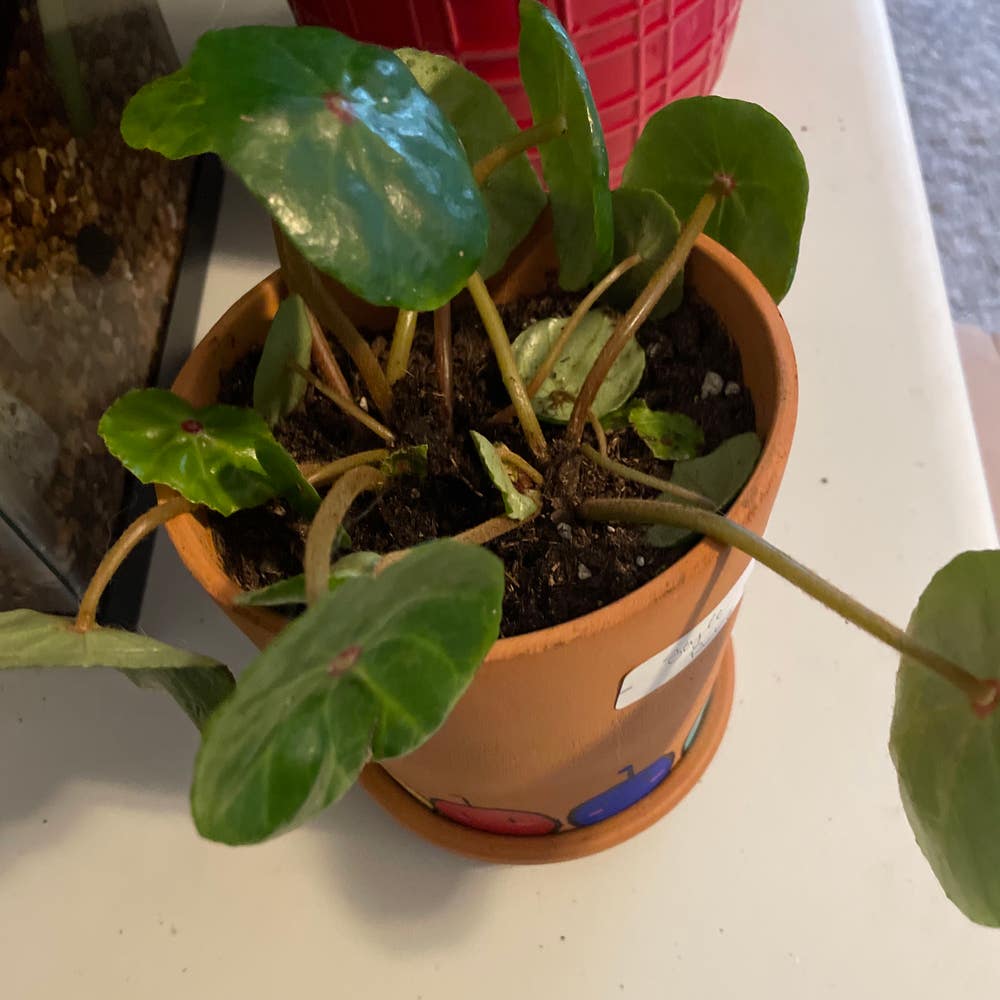
Why Are My Begonia conchifolia Leaves Falling Over?
Begonia conchifolia
By the Greg Editorial Team
Feb 09, 2024•4 min read
This article was created with the help of AI so we can cover more plants for you. May contain errors. See one? Report it here.
Stop Begonia conchifolia's leaf flop 🍂 with the right care mix for a perky plant life! 🌿
- 🌊 Overwatering and underwatering both lead to leaf droop.
- 🌡️ Keep 60°F-85°F and bright, indirect light for happy leaves.
- 🌱 Use balanced fertilizer; consistent care prevents leaf fall.
Spotting the Trouble Signs
🌊 Recognizing Overwatering Symptoms
Overwatering can turn your Begonia conchifolia into a sad, soggy spectacle. Yellow leaves and a wet soil consistency are the tell-tale signs of too much love with the watering can. If the pot feels heavier than your post-holiday suitcase, it's a sign to ease up on hydration.
Roots suffocating in waterlogged soil will cause leaves to droop as if in defeat. Root rot is the silent assassin here, with roots turning as mushy as overripe fruit. When the base of the plant feels like a damp bath sponge, it's time for an intervention.
🏜️ Identifying Underwatering Red Flags
Conversely, a thirsty Begonia conchifolia will have leaves as crisp as autumn leaves. If the soil is drier than a humorist's punchline, your plant is sending an SOS for water. A pot lighter than your workload on a Friday afternoon is a clear indicator of underwatering.
Leaves curling inward, resembling a closed book, are begging for a drink. When the edges of the leaves are as dry and brittle as stale bread, it's a signal to adjust your watering schedule. Remember, your plant prefers a steady sip, not a feast-or-famine approach.
Light and Temperature: Getting It Just Right
🌞 The Goldilocks Zone for Light Exposure
Begonia conchifolia thrives in bright, indirect light. Direct sunlight scorches leaves, while too little light leads to a wilted, lackluster plant. Find that sweet spot, akin to a well-placed Instagram filter, where the light is just enough to keep your Begonia conchifolia vibrant without the drama of leaf drop.
Keeping the Temperature Steady
Temperature consistency is key; Begonia conchifolia despises fluctuations. Aim for a steady range between 60°F to 85°F (15°C to 29°C) to avoid triggering a leaf-dropping fiasco. Think of it as maintaining a comfortable room temperature that neither breaks a sweat nor induces a shiver.
Feeding Your Begonia conchifolia
💡 Spotting Nutrient Deficiency Clues
Yellow leaves often shout for nitrogen, while crispy edges hint at a lack of potassium. If your Begonia conchifolia's leaves are more droopy than a Monday morning mood, it might be screaming for a nutrient pick-me-up.
🍽️ The Balanced Diet for Robust Leaves
A balanced fertilizer is your Begonia conchifolia's best friend. Aim for a mix that's rich in phosphorus to encourage blooming, but don't turn it into a food coma. Overfeeding is as detrimental as neglect—think of it as a well-rounded diet, not an all-you-can-eat buffet. For soilless setups, peat moss and perlite can work wonders, especially when paired with the right nutrients. Keep an eye on the response post-feeding and adjust accordingly.
Turning Things Around: Remedial Actions
💧 Fine-Tuning Watering Habits
Consistency is your new mantra when it comes to watering. Begonia conchifolia can't stand soggy feet, so wait for the topsoil to dry out before giving it a drink. If you're the forgetful type, consider a moisture meter to take the guesswork out of the equation. Overwatering? Let the soil dry. Underwatering? Time to hydrate, but don't drown your plant in enthusiasm.
🌞 Adjusting Light and Temperature
Begonia conchifolia isn't a fan of dramatics, especially in its lighting and temperature settings. Aim for bright, indirect light—too much sun and your plant will throw a leafy tantrum. Keep the temperature consistent, avoiding the extremes of a sauna or an igloo. A steady environment equals happy, upright leaves.
🍽️ Nutrient Boost: Fertilization Fixes
Fertilizers are like vitamins for your plant—necessary but in moderation. Overdo it and you're in for a world of root burn. Stick to a balanced fertilizer and follow the instructions to the letter. If you suspect nutrient deficiency, don't just pile on more food; find the specific nutrient your plant is missing and supplement accordingly. Remember, it's about quality, not quantity.
Keeping Your Begonia conchifolia Upright: Prevention Strategies
📅 Crafting a Consistent Care Schedule
Consistency isn't just a buzzword; it's your Begonia conchifolia's lifeline. Sketch out a care calendar that's as predictable as your morning coffee. Water when the soil's dry to the touch—no guesswork needed. Keep the light bright but not harsh; think dappled sunlight, not desert noon. And remember, your Begonia's a creature of habit, so keep those temperatures as steady as a metronome.
🌱 Selecting the Perfect Pot and Soil Mix
Choosing a pot for your Begonia conchifolia isn't about aesthetics alone—though we all appreciate a good-looking planter. Go for terracotta; it's porous, breathes better than a yoga instructor, and helps prevent waterlogging. Pair it with a soil mix that's got the grip of a gymnast—well-draining yet moisture-retentive. This dynamic duo will keep your Begonia's roots as happy as a clam, and upright leaves will follow suit.
⚠️ Safety First
This content is for general information and may contain errors, omissions, or outdated details. It is not medical, veterinary advice, or an endorsement of therapeutic claims.
Always consult a qualified healthcare professional before using any plant as food, medicine, or supplement.
Never eat any plant (or feed one to pets) without confirming its identity with at least two trusted sources.
If you suspect poisoning, call Poison Control (800) 222-1222, the Pet Poison Helpline (800) 213-6680, or your local emergency service immediately.
Spotted an error? Please report it here.
Avoid the leafy pitfalls of Begonia conchifolia care by ensuring just-right watering 💧 with Greg's personalized reminders and expert tips!