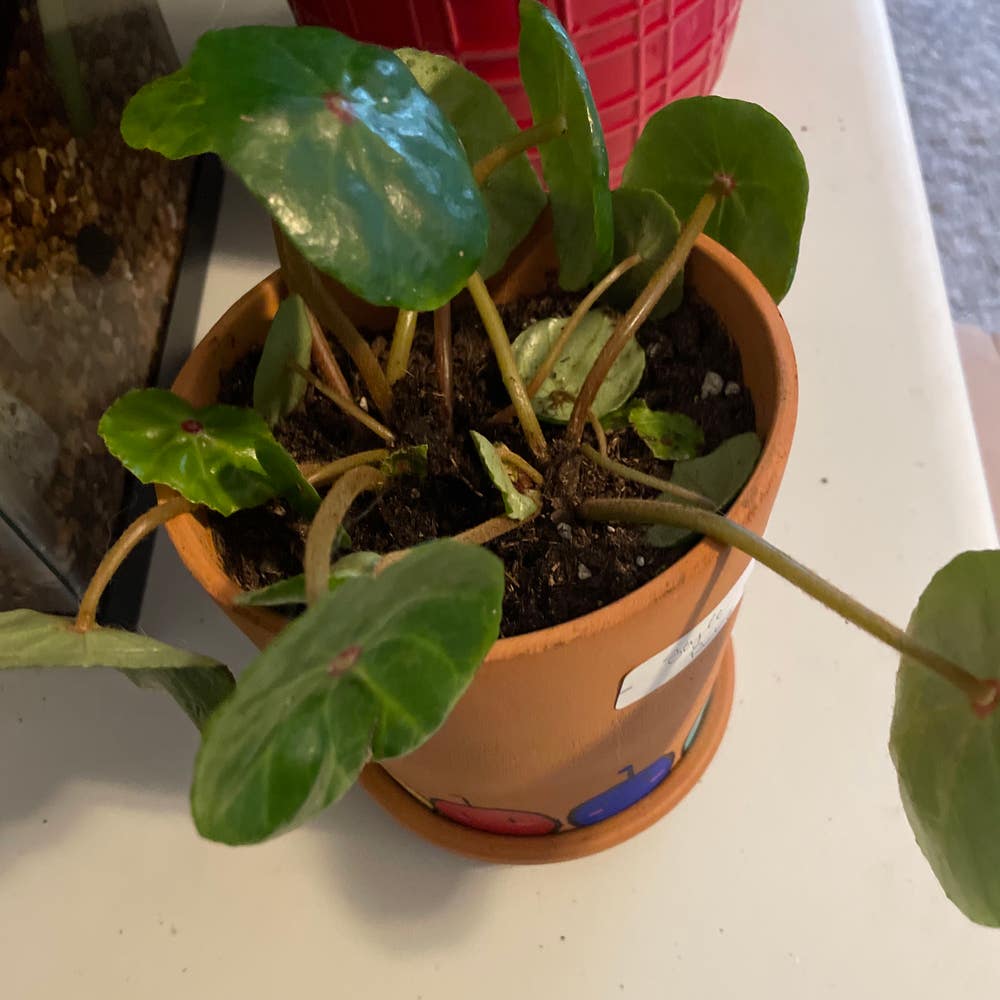
Why Does My Begonia conchifolia Have Yellow Leaves? 🍂
Begonia conchifolia
By the Greg Editorial Team
Feb 09, 2024•4 min read
This article was created with the help of AI so we can cover more plants for you. May contain errors. See one? Report it here.
Solve your Begonia's yellow leaf puzzle 🍂 and ensure its lush, vibrant health with expert tips!
- Rapid yellowing signals distress; it's not just old age.
- 🌞💧 Balance light and water to prevent yellow leaves.
- Nutrient balance is key; correct deficiencies with fertilizer.
When Yellow Means Caution: Identifying the Problem
Natural Aging vs. Trouble Signs
Spotting the difference between natural aging and distress signals in Begonia conchifolia is crucial. Yellow leaves can be a part of the plant's graceful aging process, especially if it's the lower, older leaves that are changing color. However, rapid yellowing, particularly in new growth, is a clear distress signal.
💧 Too Much H2O: The Overwatering Effect
Root rot is often the culprit behind yellow leaves, a telltale sign of overwatering. If the soil feels more like a swamp than a garden bed, it's time to reassess your watering habits. The goal is to find that watering sweet spot where the soil is moist but not waterlogged.
🏜️ Thirsty Roots: The Underwatering Impact
Conversely, underwatering can lead to yellow leaves that are dry and lifeless. If the soil is as dry as a bone, your Begonia conchifolia is likely parched. To remedy this, aim for thorough watering that reaches the plant's roots, allowing the top inch of soil to dry out before the next watering session.
Let There Be (The Right Amount of) Light!
🌞 Sunburn and Shade: Striking a Light Balance
Begonia conchifolia thrives in the Goldilocks zone of lighting. Too much sunlight, and you're left with a sunburned spectacle; too little, and your plant's vibrancy fades into oblivion.
🐻 The Goldilocks Principle: Not Too Much, Not Too Little Light
Bright, indirect light is your Begonia's best friend. Direct sun can lead to a crispy, yellow mess, while insufficient light results in a pale, lackluster appearance. Aim for a spot that mimics the dappled sunlight of a forest understory.
🌲 Adjusting Your Plant's Tan Lines
Keep a watchful eye on the changing seasons, as they affect the intensity of light. A light meter app can be a tech-savvy ally in finding that perfect balance. Remember, you're not trying to roast or hide your Begonia, but rather provide a gentle glow.
💡 Determining Ideal Light Conditions
If your Begonia's leaves start to yellow, it might be begging for some shade. Conversely, if it's stretching towards the light, it's time to move it closer to a window or consider a grow light. It's all about the right kind of light, not just more or less.
Feeding Frenzy: Nutrients and Yellow Leaves
💡 The Usual Suspects: Nitrogen, Iron, and Magnesium
Yellow leaves on your Begonia conchifolia can be a distress signal for nutrient deficiencies. Let's decode what your plant is trying to tell you.
💡 Decoding Deficiencies
Nitrogen is a heavyweight in the plant nutrient lineup, crucial for leafy growth. If older leaves are fading to yellow, it's time to consider a nitrogen boost. Iron deficiency often targets new growth, leaving leaves with a pale complexion but green veins. It's like your Begonia is trying to keep its green identity but struggling. Magnesium is the core of chlorophyll, the molecule that makes plants green. Yellow edges on leaves might be a cry for magnesium.
💡 The Feeding Guide
To correct these deficiencies, start with a soil pH test. If the pH is off, your Begonia won't absorb nutrients effectively, no matter how much you feed it. Adjust the pH to ensure your plant can access its meal. Next, pick a balanced fertilizer—your plant's equivalent of a well-rounded diet. Apply it according to the recommended dosage to avoid nutrient overload, which can be just as harmful as deficiency. Keep an eye on your Begonia's response and adjust your feeding routine accordingly. Sometimes, a targeted supplement, like Epsom salts for magnesium, can be the quick fix your plant needs. Remember, it's a dance, and you're leading—observe, respond, and adjust.
Green Thumb Tactics: Prevention and Care
💧 Smart Watering and Soil Choices
Perfecting your pour isn't just about frequency; it's about understanding your Begonia's love language. Check the topsoil; if it's dry, it's time to water. But don't just go on autopilot—adapt to your plant's changing needs.
Choosing well-draining soil is like picking a good roommate; it makes life easier. Mix in perlite or sand to avoid waterlogging. Remember, your Begonia doesn't like wet feet.
✂️ Pruning for Health: Keeping Your Begonia Happy
Trim and tidy isn't just for haircuts. Snip off yellow leaves to redirect energy to new growth. It's like giving your plant a shot of espresso.
Regular check-ups are your chance to play detective. Spot yellowing early and you can often reverse course before it's a full-blown plant crisis. Keep an eye out, and your Begonia will thank you.
⚠️ Safety First
This content is for general information and may contain errors, omissions, or outdated details. It is not medical, veterinary advice, or an endorsement of therapeutic claims.
Always consult a qualified healthcare professional before using any plant as food, medicine, or supplement.
Never eat any plant (or feed one to pets) without confirming its identity with at least two trusted sources.
If you suspect poisoning, call Poison Control (800) 222-1222, the Pet Poison Helpline (800) 213-6680, or your local emergency service immediately.
Spotted an error? Please report it here.
Prevent yellow leaves and keep your Begonia conchifolia thriving 🌟 with Greg's personalized care routines that monitor and adjust watering, lighting, and nutrients for plant perfection.