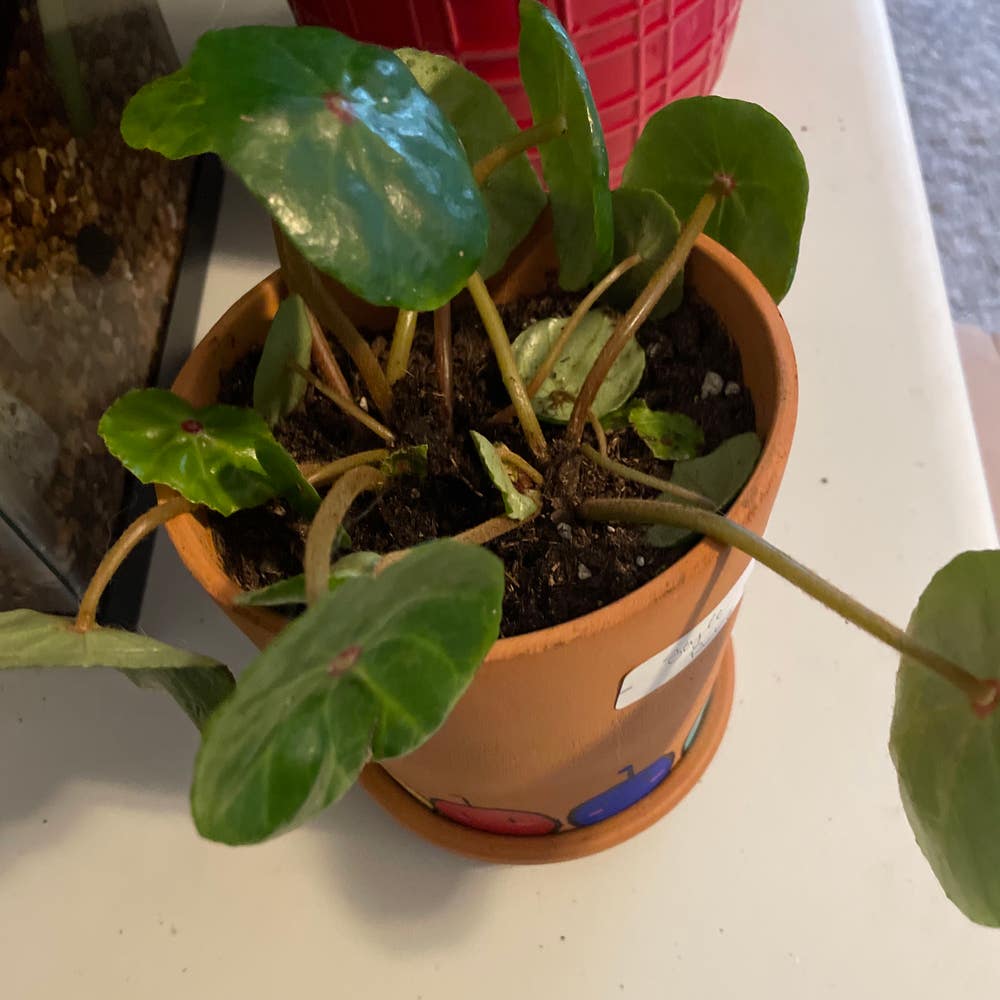
💧 Why Are My Begonia conchifolia Leaves Mushy?
Begonia conchifolia
By the Greg Editorial Team
Feb 09, 2024•4 min read
This article was created with the help of AI so we can cover more plants for you. May contain errors. See one? Report it here.
Prevent mushy leaf mayhem 🍂 in your Begonia conchifolia with our expert rescue guide!
- Overwatering and poor drainage lead to mushy Begonia conchifolia leaves.
- Fungal infections mimic overwatering, look for yellow halos and mold.
- Prevent mushiness with proper watering, soil mix, and plant hygiene.
Spotting the Trouble: Identifying Mushy Leaves in Begonia conchifolia
👀 Visual Cues: The Look of Mushiness
Discoloration is your first clue. If your Begonia conchifolia's leaves have turned a sickly yellow-brown, they're not trying a new autumn look—they're signaling distress. Leaves should be vibrant, not resemble overcooked veggies.
✋ Tactile Signs: The Feel of Mushiness
Get hands-on. Leaves that collapse under gentle pressure like a deflated balloon are in trouble. They should be springy, ready to bounce back, not play dead.
🕵️ Early Detection: Catching Mushiness Early
Stay sharp. Catching mushy leaves early is like catching a typo in a tweet before it goes viral—crucial. Address issues promptly to prevent your Begonia conchifolia from becoming a plant pancake.
The Usual Suspects: Direct Causes of Leaf Mushiness
💦 Overwatering Woes: Connecting Too Much Water to Leaf Decay
Overwatering is the equivalent of giving your Begonia conchifolia an unwanted bath. The roots, craving air, are instead smothered by excess moisture. This leads to the dreaded mushiness in leaves. If your pot feels like it's packed with lead or the soil reeks of decay, you've entered the overhydration danger zone.
Signs You're Overdoing the Hydration
Yellowing leaves that droop or fall are your plant's cry for help. A stem that's more mush than mighty is a clear distress signal. And if the soil smells like last week's forgotten laundry, it's time to reassess your watering strategy.
🚰 Drainage Dilemmas: How Inadequate Drainage Leads to Soggy Situations
Poor drainage is like giving your plant concrete shoes—it's a sinking feeling, literally. If water pools on the soil's surface or the pot's heft reminds you of a bad decision, your drainage is likely deficient.
Tips for Testing and Improving Your Pot's Drainage
First, check the drainage holes—if they're as clogged as city traffic, it's time for some maintenance. Ensure the pot isn't sitting in a tray of water; that's just a swampy playground for root rot. Consider a soil mix that promotes drainage, and remember, a pot without holes is a recipe for disaster.
Fungal Foes: Understanding Disease-Induced Mushiness
🍄 Spotting the Spores: Identifying Fungal Infections in Begonia conchifolia
Brown spots or a defeated look on your Begonia conchifolia's leaves might be shouting "fungus alert!" Look for concentric rings or darkened leaf margins—these are the fingerprints of a fungal culprit. Mold or powdery substances are also dead giveaways. It's not just ugly; it's a sign your plant is under siege.
🕵️ Differentiating between Fungal Issues and Other Causes
It's a detective game: fungal infections often mimic overwatering symptoms. But here's a clue—fungal foes leave a calling card of yellow halos around brown spots. Mold on the soil? That's the white flag of surrender. Spot these, and it's time to take action.
💪 Treatment Tactics: Effective Ways to Combat Fungal Culprits
Air circulation is your secret weapon. Think of it as your plant's personal space—no crowding allowed. Early watering gives leaves time to dry, dodging the fungal bullet. And if you spot trouble, isolate and remove affected areas with sterilized shears. Hit back with a fungicide, but remember, the best defense is a good offense—keep your plant healthy to fend off these silent assassins.
Turning the Tide: Preventative Measures and Remedies
💧 Watering Wisdom: Fine-tuning your watering routine
Touch the soil before you water; if the top inch feels like a dry debate, it's time to hydrate. Overwatering is the fast track to mushy leaf mayhem. Water your Begonia conchifolia deeply but infrequently, allowing the excess to escape like a smooth criminal.
The perfect pour: How much and how often?
Consistency is your plant's best friend. Establish a watering schedule that's more reliable than your morning alarm. Adjust with the seasons—your Begonia's thirst changes with the weather, not your personal calendar.
🌱 Soil and Pot Perfection: Choosing the right components for health
Soil mix matters. Select one that's well-draining yet holds enough moisture for a suspenseful thriller. It's all about balance, like a good diet. Terracotta pots are the unsung heroes here, wicking away excess moisture like a discreet butler.
Mixes and materials that make a difference
Combine perlite or vermiculite with your soil to improve aeration. Think of it as giving your Begonia room to breathe. Choose a pot size that's just right—not too tight, not too spacious, but a cozy fit for your plant's roots.
🍄 Fungus-Free Future: Keeping diseases at bay
Cleanliness is next to godliness, especially in plant care. Keep your tools and pots as spotless as your reputation. Water at the base to prevent unwanted fungal parties on the leaves—it's like good hygiene for your Begonia.
Preventative practices to protect your Begonia conchifolia
Rotate your plants to prevent disease build-up. It's like crop rotation but for your indoor farm. And remember, a clean plant is a happy plant. Regularly wipe down those leaves; it's a spa day that keeps the doctor away.
⚠️ Safety First
This content is for general information and may contain errors, omissions, or outdated details. It is not medical, veterinary advice, or an endorsement of therapeutic claims.
Always consult a qualified healthcare professional before using any plant as food, medicine, or supplement.
Never eat any plant (or feed one to pets) without confirming its identity with at least two trusted sources.
If you suspect poisoning, call Poison Control (800) 222-1222, the Pet Poison Helpline (800) 213-6680, or your local emergency service immediately.
Spotted an error? Please report it here.
Ensure your Begonia conchifolia stays mush-free 🍃 with Greg's precise soil moisture tracking and custom watering reminders, keeping overwatering and fungal foes at bay.