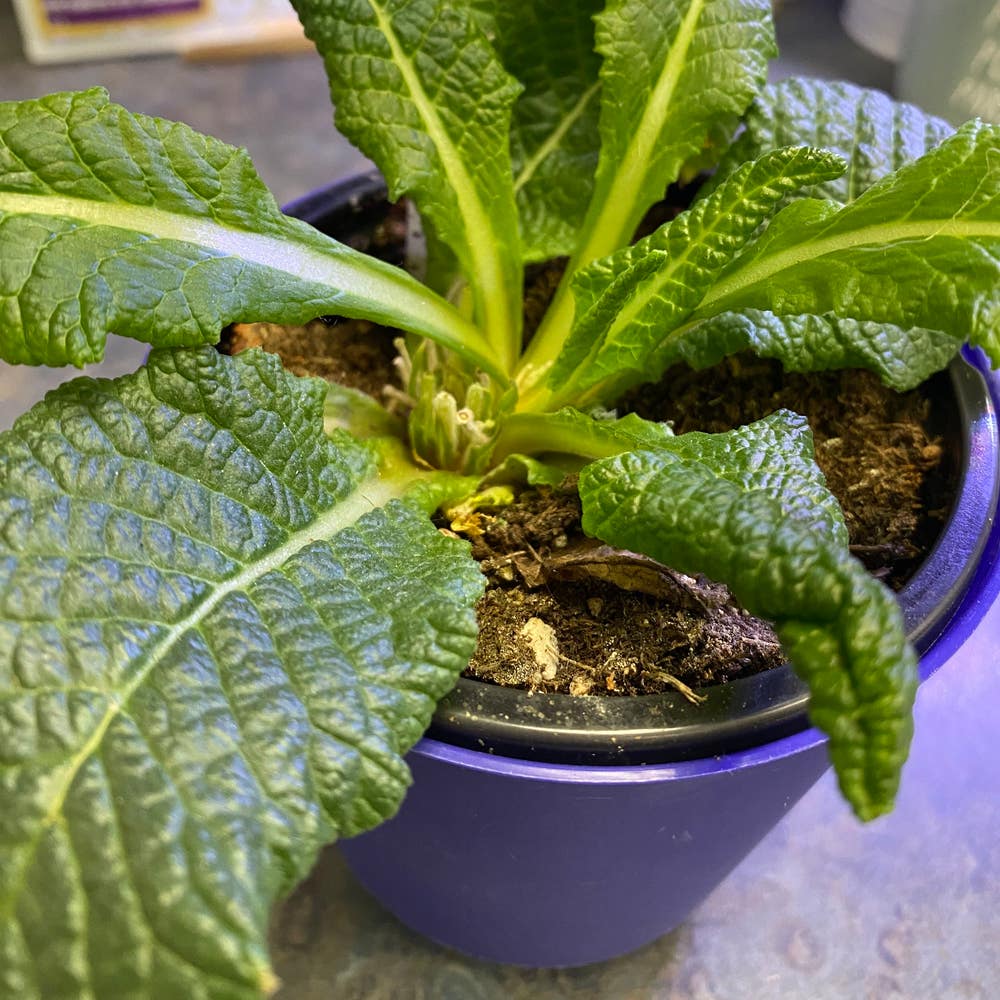
🌼 What to Do About Curling Leaves on Your Double Primrose
Primula vulgaris 'Double'
By the Greg Editorial Team
Oct 15, 2024•6 min read
This article was created with the help of AI so we can cover more plants for you. May contain errors. See one? Report it here.
Revive your double primrose 🌱 by quickly diagnosing and treating those pesky curling leaves!
- 🌡️ Maintain 15°C to 20°C for optimal growth and to prevent curling leaves.
- 💧 Moderate humidity is crucial; low levels stress plants and cause curling.
- 🐜 Watch for pests like aphids; sticky residue indicates infestations leading to curling.
Causes of Curling Leaves
🌡️ Environmental Stress Factors
Temperature fluctuations can wreak havoc on your double primrose. Ideally, keep them in a range of 15°C to 20°C (59°F to 68°F) to ensure they thrive.
Humidity levels also play a crucial role. These plants prefer moderate humidity; low levels can lead to significant stress and curling leaves.
🐜 Pest Infestations
Aphids
Aphids are sneaky little pests that can cause major issues. Look for sticky residue on leaves and distorted growth, which are telltale signs of their presence.
These pests suck sap from the leaves, leading to curling and stunted growth. If you notice these signs, it's time to take action.
Spider Mites
Spider mites are another common culprit. You might spot fine webbing on leaves, along with a yellowing or stippled appearance.
Their feeding habits reduce plant vigor and can cause significant leaf curling. Keep an eye out for these signs to protect your primrose.
🍄 Fungal Infections
Powdery Mildew
Powdery mildew is a fungal infection that can be detrimental to your plant. Symptoms include white, powdery spots on leaves, which can lead to curling and distortion.
This fungus thrives in high humidity and poor air circulation, so it's essential to monitor your plant's environment closely.
🥦 Nutrient Deficiencies
Nitrogen Deficiency
Nitrogen deficiency can manifest as yellowing leaves and stunted growth. This nutrient is essential for healthy foliage development, so don’t overlook it.
If you notice leaf curling alongside these symptoms, your plant may be crying out for nitrogen.
Potassium Deficiency
Potassium deficiency often shows up as marginal leaf curling and browning. This nutrient is vital for overall plant health and stress resistance.
Addressing this deficiency can help restore your primrose to its former glory.
💧 Overwatering or Underwatering
Overwatering is a common mistake that leads to root rot, causing wilting and curling leaves. Always ensure your plant has proper drainage to avoid this issue.
On the flip side, underwatering can result in dry, crispy leaves that curl inward. Finding the right balance is key to keeping your double primrose healthy.
Understanding these causes of curling leaves is the first step in restoring your plant's health. Next, we’ll dive into how to diagnose these issues effectively.
Diagnosing Curling Leaves
Identifying Symptoms of Leaf Curl 🌿
To effectively diagnose curling leaves on your double primrose, start by observing the visual signs. Pay attention to the direction of the curl—whether it's upward or downward—as well as any discoloration or changes in leaf texture.
Timing is crucial in this process. Regularly monitor your plant to assess how quickly the symptoms develop, as this can indicate the severity of the issue.
Differentiating Between Pest and Disease Issues 🐛
Next, differentiate between pest infestations and disease problems. Look for pest indicators such as the presence of insects, sticky residue on leaves, or fine webbing.
On the other hand, disease indicators often include fungal growth, unusual spots, or discoloration. Identifying these signs early can help you take appropriate action.
Assessing Environmental Conditions 🌤️
Environmental conditions play a significant role in the health of your primrose. Start by checking for adequate light exposure; if your plant is getting too much direct sunlight, consider relocating it to a shadier spot.
Humidity levels are also important. Measure the humidity around your plant, and if it's low, think about using a humidifier to create a more favorable environment.
Lastly, ensure that your plant is in a stable temperature zone. Fluctuations can stress the plant, leading to curling leaves.
By carefully diagnosing the symptoms and conditions affecting your double primrose, you can take the necessary steps to restore its health. Next, let's explore effective treatment options for curling leaves.
Treatment Options for Curling Leaves
🌿 Organic Pest Control Methods
If your double primrose is suffering from pests, organic solutions can be highly effective. Insecticidal soap is a great option; simply apply it to the affected areas to eliminate pests without harming the plant.
Another excellent choice is neem oil, a natural pesticide that works wonders against aphids and spider mites. This oil not only tackles existing infestations but also helps prevent future ones.
🦠 Fungicide Application for Fungal Issues
When it comes to fungal infections like powdery mildew, using the right fungicide is crucial. Opt for a broad-spectrum fungicide that targets powdery mildew specifically.
Timing your application is just as important. For best results, apply the fungicide during the early morning or late evening to avoid sunburn on your primrose leaves.
💧 Adjusting Watering Practices
Watering practices can make or break your plant's health. If you suspect overwatering, allow the soil to dry out between waterings and ensure proper drainage to prevent root rot.
Conversely, if your plant is underwatered, increase the frequency of watering. Aim for consistent moisture to keep your double primrose thriving.
🌱 Fertilization Techniques to Address Nutrient Deficiencies
Nutrient deficiencies can lead to curling leaves, so proper fertilization is key. Use a balanced NPK fertilizer to provide essential nutrients.
For optimal growth, fertilize every 4-6 weeks during the growing season. This will help your double primrose develop robust foliage and resist curling leaves.
By implementing these treatment options, you can effectively address the curling leaves on your double primrose. Next, let’s explore preventive measures to keep your plant healthy and vibrant.
Preventive Measures
🌱 Best Practices for Primrose Care
To keep your double primrose thriving, start with well-draining soil. This prevents waterlogging, which can lead to root rot and curling leaves.
Consistent moisture is key. Water your primrose regularly, but avoid overwatering to maintain a healthy balance.
☀️ Ideal Growing Conditions
Your primrose loves partial shade. Too much direct sunlight can scorch its leaves, leading to curling and distress.
Regularly check soil moisture levels. A moisture meter can help you gauge when it’s time to water, ensuring your plant stays hydrated without drowning.
🐛 Regular Monitoring for Pests and Diseases
Make it a habit to inspect your primrose weekly. Look for any signs of pests or diseases that could threaten its health.
Address any issues promptly. Early intervention can save your plant from more severe problems down the line.
❄️ Seasonal Care Adjustments
In winter, protect your primrose from frost. If temperatures drop significantly, consider bringing it indoors to keep it safe.
During the summer, increase humidity around your plant. Monitor for heat stress, as high temperatures can lead to curling leaves.
By following these preventive measures, you can create a nurturing environment for your double primrose, helping it flourish year-round. Next, let’s explore how to diagnose curling leaves effectively.
⚠️ Safety First
This content is for general information and may contain errors, omissions, or outdated details. It is not medical, veterinary advice, or an endorsement of therapeutic claims.
Always consult a qualified healthcare professional before using any plant as food, medicine, or supplement.
Never eat any plant (or feed one to pets) without confirming its identity with at least two trusted sources.
If you suspect poisoning, call Poison Control (800) 222-1222, the Pet Poison Helpline (800) 213-6680, or your local emergency service immediately.
Spotted an error? Please report it here.
Keep your double primrose curl-free 🌿 by using Greg for tailored care reminders and tips that ensure a thriving environment for your plant!