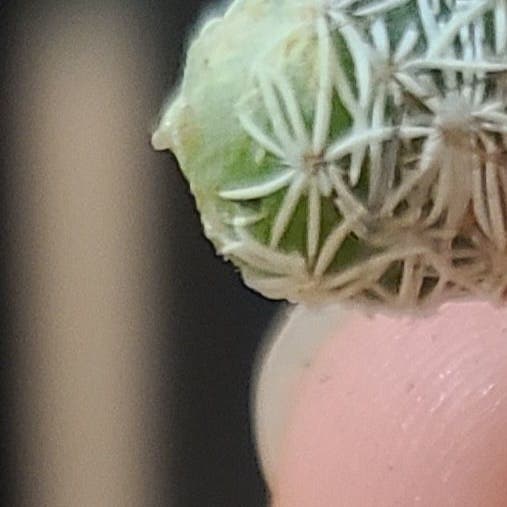
Why Does My Coryphantha delicata Have Yellow Leaves?
Coryphantha delicata
By the Greg Editorial Team
Feb 27, 2024•4 min read
This article was created with the help of AI so we can cover more plants for you. May contain errors. See one? Report it here.
Solve the mystery of your Coryphantha delicata's yellow leaves and revive its glow! 🌵🔍
- Yellow leaves signal distress or natural aging in Coryphantha delicata.
- Watering woes? Adjust frequency and ensure good drainage.
- Sunlight balance is key to prevent overexposure and light deprivation.
Spotting Trouble: Identifying Yellow Leaves on Your Coryphantha delicata
🚨 Recognizing Symptoms of Distress
Yellow leaves on your Coryphantha delicata can be as alarming as an unexpected siren. It's crucial to determine if this is a natural aging process or a cry for help. Uniform yellowing could be a shout-out for better care, possibly due to nutrient deficiencies or watering mishaps. However, if the yellowing is selective, showing up as spotty patterns, you might be dealing with uninvited guests like pests or an outbreak of disease.
🕵️ Quick Checks for Immediate Concerns
Before you panic, do a quick inspection. Look for unwelcome pests making a meal of your plant or signs of disease, such as unusual spots or lesions. Don't overlook environmental stressors; these could range from a recent move to a less-than-ideal location to a sudden change in temperature. Immediate action may be required to prevent further damage, so keep your eyes peeled and your wits about you.
Thirsty or Drowning? Watering Issues Leading to Yellow Leaves
🏜️ Underwatering Woes
Yellowing leaves on your Coryphantha delicata may be a distress signal for dehydration. If the plant's soil feels like a forgotten loaf of bread, it's time to water. Leaves may appear shrunken or wrinkled when the plant is thirsty. To properly hydrate, water the plant until moisture seeps through the drainage holes, ensuring the soil is uniformly moist. Wait for the topsoil to dry out before the next watering session.
🚰 The Perils of Overwatering
Conversely, yellow leaves can also indicate that your plant is drowning in excess water. Soggy soil and a musty odor are the tell-tale signs of overwatering. This can lead to root rot, which is as good for your plant as a chocolate teapot. To remedy this, allow the soil to dry out more between waterings and consider improving the drainage by adding perlite or sand to the soil mix. Remember, your Coryphantha delicata doesn't need a daily swim, just enough to quench its thirst.
Getting to the Root: Soil and Drainage Problems
💧 The Drainage Dilemma
Poor drainage is like a bad relationship for your Coryphantha delicata—it's suffocating. Yellow leaves often scream "I can't breathe!" because soggy soil drowns the roots. Root rot is the drama queen here, and it loves the limelight of a waterlogged stage. To fix this, think of perlite or pumice as your plant's lifeline. Mix them into the soil to break up the clinginess and let the water flow through like a good conversation.
🌱 Soil Quality and Composition
The right soil mix is your plant's best friend. Aim for a well-draining, breathable blend. Ingredients like perlite or pumice are not just trendy; they're essential for that airy, desert-like feel your cactus craves. If your soil is more clay than a well-draining mix, it's time for an intervention. Remember, a soil that clings to your fingers like a needy pet is a no-no. Adjust your soil mix, and watch your plant ditch the yellow and get back to green.
Let There Be Light: Balancing Sunlight Exposure
🌞 Too Much Sun
Sunburn on your Coryphantha delicata's leaves is a real threat. If you spot crispy edges, bleached spots, or a generally scorched appearance, it's time to intervene. To combat overexposure, shade your plant with sheer curtains or move it to a spot with bright, yet indirect, light. Rotate the plant regularly to ensure all sides receive equal light and avoid the one-sided tan.
🌞 Not Enough Light
Conversely, light deprivation can leave your plant looking stretched out and pale, like it's reaching for a light source that's just too far away. Increase light exposure gradually to prevent shock. Consider using fluorescent bulbs to simulate sunlight if your space lacks natural light. Remember, your Coryphantha delicata isn't asking for a sunbath—just a comfortable glow.
⚠️ Safety First
This content is for general information and may contain errors, omissions, or outdated details. It is not medical, veterinary advice, or an endorsement of therapeutic claims.
Always consult a qualified healthcare professional before using any plant as food, medicine, or supplement.
Never eat any plant (or feed one to pets) without confirming its identity with at least two trusted sources.
If you suspect poisoning, call Poison Control (800) 222-1222, the Pet Poison Helpline (800) 213-6680, or your local emergency service immediately.
Spotted an error? Please report it here.
Diagnose your Coryphantha delicata's yellow leaves and keep it thriving 🌵 with Greg's personalized care plans that balance watering, lighting, and soil conditions perfectly.