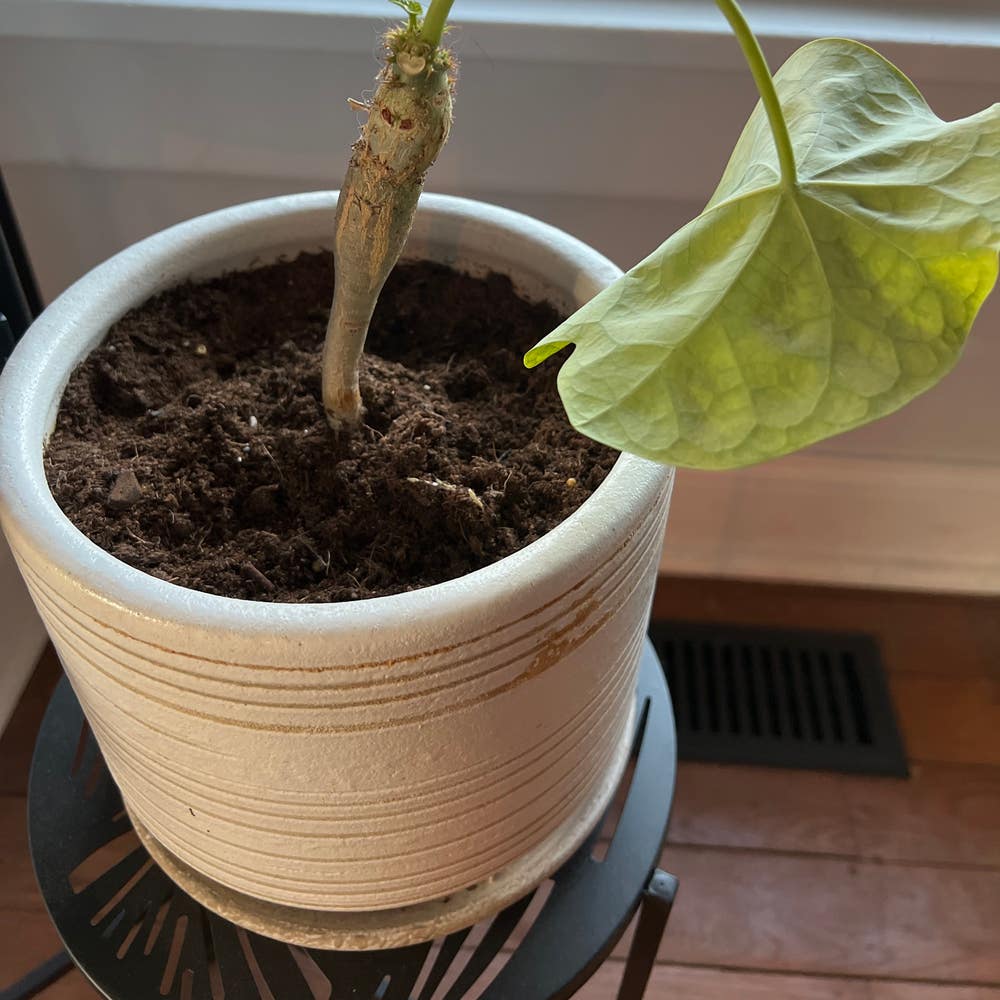
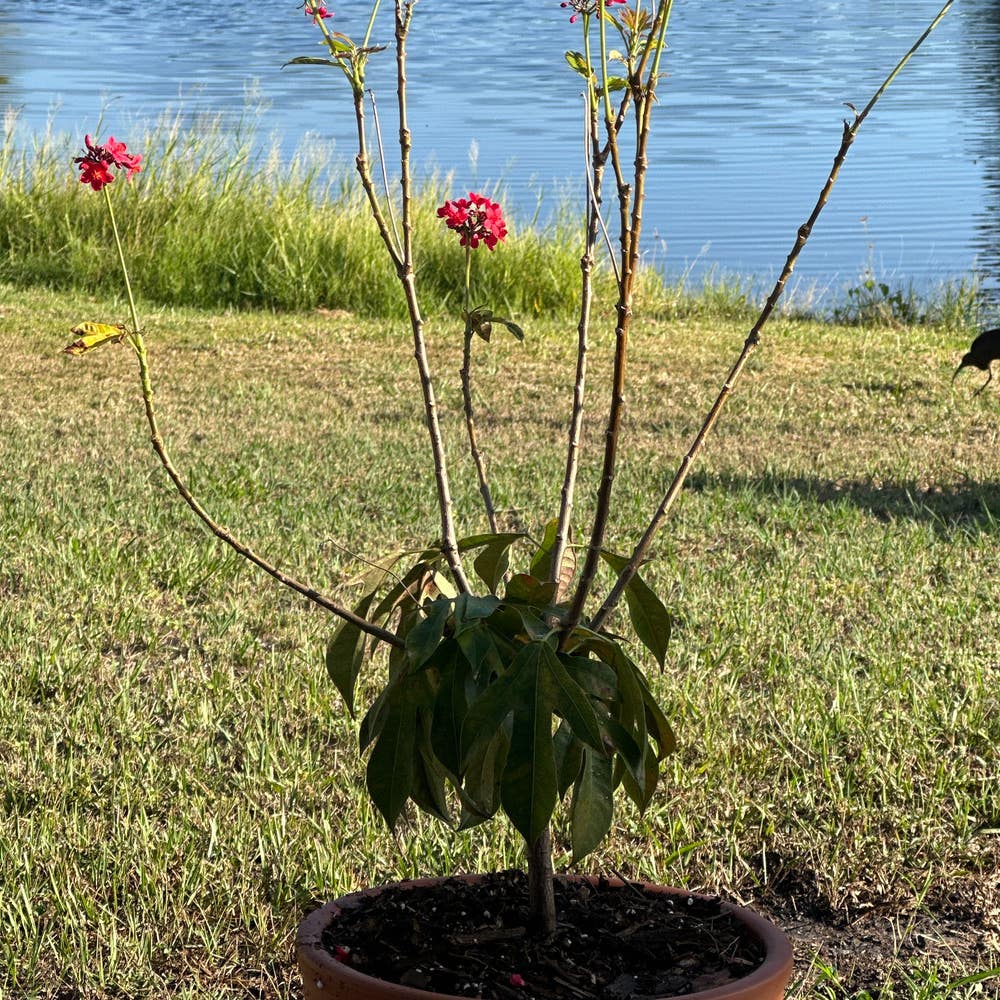
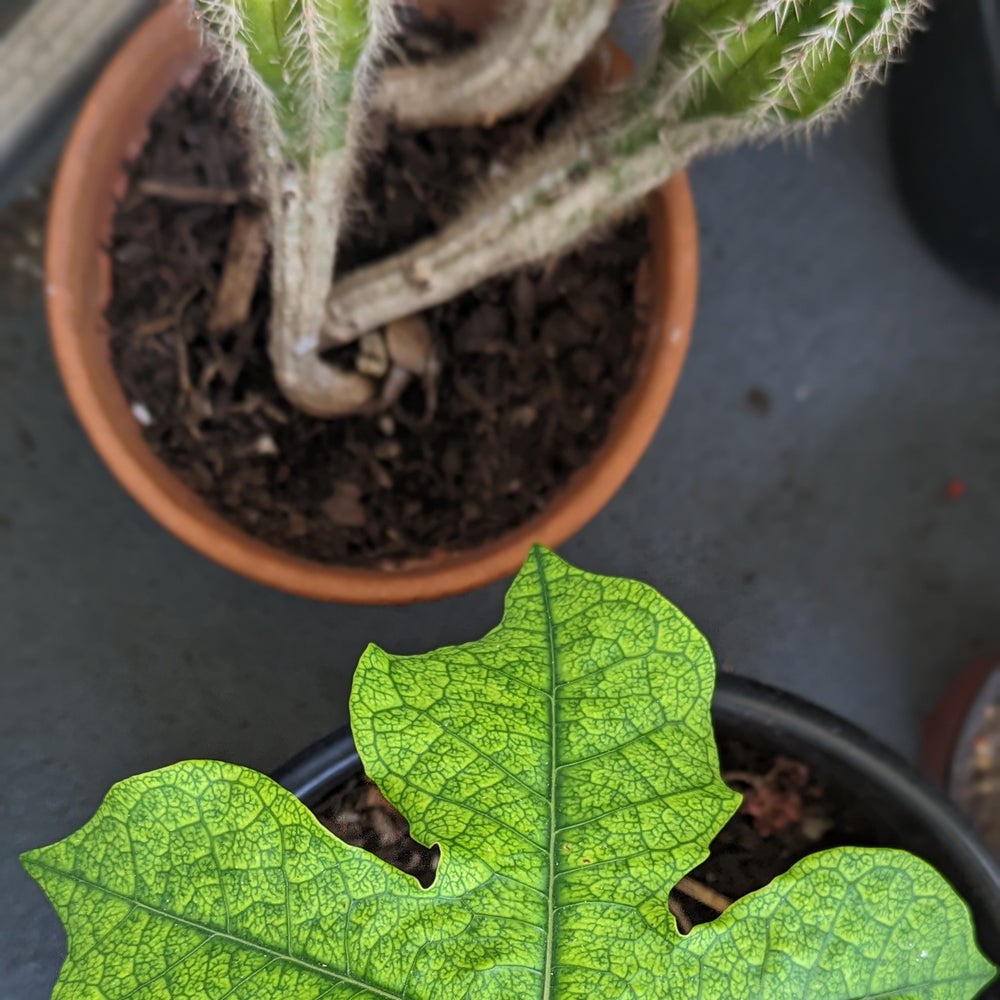
🐠 Managing Leaf Drop on Your Coral Plant
Jatropha multifida
By the Greg Editorial Team
Nov 08, 2024•4 min read
This article was created with the help of AI so we can cover more plants for you. May contain errors. See one? Report it here.
Unlock vibrant growth in your coral plant 🌱 by mastering essential watering techniques to prevent leaf drop!
- 💧 Proper watering prevents leaf drop; adjust based on environmental conditions.
- 🐛 Pests like aphids and spider mites can cause leaf drop; inspect regularly.
- 🌱 Monitor humidity and light to maintain coral plant health and prevent stress.
Watering Practices
🌊 Importance of Proper Watering
Proper watering is crucial for maintaining the health of your coral plant's leaves. It ensures that the plant receives the right amount of moisture, which is essential for photosynthesis and overall vitality.
Improper watering can lead to significant leaf drop. Too much or too little water stresses the plant, causing it to shed leaves as a survival mechanism.
🚿 Signs of Overwatering vs. Underwatering
Recognizing the signs of overwatering is vital. Look for yellowing leaves and mushy stems, which indicate that your plant is drowning.
Root rot is another serious consequence of overwatering, often accompanied by a foul smell and blackened roots.
On the flip side, underwatering shows its own set of symptoms. You might notice wilting leaves and dry soil, signaling that your coral plant is thirsty.
Leaf drop can occur as a stress response to insufficient water, so keep an eye out for these indicators.
📅 Recommended Watering Schedule
A general guideline for watering your coral plant is every 1-2 weeks, but this can vary based on environmental conditions. Factors like temperature and humidity play a significant role in how often you should water.
To ensure you're providing the right amount of moisture, check the soil moisture regularly. You can use a moisture meter for precision or simply perform a finger test by sticking your finger into the soil to gauge its dampness.
By following these watering practices, you can help your coral plant thrive and minimize the risk of leaf drop. Next, let’s dive into pest and disease management to further protect your plant’s health.
Pest and Disease Management
🐜 Common Pests Affecting Coral Plant
Identifying pests early can save your coral plant from significant damage. The most common culprits include aphids, spider mites, and mealybugs.
- Aphids are tiny, soft-bodied insects that cluster on new growth.
- Spider mites are even smaller and create fine webbing on the undersides of leaves.
- Mealybugs appear as white, cottony masses on stems and leaves.
Symptoms of pest infestation often manifest as sticky residue on leaves, webbing, or discolored foliage. If you notice these signs, it’s time to take action.
🔍 Identifying Signs of Disease
Coral plants are susceptible to various diseases that can lead to leaf drop.
- Fungal infections often result in wilting and leaf drop, especially in humid conditions.
- Bacterial infections can cause unsightly leaf spots, which may eventually lead to more severe damage.
Regularly inspecting your plant can help you catch these issues before they escalate.
🧪 Treatment Options for Pests and Diseases
When it comes to treating pests and diseases, organic methods are often the safest and most effective.
- Neem oil is a popular choice for pest control, suffocating insects while being gentle on the plant.
- Insecticidal soap can also effectively eliminate pests without harming beneficial insects.
For disease management, focus on removing affected leaves to prevent the spread of infection. Improving air circulation around your coral plant can also help reduce humidity levels, making it less hospitable for pathogens.
By staying vigilant and proactive, you can keep your coral plant healthy and thriving. Next, let’s explore preventive measures and best practices to ensure your plant remains in top condition.
Preventive Measures and Best Practices
🌱 Routine Care Tips to Prevent Leaf Drop
Regular monitoring of your coral plant's health is crucial. Keep an eye out for any changes in leaf color or texture, as these can signal underlying issues.
Adjust your care routine based on seasonal changes. For instance, during winter months, consider increasing humidity to combat dry indoor air.
🌦️ Seasonal Considerations for Care
As the seasons change, so should your watering and humidity levels. In the warmer months, your coral plant may need more frequent watering, while in cooler months, you might need to reduce it.
Light exposure is also vital during shorter days. Ensure your plant receives adequate sunlight, as insufficient light can lead to stress and leaf drop.
📊 Importance of Monitoring Plant Health Regularly
Keeping a care journal can be a game-changer. Documenting changes in your plant's health helps you identify patterns and adjust your care accordingly.
Utilize tools like the Greg plant care app for timely reminders on watering and humidity adjustments. Staying organized can make all the difference in maintaining a thriving coral plant.
By implementing these preventive measures, you can significantly reduce the risk of leaf drop and ensure your coral plant remains healthy and vibrant. Next, we’ll explore pest and disease management to further safeguard your plant's well-being.
⚠️ Safety First
This content is for general information and may contain errors, omissions, or outdated details. It is not medical, veterinary advice, or an endorsement of therapeutic claims.
Always consult a qualified healthcare professional before using any plant as food, medicine, or supplement.
Never eat any plant (or feed one to pets) without confirming its identity with at least two trusted sources.
If you suspect poisoning, call Poison Control (800) 222-1222, the Pet Poison Helpline (800) 213-6680, or your local emergency service immediately.
Spotted an error? Please report it here.
Keep your coral plant thriving 🌿 by using Greg's tailored watering alerts and pest control tips to prevent leaf drop and ensure vibrant growth!