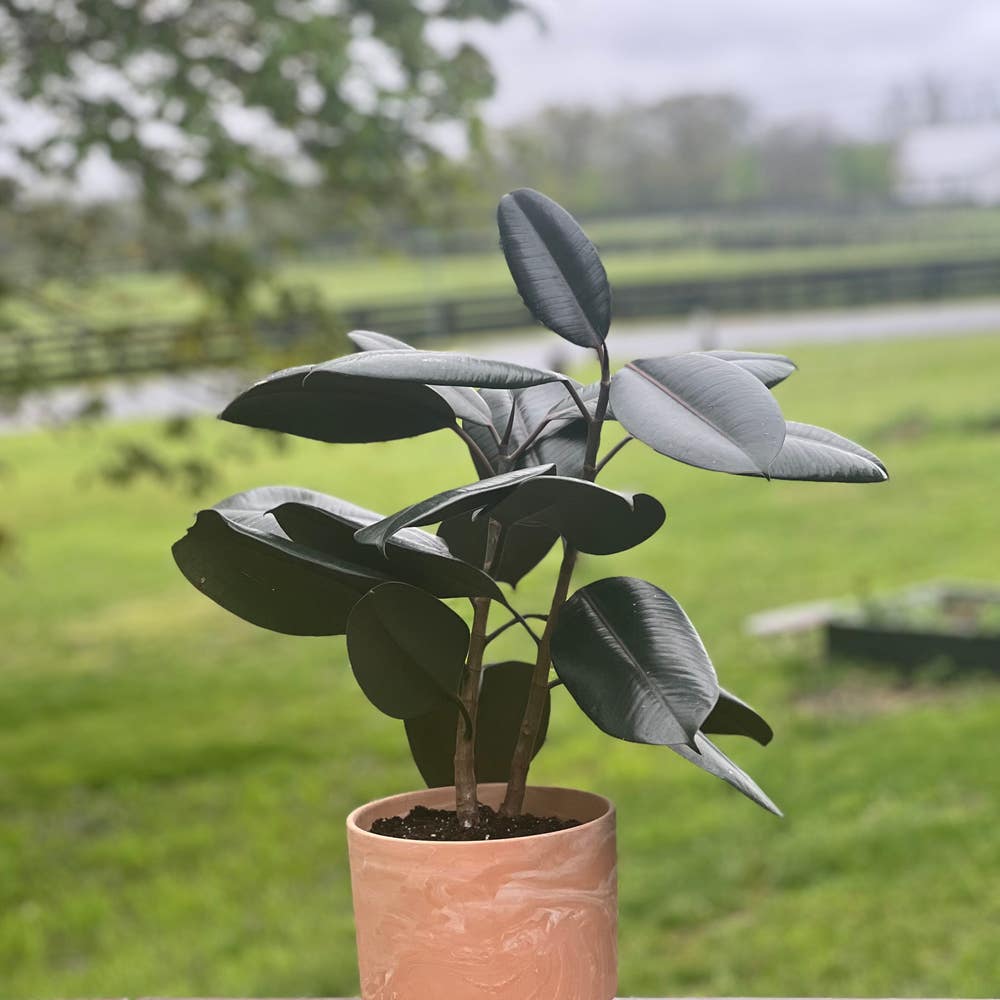
Black Spots on My Burgundy Rubber Tree Leaves
Ficus elastica 'Burgundy'
By the Greg Editorial Team
Jun 18, 2024•3 min read
This article was created with the help of AI so we can cover more plants for you. May contain errors. See one? Report it here.
Banish black spots 🍂 on your Rubber Tree and keep it lush with these expert care tips!
- Overwatering leads to black spots; adjust your watering habits.
- Fungal infections and pests cause spots; use antifungal agents and neem oil.
- Prevent spots with regular inspections and ideal plant environment.
Spotting the Culprits: What's Behind the Black Spots?
💦 Overwatering Woes
Overzealous watering rolls out the red carpet for fungi. Your Burgundy Rubber Tree might be drowning in kindness.
Signs of overwatering include yellowing leaves, a mushy feel, and of course, those notorious black spots.
🍄 Fungal Foes
Fungal infections like Cercospora and Anthracnose turn leaves into their personal destruction canvas.
Look for patterns and lesions on leaves to spot these uninvited guests.
🐜 Pesky Pests
Insects can be the villains behind black spots. Spider mites and fungus gnats are the usual suspects.
Webs and over-moist soil are telltale signs of these pests turning your plant into their playground.

From Diagnosis to Action: Treating Black Spots
🍄 Battling Fungus Among Us
Antifungal agents are your rubber tree's knights in shining armor. Over-the-counter or DIY, these concoctions halt the fungal fiesta dead in its tracks. Sunlight and airflow are your secret weapons; crank them up to make your plant less hospitable to spore squatters.
For those who prefer a more natural approach, mix up a storm with baking soda, water, and a dash of horticultural oil. This pH-altering potion is like a bouncer, showing fungi the door. Apply weekly, but ease off when the mercury rises – fungi can't stand the heat.
🐜 Evicting Insects
Insecticidal soaps and neem oil are your bug-busting buddies, ready to evict those tiny terrors causing black spots. They work like plant-friendly pest control, showing bugs the exit without harsh chemicals.
When applying treatments, think of it as delicate surgery on your green patient. Avoid drenching the leaves; instead, target the pests with precision. A little goes a long way – your plant will thank you for not going overboard.

Keeping Black Spots at Bay: Prevention Tactics
💧 Watering Wisdom
Mastering the art of watering is crucial to prevent future black spot outbreaks. Overhead watering is out—like last season's fad. Instead, aim for the soil's base, keeping those leaves as dry as a stand-up comedian's wit. Early morning watering sessions are the new brunch; they let the leaves bask in the sun and dry off, reducing the allure for fungi looking to party.
👩🌾 Vigilant Plant Parenting
Regular leaf inspections are the early warning system you never knew you needed. It's like checking your teeth for spinach before a date. Catch those black spots early, and you're golden. Miss them, and it's game over for your plant's flawless complexion. Keep those pruners sanitized too; you wouldn't want to spread the plant equivalent of cooties.
🌡 Creating the Ideal Environment
Tweaking humidity and temperature can be as nuanced as a barista perfecting your latte. Aim for that sweet spot where your plant feels like it's on a permanent vacation—not too hot, not too cold, just right. Remember, stability is key; sudden changes are more shocking to your plant than a plot twist in a telenovela. Keep it stable, and those black spots will be as rare as a unicorn sighting.

⚠️ Safety First
This content is for general information and may contain errors, omissions, or outdated details. It is not medical, veterinary advice, or an endorsement of therapeutic claims.
Always consult a qualified healthcare professional before using any plant as food, medicine, or supplement.
Never eat any plant (or feed one to pets) without confirming its identity with at least two trusted sources.
If you suspect poisoning, call Poison Control (800) 222-1222, the Pet Poison Helpline (800) 213-6680, or your local emergency service immediately.
Spotted an error? Please report it here.
Prevent black spots 🛡️ on your rubber tree by letting Greg tailor your watering schedule, ensuring your plant's environment is always spot-on!