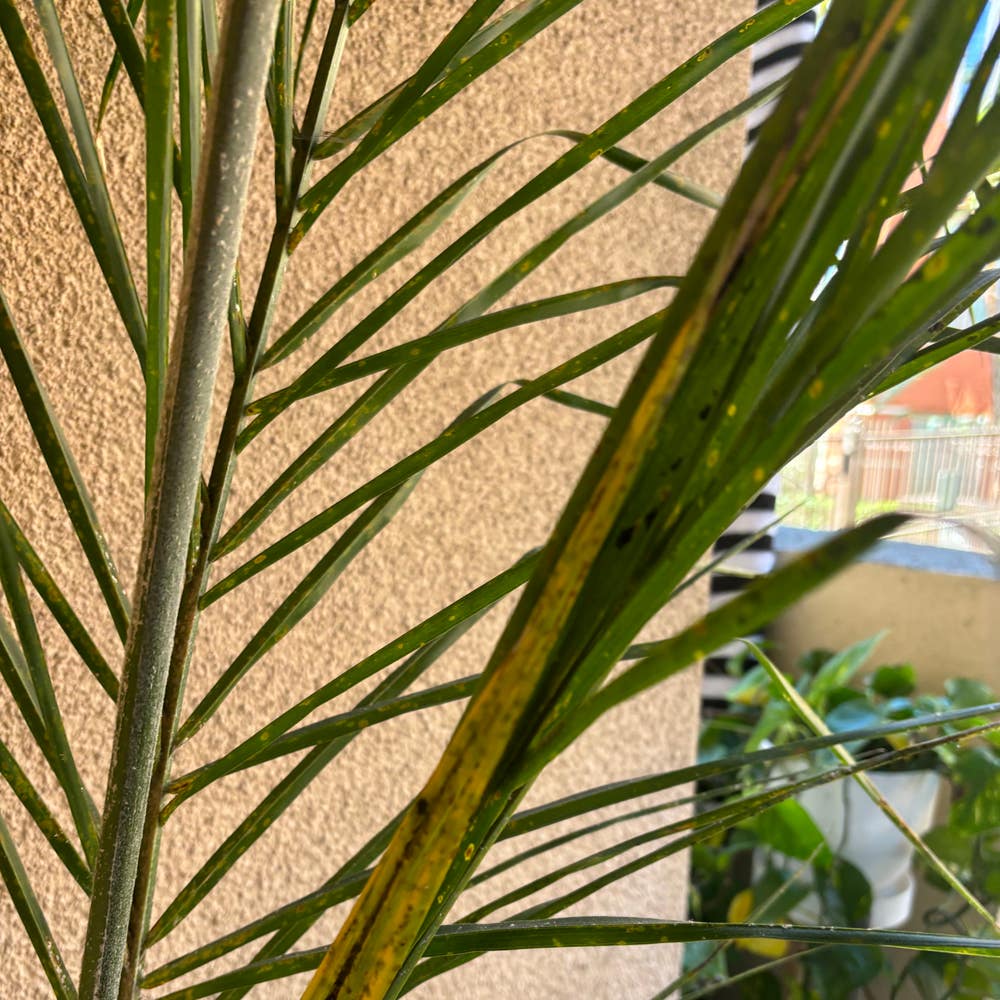
Ultimate Guide to What's Eating Your Queen Palm 🐞
Syagrus romanzoffiana
By the Greg Editorial Team
Sep 30, 2024•7 min read
This article was created with the help of AI so we can cover more plants for you. May contain errors. See one? Report it here.
Safeguard your queen palm from herbivores while inviting beneficial wildlife for a flourishing garden! 🌱
- 🌴 Queen palms attract wildlife, but young shoots are vulnerable to herbivores.
- 🦌 Deer and rabbits can severely damage young palms; look for signs of their presence.
- 🛡️ Effective deterrents like repellents and fencing protect queen palms from herbivore damage.
Description and Appeal
🌴 Appearance
The queen palm is a striking sight, boasting a tall, slender trunk that can reach heights of 50 to 70 feet. Its feathery fronds, which can grow up to 10 feet long, create a lush canopy that adds elegance to any landscape.
The palm produces small, round fruits that transition from green to a vibrant yellow or orange when ripe. These fruits not only enhance the visual appeal but also serve as a food source for various wildlife.
🐦 Most Appealing Parts to Animals
The fruits of the queen palm are nutrient-rich and particularly attractive to birds and small mammals. Their sweet nectar draws in pollinators and herbivores, making the flowers another appealing aspect of the plant.
Young shoots are tender and palatable, often targeted by herbivores looking for a quick snack. This combination of features makes the queen palm a magnet for various animals, both beneficial and harmful.
Understanding these appealing aspects is crucial for maintaining the health of your queen palm while appreciating its role in the ecosystem. As we explore the common herbivores that may threaten this majestic tree, keep in mind the delicate balance between attraction and protection.
Common Herbivores
🦌 Deer
Signs of Presence and Damage
Deer are often the first culprits when it comes to damage to your queen palm. Look for hoof prints in muddy areas near the base and fronds stripped of leaves, especially at the lower levels.
Beneficial vs. Harmful Interactions
While deer can be a beautiful sight in nature, their impact on young palms is generally harmful. They can severely damage these plants and stunt their growth.
Deterrent Methods
To keep deer at bay, consider using commercial repellents that contain putrescent egg solids. Alternatively, planting strong-smelling herbs like lavender around the palm can act as a natural deterrent.
🐇 Rabbits
Signs of Presence and Damage
Rabbits leave behind small, round droppings and often gnaw on fronds. You may notice cleanly cut fronds and young shoots, indicating their presence.
Beneficial vs. Harmful Interactions
Rabbits are generally harmful to young palms, as they can decimate plants and hinder growth. Their appetite for tender shoots can be quite destructive.
Deterrent Methods
For an easy solution, use rabbit repellents that have a bitter taste. Fencing with chicken wire around the base of the palm is another effective method to keep these critters away.
🐿️ Squirrels
Signs of Presence and Damage
Squirrels can be tricky to spot, but their damage is evident. Look for chewed fronds and fruits, along with visible bite marks and nesting debris near the palm.
Beneficial vs. Harmful Interactions
Squirrels have a mixed reputation; while they can help with seed dispersal, they may also damage young shoots. Their presence can be both beneficial and harmful.
Deterrent Methods
To deter squirrels, consider using repellents that contain capsaicin. Installing squirrel baffles on nearby trees can also help keep them from accessing your palms.
🐦 Birds
Signs of Presence and Damage
Birds can be both friends and foes. Look for peck marks on fruits and fronds, along with signs of nesting activity in the fronds.
Beneficial vs. Harmful Interactions
Generally, birds are beneficial as they aid in pollination and seed dispersal. Their presence can enhance the health of your queen palm.
Deterrent Methods
If you need to keep birds away, bird deterrent sprays can be effective. Hanging reflective objects around the palm can also scare them off.
🐭 Rodents
Signs of Presence and Damage
Rodents can cause significant damage to your queen palm. Look for gnaw marks on the trunk and fronds, as well as burrows or nests near the base.
Beneficial vs. Harmful Interactions
Rodents are generally harmful, especially to young palms. Their chewing habits can lead to severe damage.
Deterrent Methods
Consider using rodent bait stations for chemical control. Organic methods like trapping and encouraging natural predators, such as owls, can also be effective.
🦡 Groundhogs
Signs of Presence and Damage
Groundhogs leave large burrows near the base of the palm and often chew on fronds and young shoots. Their presence can be quite noticeable.
Beneficial vs. Harmful Interactions
Unfortunately, groundhogs are generally harmful and can severely damage your plants. Their burrowing and eating habits can lead to significant issues.
Deterrent Methods
For groundhog control, commercial repellents can be useful. Installing fencing at least 3 feet high and buried 1 foot underground can also help keep them out.
Understanding these common herbivores and their interactions with your queen palm is crucial for its health. Next, we’ll explore the beneficial animals that can positively impact your palm’s ecosystem.
Beneficial Animals and Ecosystem Impact
🐝 Description of Beneficial Animals
Bees and butterflies are vital pollinators that flock to the flowers of the queen palm. Their activity not only enhances the beauty of your garden but also plays a crucial role in the reproductive cycle of the palm.
Birds, on the other hand, serve as seed dispersers. They consume the nutrient-rich fruits and help spread the seeds, ensuring the growth of new palms in different areas.
🌱 Positive Impacts
The presence of these beneficial animals leads to enhanced pollination, which significantly boosts fruit production. This increase in fruit not only benefits the palm but also supports a diverse range of wildlife.
Moreover, attracting various species fosters biodiversity in your garden. A thriving ecosystem creates a balanced environment, making it resilient against pests and diseases.
Incorporating these beneficial animals into your garden can lead to a flourishing landscape. By understanding their roles, you can create a harmonious space that supports both the queen palm and the wildlife that depends on it.
As we explore protection strategies next, consider how to maintain this balance while managing the challenges posed by herbivores.
Protection Strategies
🛡️ Preventive Measures
Regular monitoring is key to keeping your queen palm safe from herbivores. Look for signs of animal presence, such as tracks or chewed fronds, to catch any issues early.
Planting companion plants can also deter herbivores. Strong-smelling herbs like lavender not only beautify your garden but can help keep unwanted visitors at bay.
⚠️ Reactive Solutions
If you notice damage, act quickly by removing affected fronds. This encourages new growth and helps the palm recover faster.
Using repellents can be effective based on observed animal activity. Choose options that suit your garden's needs and the specific animals you're dealing with.
⚖️ Maintaining Balance
Encouraging beneficial insects and animals is essential for a healthy ecosystem. Pollinators like bees and butterflies can thrive alongside your palms, enhancing their growth.
Creating habitats for natural predators of herbivores can also help. This approach fosters a balanced environment where beneficial species can flourish while keeping harmful ones in check.
By implementing these strategies, you can protect your queen palm while promoting a vibrant garden ecosystem. Next, let’s explore seasonal considerations that affect your palm's vulnerability to herbivores.
Seasonal Considerations
🌱 Variations in Attraction
Spring and summer are peak seasons for animal activity around queen palms. Young shoots are tender and irresistible, drawing in herbivores eager for a nutritious snack.
As summer transitions to fall, the fruits ripen, becoming a magnet for birds and small mammals. This seasonal shift highlights the importance of monitoring your palms during these times.
⏰ Timing of Vulnerability
Young palms face their greatest vulnerability in the first few years of life. During this period, they require extra care to fend off hungry visitors.
Seasonal changes also influence herbivore behavior and food availability. Understanding these patterns can help you protect your palms effectively.
By staying vigilant and adapting your strategies, you can ensure your queen palms thrive throughout the year. This proactive approach sets the stage for a healthy ecosystem around your plants.
Toxicity and Safety
🩺 Toxic Effects
The queen palm is generally considered non-toxic, making it a safe choice for gardens. However, if ingested in large quantities, it can cause mild gastrointestinal upset.
🐾 Implications for Interactions
Understanding the palm's toxicity is crucial for managing animal behavior around it. This knowledge helps ensure that pets and livestock remain safe while enjoying the beauty of your garden.
Being aware of potential risks allows you to create a harmonious environment where both plants and animals can thrive. With the right precautions, you can enjoy your queen palm without worry.
As you consider the interactions between your palm and the local wildlife, remember that balance is key. Keeping an eye on animal activity can help you maintain a healthy ecosystem around your queen palm.
Next, let’s explore effective protection strategies to safeguard your palm from herbivores while promoting beneficial wildlife.
⚠️ Safety First
This content is for general information and may contain errors, omissions, or outdated details. It is not medical, veterinary advice, or an endorsement of therapeutic claims.
Always consult a qualified healthcare professional before using any plant as food, medicine, or supplement.
Never eat any plant (or feed one to pets) without confirming its identity with at least two trusted sources.
If you suspect poisoning, call Poison Control (800) 222-1222, the Pet Poison Helpline (800) 213-6680, or your local emergency service immediately.
Spotted an error? Please report it here.
Protect your queen palm's beauty 🌴 from wildlife with Greg's personalized care reminders and tips, ensuring it thrives year-round!