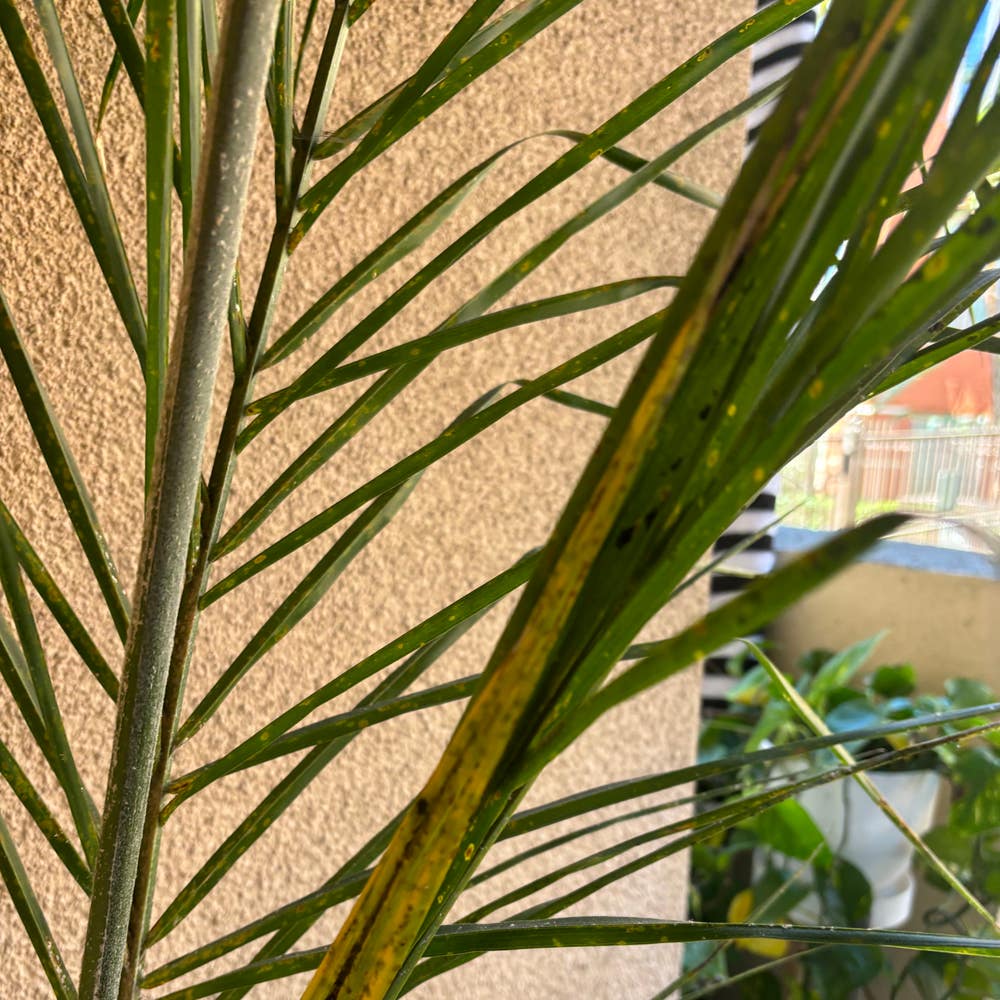
Common Queen Palm Problems
Syagrus romanzoffiana
By the Greg Editorial Team
Jun 18, 2024•4 min read
This article was created with the help of AI so we can cover more plants for you. May contain errors. See one? Report it here.
Safeguard your Queen Palm's 👑 reign by nipping these typical troubles in the bud! 🌿
- Yellowing fronds? Check for nutrient deficiencies or underwatering.
- Overwatering risks root rot; let soil dry before watering again.
- Prevent pests and fungus with regular inspections and proper soil care.
When Your Queen Palm Throws a Tantrum: Spotting the Signs
💛 Yellowing or Browning Fronds: A Cry for Help
Yellow fronds may scream nutrient deficiency, particularly a lack of manganese or iron. Browning, on the other hand, could be your palm begging for hydration or suffering from a potassium shortage. Don't ignore these colorful pleas; they're the first indicators that your Queen Palm is not reigning as it should.
🌱 Wilting or Stunted Growth: More Than Just a Bad Palm Day
If your Queen Palm has the posture of a slouching teenager, it's likely not just having an off day. Stunted growth and wilting could point to environmental stress, be it from temperature tantrums or lighting issues. It's a sign that your palm's comfort zone has been breached.
🐜 Pest Parties: Uninvited Guests on Your Queen Palm
Pests like spider mites, mealybugs, and scale insects are the uninvited guests that never bring a bottle to the party. Look out for the telltale signs: webbing, sticky residue, or the critters themselves. These pests can throw a real wrench in your palm's health, so regular inspections are key to keeping the party crashers away.

Water Woes: Too Much or Too Little
💦 Overzealous Watering
Root rot is the silent killer lurking in overwatered soil, a real backstabber for your Queen Palm. To combat this, let the soil dry out before giving your palm another drink. Think of your watering can as a precision tool, not a fire hose.
💧 The Drought Effect
Crispy tips and droopy fronds are your Queen Palm's SOS for water. Establish a hydration schedule that's more regular than your morning coffee ritual, adjusting for seasonal changes to prevent your palm from becoming a crispy critter.

Sunburn and Chill: Finding the Light and Temperature Balance
🌞 Too Much Sun
- Leaf scorching: Your Queen Palm's SOS signal.
- Shield your palm with strategic shade during peak sun hours.
❄️ Not Enough Warmth
- Cold snaps: The bane of tropical Queen Palms.
- Wrap up your palm or provide a heat source to ward off the chill.

Uninvited Guests: Tackling Pest Infestations
🐛 Common Culprits
Spider mites, mealybugs, and scale insects are the bane of Queen Palms. These pests are like bad roommates—overstaying their welcome and wreaking havoc. Look for webbing, white cottony substances, or tiny shield-shaped bumps on your palm.
To evict these freeloaders, start with natural remedies like neem oil or insecticidal soap. For stubborn squatters, you may need to resort to chemical pesticides. Apply these treatments during the pests' active stages for the best eviction rates.
🚫 Preventative Measures
Regular plant check-ups are non-negotiable. Inspect your Queen Palm for early signs of infestation to prevent a full-blown pest party. Environmental control is key; ensure good air circulation and avoid overwatering to make your palm less inviting to pests.
Create a hostile environment for pests by introducing natural predators like ladybugs or lacewings. These beneficial bugs act as your palm's personal security team, keeping the riff-raff at bay. Remember, prevention is less costly than the cure—stay vigilant.
Fungal Fiascos: Mold, Mildew, and Root Rot
🍄 Spotting Fungal Invaders
Mold and mildew on your Queen Palm are like unwanted squatters: they move in quietly but can wreak havoc. Yellowing leaves or a black-spotted frond parade are your first hints of trouble. The soil's musty odor? That's the signature scent of fungal festivities. And if the roots feel like a squishy mess, it's a red flag that root rot has set up camp in your palm's foundation.
🍄 Fungus Among Us: Solutions
To evict these fungal freeloaders, start by improving soil drainage. Think of it as making the ground less of a cushy mattress and more of a firm futon for your palm's roots. Aeration is key—give those roots the breath of fresh air they've been craving. When it comes to fungicides, they're the equivalent of calling in the pest control—use them as directed, and only when your palm is in the ICU with its roots on life support.
⚠️ Safety First
This content is for general information and may contain errors, omissions, or outdated details. It is not medical, veterinary advice, or an endorsement of therapeutic claims.
Always consult a qualified healthcare professional before using any plant as food, medicine, or supplement.
Never eat any plant (or feed one to pets) without confirming its identity with at least two trusted sources.
If you suspect poisoning, call Poison Control (800) 222-1222, the Pet Poison Helpline (800) 213-6680, or your local emergency service immediately.
Spotted an error? Please report it here.
Banish those Queen Palm blues with Greg's tailored reminders 🌴, ensuring your tropical beauty gets just the right mix of water, sun, and care to prevent pests and thrive.