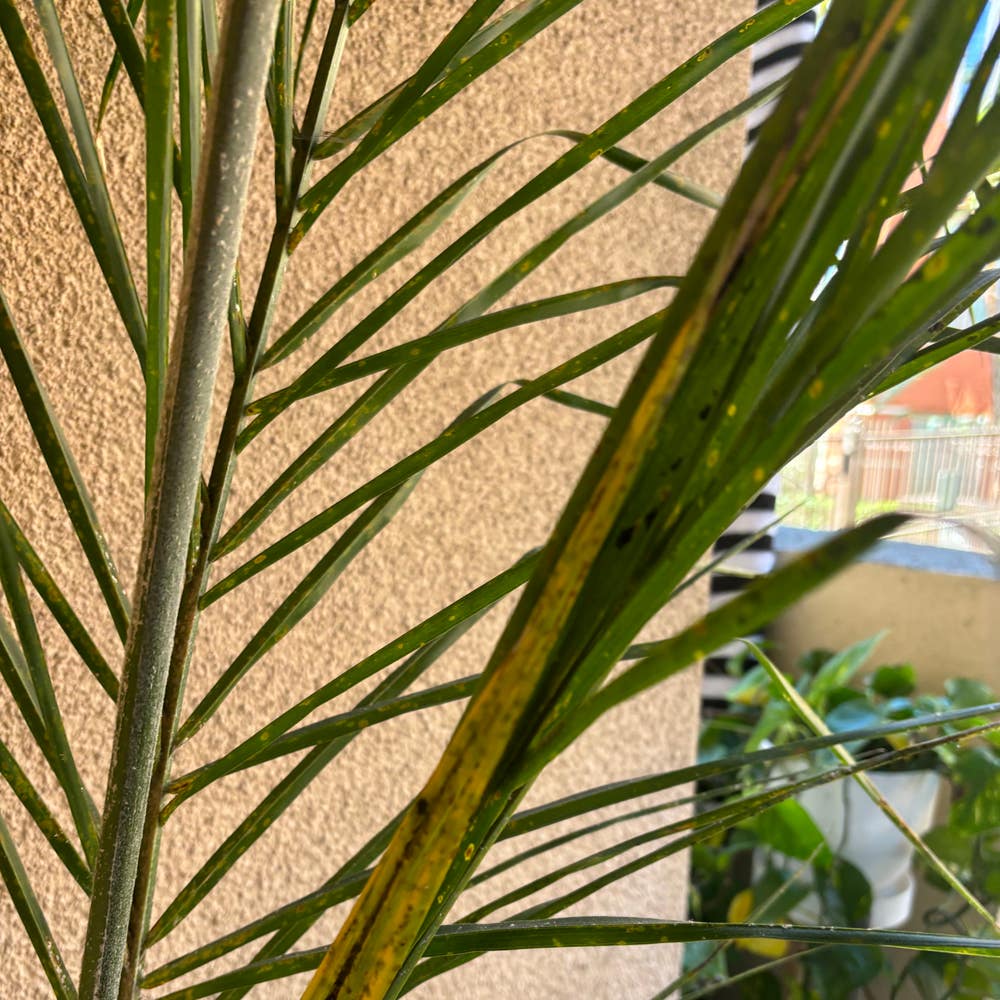
How Do I Cure Queen Palm Root Rot?
Syagrus romanzoffiana
By the Greg Editorial Team
Jun 18, 2024•4 min read
This article was created with the help of AI so we can cover more plants for you. May contain errors. See one? Report it here.
Rescue your Queen Palm 🌴 from root rot's grip with life-saving care tips.
- 🚫 Overwatering and poor drainage lead to root rot in Queen Palms.
- 🌱 Dry out roots and prune to treat, and use fungicide for protection.
- 💧 Smart watering and soil choice are key to preventing future rot.
Spotting the Red Flags: Symptoms and Causes of Root Rot in Queen Palms
🚩 Symptoms: What Does Root Rot Look Like?
Yellowing fronds are the first hint that your Queen Palm might be sending an SOS. If the palm appears wilted, despite your attentive care, it's time to inspect the roots for signs of rot.
Foul odor emanating from the soil is as subtle as a smoke alarm; it's a clear indicator that something's not right below the surface. Healthy roots should be firm and white, not dark and squishy.
🕵️ Root Rot Culprits
Overwatering and inadequate drainage are the dynamic duo of destruction for Queen Palms. They create the perfect storm for root rot to take hold.
Fungal invaders are the unseen enemy, thriving in the excess moisture around your palm's roots. Recognizing these culprits is crucial for the health of your plant.

Turning the Tide: Effective Prevention Strategies
💧 Water Wisdom
Smart watering is your first line of defense against root rot in Queen Palms. Wait until the soil feels dry before watering again, and even then, give your palm just what it needs—no more, no less. Overwatering is like throwing a pool party for fungi, and you're not looking to host that kind of bash.
Soil and Drainage Savvy
Choosing the right soil is like picking a good running shoe—it needs to provide support but also let things breathe. Mix in materials like perlite or sand to create a well-draining environment that laughs in the face of water retention.
🚰 Drainage Do's and Don'ts
Make sure your Queen Palm isn't sitting in a swamp. If you're not using a pot with a drainage hole, you're basically asking for trouble. Elevate your pots with feet or stands to prevent water from pooling at the bottom—think of it as a tiny throne to keep your palm's roots high and dry.

The Rescue Mission: Treating Root Rot in Queen Palms
🌴 Dry Out and Prune
Root rot in Queen Palms is like a bad relationship—it's all about setting boundaries. Stop watering immediately to give the roots a chance to dry out. Think of it as enforcing a no-contact rule with moisture.
Once the roots have had their space, it's time for a trim. With sterilized shears, snip away the rotted parts. Be ruthless; this is a rescue mission, not a spa day. You're aiming to preserve the healthy, white roots and remove the mushy, dark ones.
🧼 Clean Up and Protect
After the pruning purge, clean your tools like a surgeon post-operation. A bleach solution (1 part bleach to 9 parts water) will do the trick. Soak your tools for 30 minutes, then rinse with water. This sterilization step is crucial to prevent spreading the disease.
Now, bring out the big guns: fungicide. Choose a product suitable for Queen Palms and apply it according to the label's instructions. This isn't a "spray and pray" situation; it's targeted intervention. By protecting the remaining healthy roots, you're giving your palm a fighting chance.

Aftercare: Helping Your Queen Palm Thrive Post-Treatment
🕵️ Monitoring for Recovery
After treating root rot, vigilance is your new best friend. Look for new growth and a return to vibrant green fronds as signs your Queen Palm is on the mend. If you notice any setbacks, like yellowing or drooping leaves, it's time to tweak your care routine.
🛡️ Ongoing Prevention
Continued care is the shield that guards against root rot's return. Regular fertilization with the right nutrients gives your palm the strength to resist infections. Protect it from harsh elements with a layer of mulch and maintain a smart watering schedule. Remember, your Queen Palm's health is a testament to your dedication. Keep up the good work, and your palm will stand tall and proud.
⚠️ Safety First
This content is for general information and may contain errors, omissions, or outdated details. It is not medical, veterinary advice, or an endorsement of therapeutic claims.
Always consult a qualified healthcare professional before using any plant as food, medicine, or supplement.
Never eat any plant (or feed one to pets) without confirming its identity with at least two trusted sources.
If you suspect poisoning, call Poison Control (800) 222-1222, the Pet Poison Helpline (800) 213-6680, or your local emergency service immediately.
Spotted an error? Please report it here.
Prevent Queen Palm root rot by letting Greg's smart watering schedule 🌴 remind you when it's safe to water again, ensuring your fronds stay vibrant and healthy.