💧 How Much Humidity Does My Queen Palm Need?
Syagrus romanzoffiana
By the Greg Editorial Team
Jun 18, 2024•3 min read
This article was created with the help of AI so we can cover more plants for you. May contain errors. See one? Report it here.
Discover the secret to lush Queen Palm fronds 🌴—mastering the art of perfect humidity is key!
- Brown tips and dry leaves signal your Queen Palm needs more humidity.
- 🌡️ Monitor humidity with a hygrometer for optimal Queen Palm health.
- Balance humidity with misting, pebble trays, or humidifiers for a tropical vibe.
Spotting the Signs: When Your Queen Palm Craves More Humidity
🌴 Telltale Symptoms of Low Humidity
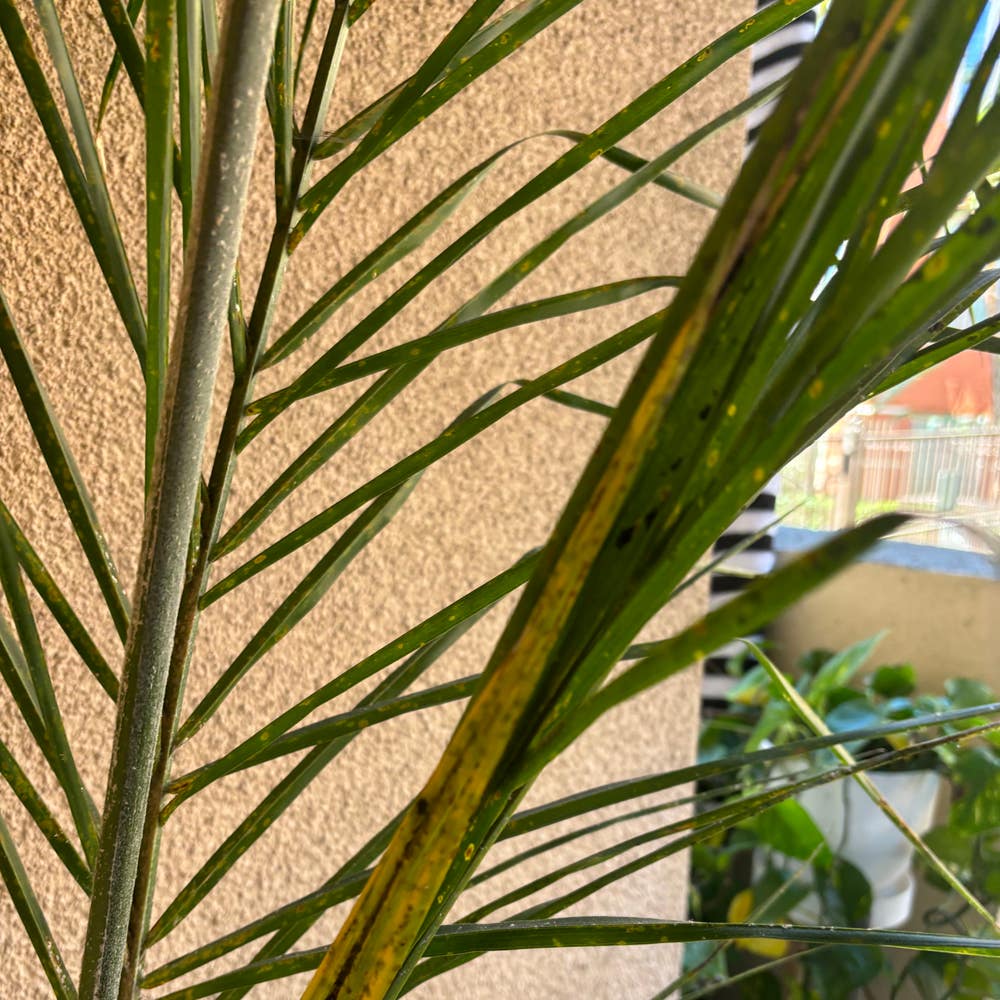
Brown tips on fronds are a classic distress signal from your Queen Palm, hinting at a humidity level that's less than ideal. Dry, crispy leaves are another red flag; they're the palm's way of saying it's not getting the tropical moisture it craves.
Monitoring Humidity Levels
A hygrometer is your go-to gadget for keeping tabs on relative humidity. It's like a weather station for your plant's comfort zone. Observing your Queen Palm for signs of discomfort, beyond the tools, can also give you a heads-up on whether you need to dial up the moisture.

Creating a Tropical Oasis: Boosting Humidity for Your Queen Palm
💦 DIY Humidity Tricks
Misting your Queen Palm can be like hitting the refresh button, providing a quick moisture boost. However, it's a short-lived solution, so don't lean on it too heavily.
Creating pebble trays is a straightforward, low-tech method to increase humidity. Just make sure the pot isn't soaking in the water, as that's a one-way ticket to root rot city.
🌡️ High-Tech Humidity Helpers
Investing in a humidifier is the high-tech route to a consistent tropical climate. Set it, forget it, and let your Queen Palm bask in the moisture.
Grouping plants together is a clever play. It's like hosting a moisture mixer where every plant is on the guest list, contributing to the ambient humidity.

When Less is More: Managing High Humidity for Queen Palm Health
💨 Ventilation is Key
- Proper air circulation is non-negotiable for Queen Palms in high humidity.
- Deploy fans to keep the air fresh and moving, avoiding the dreaded greenhouse effect indoors.
🌬 Dehumidifying for Balance
- Time for a dehumidifier? Consider one when your tropical paradise starts resembling a rainforest.
- Watch for over-humidity signs: droopy fronds or a general look of 'I've had too much of a good soak'.

Navigating Your Environment: Adapting Queen Palm Care to Local Humidity
💧 Understanding Your Region's Humidity Profile
Your Queen Palm's vibe thrives on local humidity intel. It's about getting to know your climate like the back of your hand. Dive into local weather data or chat up a nearby nursery for the scoop on your area's atmospheric mood swings.
- Research local climate humidity to align your Queen Palm's needs with your region's weather patterns.
- Make seasonal adjustments for indoor Queen Palms, because what works in July will flop in January.
🌴 The Balancing Act
Humidity care for your Queen Palm is a year-round DJ session. You're constantly tweaking the dials—more mist here, less water there—to hit that tropical sweet spot.
- Adjust care with changing seasons; your palm's thirst in the summer is not the same as in winter's chill.
- For sudden humidity drops or spikes, have a toolkit ready: humidifiers, misters, or fans to keep things steady.
⚠️ Safety First
This content is for general information and may contain errors, omissions, or outdated details. It is not medical, veterinary advice, or an endorsement of therapeutic claims.
Always consult a qualified healthcare professional before using any plant as food, medicine, or supplement.
Never eat any plant (or feed one to pets) without confirming its identity with at least two trusted sources.
If you suspect poisoning, call Poison Control (800) 222-1222, the Pet Poison Helpline (800) 213-6680, or your local emergency service immediately.
Spotted an error? Please report it here.
Ensure your Queen Palm is thriving 🌴 with Greg's custom environmental monitoring and care reminders, tailored to keep the humidity just right.