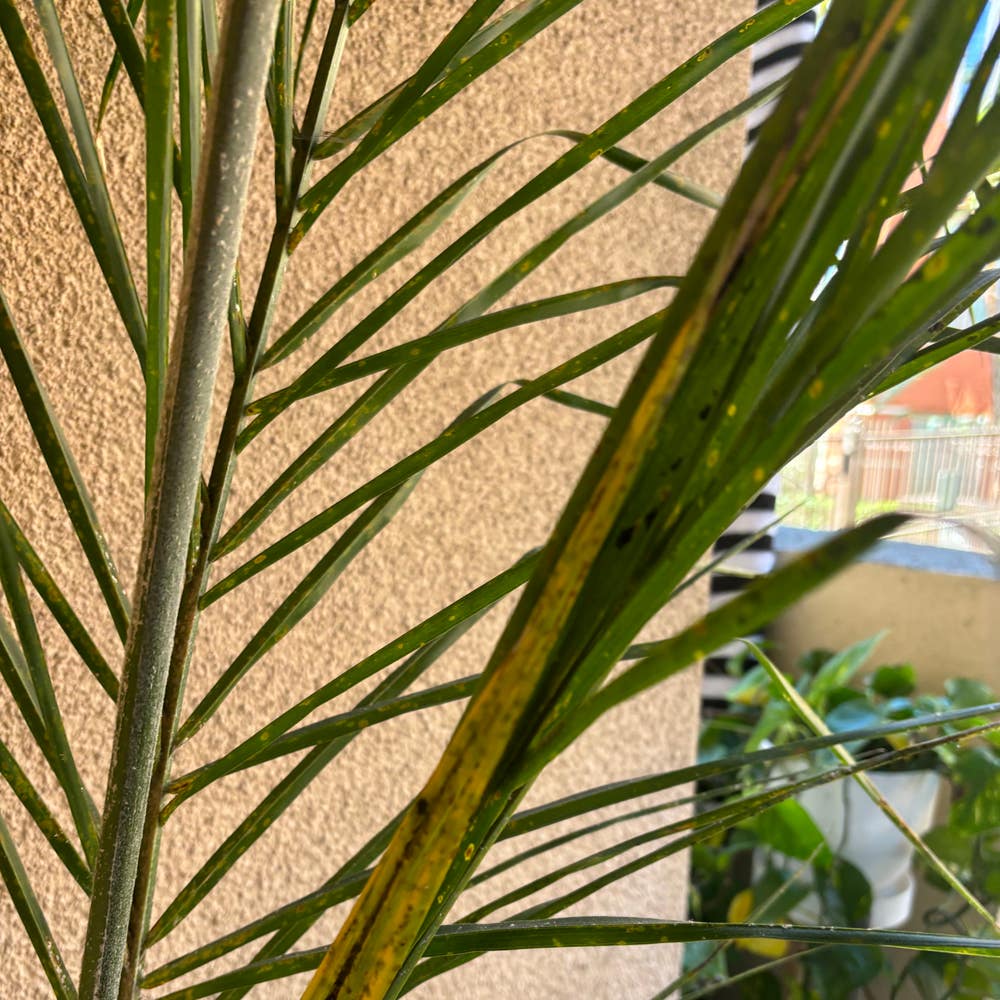
Why Are My Queen Palm Leaves Mushy?
Syagrus romanzoffiana
By the Greg Editorial Team
Jun 18, 2024•3 min read
This article was created with the help of AI so we can cover more plants for you. May contain errors. See one? Report it here.
Revive your Queen Palm from squishy to splendid 🌴 by tackling overwatering woes head-on!
- 🚿 Overwatering causes mushy leaves, root rot, and nutrient issues.
- 🕳️ Ensure proper drainage to prevent root suffocation and fungal infections.
- 🌱 Adjust watering and soil, and prune to fight and prevent mushiness.
Spotting the Trouble: Signs Your Queen Palm is Too Wet
💧 Overwatering Symptoms
Yellowing leaves and browning tips might seem like your Queen Palm's latest fashion statement, but they're actually distress flares. Overwatering turns your palm into a drama queen, with leaves that droop like they've just heard bad news. Root rot sneaks in when the soil smells worse than forgotten laundry, and the roots can't breathe, let alone drink up nutrients.
🚰 Drainage Woes
When the soil feels more like a soggy sponge than a nurturing bed, you've got a drainage drama on your hands. Your Queen Palm's roots are gasping for air, and without intervention, they'll soon be swimming with the fishes. Check for drainage holes; if they're missing or blocked, it's like you've put your palm in a watery grave.
🍄 Fungal Foes
Black spots on stems and leaves are the palm's version of crying out, "I've got a fungal infection, and I'm not afraid to show it!" Overwatering is the enabler, turning your palm's home into a fungus playground. Cut back on the waterworks, remove the infected bits, and keep the foliage dry to avoid turning your palm into a mushroom farm. If things look grim, a fungicide might just be the hero you need.

First Aid for Your Palm: Turning Mushy to Mighty
💧 Cutting Back on Water
Overwatering is the equivalent of giving your palm a never-ending bath. To firm up those leaves, reduce watering immediately. Let the top inch of soil dry out before you even think about giving it another drink. It's like a detox for your palm's roots.
🚰 Drainage Makeover
If your palm's pot is acting like a swimming pool, it's time for a drainage intervention. Mix in perlite or coarse sand to the soil; it's like installing a drainage system in a rain-soaked city. For potted palms, ensure the pot has adequate drainage holes—no holes, no hope.
🍄 Fungus Among Us: Treatment Tactics
Fungus thrives in the mushy mess of overwatered soil. To combat this, prune away any infected leaves with sterilized shears. Choose a fungicide that's like a bouncer for unwanted fungal guests, or go natural with neem oil. Remember, cleanliness is next to godliness—disinfect your tools after each cut.

Future-Proofing Your Queen Palm: Prevention Strategies
💧 Watering Wisdom
Watering your Queen Palm is like a balancing act; too much, and you're in mushy leaf territory. Water wisely—only when the soil feels dry to the touch. Remember, your palm isn't a fish; it doesn't need to swim. Stick to a schedule that respects dry periods and you'll avoid waterlogged woes.
🌱 The Right Foundation: Soil and Pot Choices
Choosing the right soil and pot is like picking a good pair of shoes; it needs to fit well and handle some wear and tear. Go for a well-draining mix and a pot with drainage holes. This isn't just good advice—it's a lifeline for your palm's roots. Mix in some perlite or sand to keep things airy, like a well-ventilated room on a hot day.
🍄 Keeping Fungus at Bay
Fungi are the party crashers of the plant world—unwanted and destructive. To keep them out, adopt a routine. Apply a copper fungicide treatment a few times a year, but don't go overboard; it's medicine, not candy. Keep an eye out for early signs of trouble, because when it comes to fungus, an ounce of prevention is worth a pound of cure.

⚠️ Safety First
This content is for general information and may contain errors, omissions, or outdated details. It is not medical, veterinary advice, or an endorsement of therapeutic claims.
Always consult a qualified healthcare professional before using any plant as food, medicine, or supplement.
Never eat any plant (or feed one to pets) without confirming its identity with at least two trusted sources.
If you suspect poisoning, call Poison Control (800) 222-1222, the Pet Poison Helpline (800) 213-6680, or your local emergency service immediately.
Spotted an error? Please report it here.
Keep your Queen Palm thriving 🌴 by using Greg to tailor your watering schedule, ensuring you never overwater and always catch those early signs of trouble.